

source : the age
Hundreds of Newtown High School of the Performing Arts students are spending 80 minutes each fortnight doing activities such as colouring-in with pencils under teacher supervision after the school was forced to add special religious education lessons to the timetable.
The move has renewed calls for the Labor government to overhaul legislation and department policy, under which schools have to accept religious groups’ desire to run special religious education (SRE) lessons.
The situation at Newtown High began four years ago after a request from some parents to introduce special religious education classes. Over the past two years, Anglican organisation Youthworks had been in discussions with the school.
Under NSW legislation, a school cannot refuse to offer special religious education classes and NSW Department of Education policy states students who are not enrolled in religion lessons “cannot participate in school curriculum lessons or other extracurricular activities during this time”.
Those rules now mean 94 per cent of Newtown High students from years 7 to 10 (or 703 students) who are not enrolled in Christianity lessons have been blocked from learning curriculum content. Extracurricular activities are also banned during this time.
Under the change, students are set to lose an entire week’s worth of learning time over a full school year. The move has prompted the creation of a WhatsApp group, and a meeting was held at the school on Tuesday evening.
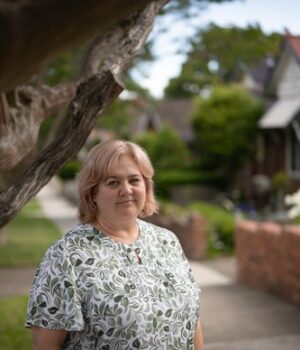
Newtown High’s P&C president Lassity Martin said effectively taking away 80 minutes of learning time each fortnight contravened NSW Education Department warnings about missing even a small amount of school and the importance of attendance.
“It flies in the face of other initiatives … I find it very confusing,” she said.
She said she respected the right to offer religious education at schools as mandated by the legislation, but could not understand why the department’s policies appeared to go a step further to prohibit children from carrying on normal lessons.
“I absolutely support parents and students who choose to attend special religious education,” she said. “What I don’t understand is why nothing else can be done while SRE is carried out. That’s not a legislative requirement, that’s just mystifying to me.”
Students are not allowed to do activities such as rehearsals for a school play or a saxophone lesson in this time.
“Some students were colouring in,” she said. “The whole school doesn’t stop if people go off for a sporting competition. I can’t understand why SRE is being treated differently to any other subject.”
A spokesman for the Department of Education said: “Providing core curriculum instruction to students who are not undertaking special religious education, while their peers attend those classes, would disadvantage students undertaking special religious education.”
In 2023, principals across the state and the NSW Teachers Federation pushed for an urgent review of religious education in NSW public schools, warning scripture classes were disrupting the curriculum.
What the NSW Education Act (1990) says about special religious education:
- In every government school, time is to be allowed for the religious education of children of any religious persuasion, but the total number of hours so allowed in a year is not to exceed, for each child, the number of school weeks in the year.
- The religious education to be given to children of any religious persuasion is to be given by a member of the clergy or other religious teacher of that persuasion authorised by the religious body to which the member of the clergy or other religious teacher belongs.
- The religious education to be given is in every case to be the religious education authorised by the religious body to which the member of the clergy or other religious teacher belongs.
- The times at which religious education is to be given to children of a particular religious persuasion are to be fixed by agreement between the principal of the school and the local member of the clergy or other religious teacher of that persuasion.
- Children attending a religious education class are to be separated from other children at the school while the class is held.
- If the relevant member of the clergy or other religious teacher fails to attend the school at the appointed time, the children are to be appropriately cared for at the school during the period set aside for religious education.
Asked this week if she would change the policy, NSW Education Minister Prue Car said special religious education has been “an integral part of our public school system since its inception, reflecting the diverse beliefs and values of communities across NSW”. She said ethics offered an additional option for families.
Si Gladman, executive director of The Rationalist Society, an organisation which has campaigned against scripture lessons in schools, said parents and school communities across NSW had a right to feel angered by the Labor government’s “continued unquestioned support” of SRE.
“The SRE program is immensely disruptive to the learning of all children, and especially to those kids who are forced to fill their time with non-curricular activities to allow for some of their peers to attend religious indoctrination classes,” he said.
“Instead of kowtowing to the demands of religious lobbyists and religious clerics, the Minns government needs to start listening to parents and school communities, and move SRE so that it is held outside normal class time.”
He said that would give children back their learning time.
“The NSW government says SRE promotes social cohesion. But the program segregates children according to their parents’ religious beliefs. Christian, Muslim, Jewish, Hindu and Buddhist kids are separated from each other and put into their own classes, while others are forced into ‘alternative meaningful activities’.”
Meaningful activities include reading, exam study and homework.
Youthworks chief executive Craig Roberts described the addition of Christianity lessons to the timetable as a “term 4 trial” which was a result of collaboration with other religious organisations.
“The principal, Dr Susan Green, has assured us the school respects the religious beliefs and choices of all students and families, and we value this approach,” he said.
He expected more religious providers would make educational offerings available and demand would grow.
Start the day with a summary of the day’s most important and interesting stories, analysis and insights. Sign up for our Morning Edition newsletter.


