

source : the age
When the ancient Romans went to war their accountants were never far behind. Called quaestors, meaning investigators or treasurers, they were essentially young magistrates whose job was to follow in soldiers’ footsteps and rigorously control spending. They might even deduct from a hard-bitten legionary’s pay the cost of feeding him and supplying him with weapons.
Assisted by keen-eyed professional clerks, they noted not just outgoings (wages, arrows, salted pork, wine) but the upsides: valuables plundered, prisoners captured, rents levied in newly seized lands. Their ledgers were scrutinised, irregularities triggering high-level investigations.
So long as the books were balanced, legionaries who fought in successful campaigns were rewarded with cash, land, even slaves; while those at the very top, such as Julius Caesar, could become wealthy beyond compare. Yet Rome’s leaders also had a pathological fear of corruption flourishing under greedy governors in far-flung provinces, and badly wanted to know what their wars actually cost: had they been worth the expense?
Today one wonders what the quaestors would make of the Pentagon’s minimal efforts to publicly account for the cost of the war in Iran. In April, the Pentagon’s acting comptroller, a little-known public servant called Jules “Jay” W. Hurst III, revealed the cost to date had been $US25 billion, but gave no detail (later bumping it up to $US29 billion, or roughly $40 billion in Australian dollars).
Independent analysts, meanwhile, pegged the cost far higher, at least by several billion dollars, with some even suggesting that as the war drags on it could top $US1 trillion, depending on what you do or don’t take into account. Adding in the increased price of fuel for consumers worldwide, for example, vastly increases the Pentagon’s figure of what the war has “cost” everybody.
So, how do you calculate the cost of war? What will this one in Iran really cost? How does it compare to other conflicts?
What do we know about the cost of the Iran war to date?
We know from official accounts that the Iran war cost the US well over a billion dollars a day at the outset, though expert sources peg it even higher. And that’s largely the cost of dollars spent on weapons, not accounting for damage incurred by Iran and the Gulf states and flow-on costs that affect the whole world.
Linda Bilmes, a Harvard economics professor and a world authority on the ultimate cost of wars, tells us the initial bill for the US up to the first ceasefire (39 days) was likely between $US1.5 billion and $US2 billion a day. “That’s an incredibly high figure,” she tells us, “but the far bigger costs are still ahead, including rebuilding dozens of facilities that have been badly damaged, raising the budget, paying interest on all the money borrowed to finance all this, and dealing with economic impacts such as fuel costs.”
Hurst gave the only actual figure, saying the war had to that point cost $US25 billion, which is about equivalent to the annual budget for NASA.
An early private briefing by Pentagon officials to Congress revealed the US had burnt through $US5.6 billion in munitions in the first two days of the war alone. Another briefing, 10 days into the conflict, put the overall cost of the first six days at $US11.3 billion; nearly $US2 billion a day.
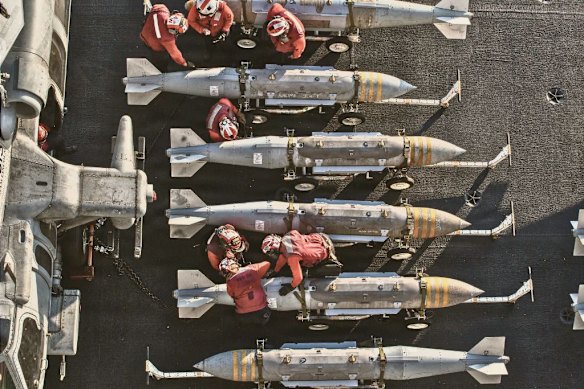
Those figures are believed to mainly cover off the expense of the thousands of rockets and bombs used in the initial onslaught, such as long-range tomahawk cruise missiles, which range from $US2-3.6 million each, the AGM-154 guided bombs, which cost around $US500,000 each and the (expensive) Patriot missiles used to shoot down (cheap) drones, 1300 of which had been fired by May 20 at a cost of $US4 million each, according to The Wall Street Journal.
On April 29, we got a little more insight when Defence Secretary Pete Hegseth, along with General Dan Caine, who is chairman of the Joint Chiefs of Staff, and Pentagon comptroller Jay Hurst, appeared before Congress’s House Armed Services Committee to provide a budget update. Hurst gave the only actual figure, saying the war had to that point – two months in – cost $US25 billion, which is about equivalent to the annual budget for NASA.
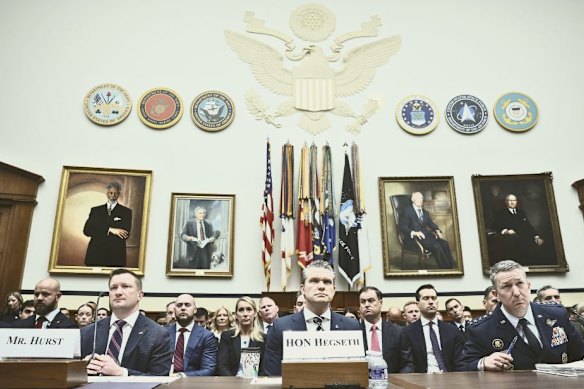
Two weeks later, on May 12, he told the House Appropriations subcommittee on defence the figure was now $US29 billion. “A lot of that increase comes from having a refined estimate on repair and replacement costs for equipment,” he said, hedging that “we want to do a full diagnosis of the aircraft before we estimate that cost” and admitting there were still “a lot of unknowns”, particularly around the cost of repairing damaged US military bases in the region. (The US American Enterprise Institute has estimated a $US5 billion pricetag for damage so far to 70 structures at a total 11 military bases in seven countries.)
‘The cost to a typical American family is measured in thousands and likely tens of thousands of dollars.’Justin Wolfers, University of Michigan
Democratic senator Patty Murray was unimpressed, saying even the new Pentagon estimate appeared “suspiciously low”. “You’re spending families’ hard-earned tax dollars on a war that many strongly oppose, and you’re forcing many to pay more at the pump, and yet you’re not even providing a real breakdown of the cost of this war so far,” she said.
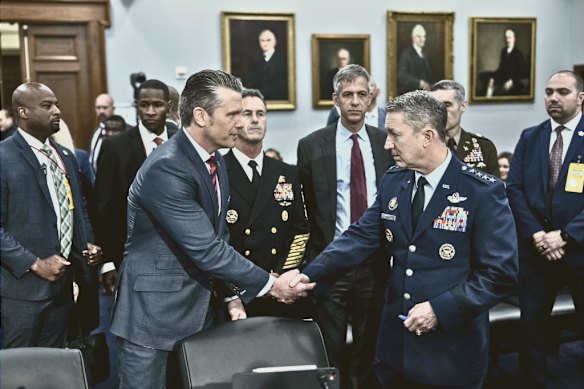
Ongoing, Trump has asked Congress for an increase in defence spending to $US1.5 trillion per year, which Senator Murray says equates to “another half trillion dollars for the war”. She told Hegseth in the hearings: “That is taxpayer money that could be used to feed families, or build new, affordable homes, or wipe out some diseases completely, or increase [child care] investments 20 times over. But you are asking us to blow it all on war.”
Practically, says Justin Wolfers, Professor of Economics and Public Policy at the University of Michigan, “What this means is that the cost to a typical American family is measured in thousands and likely tens of thousands of dollars.”
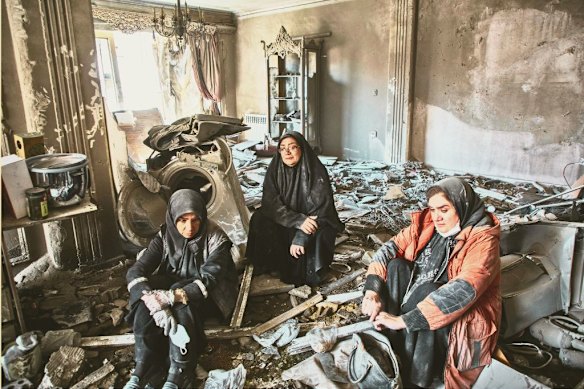
As for the costs to Iran, in mid-April an Iranian government spokesperson said Iran had to that point suffered around $400 billion in direct and indirect damage to infrastructure such as petrochemical plants, steel and aluminum factories and military complexes. Rystad Energy, an energy consultancy based in Norway, in April calculated the damage to energy facilities alone across the wider Gulf at around $80 billion.
Why are the costs of war so often disputed?
“Throughout history, those who start wars tend to underestimate the costs, and to be overly optimistic about the length of time and difficulty of military action,” says Linda Bilmes. “As costs mount, there is rising pressure to obscure the human and financial costs.”
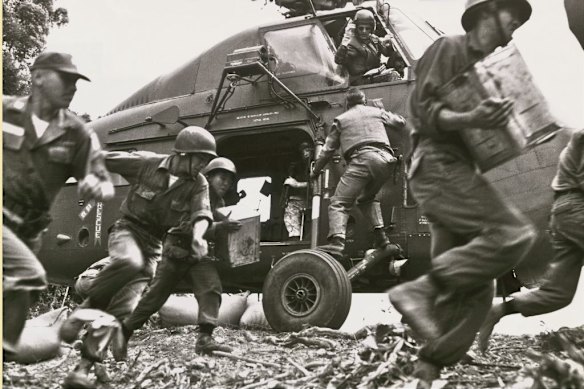
Vietnam was particularly egregious. The Pentagon Papers (the top-secret defence department study leaked to The New York Times and The Washington Post) showed the true costs of both materiel and lives were routinely hidden in budgetary sleight of hand.
Even after the war ended, nobody had a real idea of the actual expense. In 1975, a congressional subcommittee admitted the total figure was “hard to get a handle on” because of “sloppy bookkeeping”. The US Statistical Abstract eventually placed the final government outlay at $600 billion in 1975 dollars (roughly $2 trillion today), a figure some economists have suggested was half or a third of the true expenditure.
In 2002, ahead of the US war in Iraq, White House economic adviser Lawrence Lindsey predicted such a war could cost about $US200 billion (in contemporary dollars). He was disavowed by the White House then let go. Yet by 2005, his estimates were already looking on the low side: Congress had by then approved $US251 billion for military operations in Iraq, plus more for reconstruction.
“The Pentagon’s accounting system is weak, it … certainly can’t account for the true costs of war.”Linda Bilmes, Harvard economics professor
By 2011 Brown University, home to a long-term study project called the Costs of War, put the true cost of the Iraq war at $3 trillion, which would continue to blow out as long-term liabilities were taken into account. This echoes the current war with Iran, says William Hartung, an expert on US military budgeting with the Quincy Institute for Responsible Statecraft, “in that the government supplied little cost data up front and vastly underestimated the long-term cost of the war”.
In addition, Linda Bilmes tells us, “The Pentagon’s accounting system is weak, it flunks its audit every year and can’t account for its assets and liabilities, and certainly can’t account for the true costs of war.” She told a recent Harvard blog, “There are always big, medium and long-term costs that go on long after the last shot is fired. I am certain we will spend one trillion dollars for the Iran war. Perhaps we have already racked up that amount.”
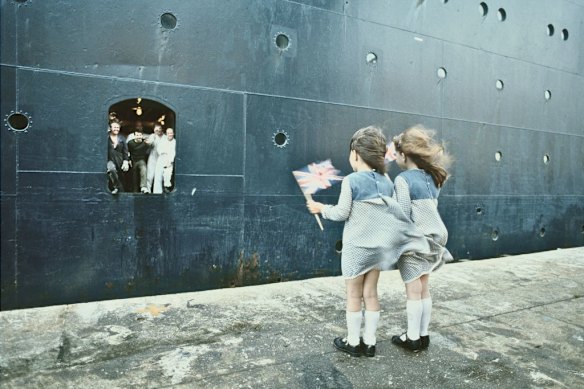
Even wars that promise to be short and cheap rarely are. The Six-Day War of 1967, fought between Israel and a coalition led by its Arab neighbours Egypt, Syria and Jordan, cost Israel alone roughly $2 billion, or $17 billion in today’s dollars – $2.5 billion a day.
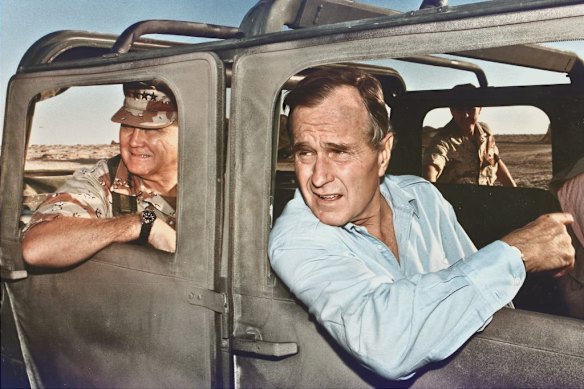
Britain racked up a $20 billion bill (again, in today’s dollars) during its 10-week conflict with Argentina over the Falklands in 1982. Operation Desert Storm, the campaign to liberate Kuwait from Iraq’s Saddam Hussein in 1990-91, lasted six weeks but – due to the enormous amounts of troops and armour involved – ended up costing the United States roughly $200 billion, adjusted for inflation (though much of that was recouped from its allies in the Gulf).
Experts generally agree that World War II cost the US something in the vicinity of $7 trillion in today’s dollars.
Wars that drag out end up costing incalculably more. Experts generally agree that World War II cost the US something in the vicinity of $7 trillion in today’s dollars. The Manhattan Project that produced the Pacific war-ending atomic bombs is estimated at $50 billion, again both in 2026 Australian dollars.
As for the Romans, not every endeavour was as profitable as they might have hoped. Around 53 BC the vainglorious Marcus Licinius Crassus, then Rome’s wealthiest man, invaded the Parthian Empire (in modern-day Iran) only to have his infantry thwarted by archers, his son killed and himself put to death, apocryphally by having gold poured down his throat. Rome collapsed into civil war – a heavy price indeed.
Getty Images
So what are the broader costs of war?
It goes without saying that the true cost of war is not measured in dollars but in lives. “The biggest costs of war are borne by the men, women and children of the country being attacked,” says William Hartung. “But this is rarely a major factor in decisions of whether to start a war.” In Iran, the tally of people killed is up to around 3600 Iranians, many of them civilians, against 14 US military personnel killed and 409 wounded to date, this being a war fought from the air to date. “An air war should be cheaper than an occupation,” says Hartung. “But because of the immense costs of operating modern ships and aircraft and the historically high costs of bombs and missiles, the difference is smaller than it used to be.”
‘The effects on the global poor, for whom energy and food are a bigger part of their budgets, are unconscionably large.’Justin Wolfers, University of Michigan
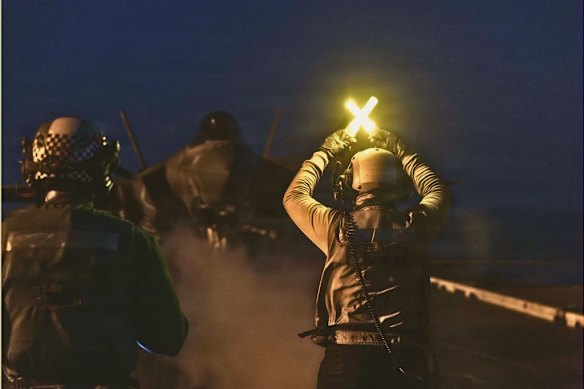
Indeed, so many expensive weapons have already been expended that supplies might be running low, says Malcolm Davis, a senior analyst at the Australian Strategic Policy Institute. “People are starting to realise the rapid use of missile capabilities by the Americans in the active phase of the war has meant that now there’s shortfalls in US missile stockpiles.”
It has already emerged that the US has had to pause a sale of Patriot missiles to Taiwan and recently told Japan that an order of up to 400 Tomahawk missiles will also now be delayed. Both have consequences for a possible future conflict with China, exposing Australia too. “If the US does go back into war against Iran in the coming days, then that situation is going to be even worse because they’re going to go through more of their remaining stockpile, so that could be one of the reasons why Trump is desperately trying to find a way out.”
In Afghanistan, Iraq and Vietnam, where there were boots on the ground, the costs of expended munitions were eventually overshadowed by the long-term cost to society of the loss of life, limb and mental health.
In 2008, Linda Bilmes and Nobel prizewinning economist Joseph Stiglitz calculated the costs of the Iraq war would eventually reach $US3 trillion (hence the title of their book The Three Trillion Dollar War), thanks to trailing costs such as long-term benefit payments to disabled veterans, who might require care for 60 years or more, as well as interest on the money often borrowed by the government to go to war, and what economists call the “opportunity cost” of what those lives and that money could have been used for more productively.
More broadly, with Iran, there’s the cost to consumers worldwide in raised oil prices – still around a third higher than before the war – blocked trade, disrupted air travel, inflation, interest rates and sharemarket fluctuations … all costs impossible to pin a final number to, but that are in the trillions of dollars.
In the Gulf itself, costs are compounding. Qatar, for example, has had virtually none of its exports shipped through the Strait of Hormuz since the start of the war, costing it billions of dollars in lost revenues. Iran’s attacks on its Ras Laffan facility will result in around $28 billion in lost annual revenue, according to the state-owned Qatar Energy. Qatar has also seen a plunge in tourism, as has the wider Gulf region, where lost revenues are estimated at nearly a billion dollars a day.
But it doesn’t end there. Qatar also makes fertiliser and a key ingredient, urea, has doubled in price since the start of the war, affecting farmers thousands of kilometres away. Textile factories in Bangladesh are dealing with input costs some 10-15 per cent higher than before the war, according to The Economist, due to the price not just of diesel but of petrochemical-based dyes. In Japan, snack-food makers have switched their gaudy packaging for monochrome to save money on naphtha, a petrochemical used to make colourings. India’s government, meanwhile, has been spending around $250 million a day to subsidise fuel prices to stabilise the economy.
“The effects on the global poor, for whom energy and food are a bigger part of their budgets, are unconscionably large,” says Wolfers. “This war hurts folks all around the world, and those costs are also likely enormous.”
Bottom line, says William Hartung, “The costs of taking care of veterans, the cost of restoring banged-up equipment and the costs of postwar reconstruction and taking care of refugees are all understated. At a minimum, reconstruction will mean repairing oil infrastructure that has been damaged or destroyed. Plus intangible costs like a lack of trust driven by, for example, walking away from a multilateral agreement that curbed Iran’s nuclear program and then using the prospect of Iran getting the bomb at some point as a rationale for attacking the country and killing its leaders. Who will trust America’s word in future diplomatic interactions?”
Get fascinating insights and explanations on the world’s most perplexing topics. Sign up for our weekly Explainer newsletter.


