

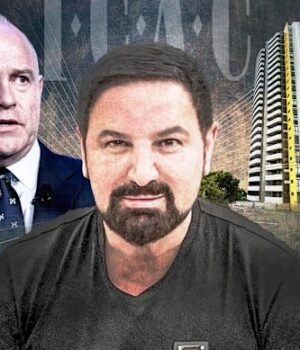
source : the age
Not long ago, I was asked to join a panel on crisis management at a Catholic Schools NSW symposium. Between the invitation and the event, news of the NSW Independent Commission Against Corruption’s Operation Rosny broke. The timing was awkward, but I think it’s good that the conversation went ahead. Here are a few thoughts about why the Catholic Church belongs in the public square, even when it’s an uncomfortable place to be.
How did the Catholic Church’s peak educational body, responsible for the distribution of billions of dollars in NSW, end up being the subject of Operation Rosny? We don’t know what other information the ICAC holds and we don’t know where the inquiry will eventually land. Despite the process still having much left to explore, we can, however, identify practices and processes that fall short of “good” governance.
Here is where the Catholic Church is in NSW – the reputation of education service delivery in NSW may well be in tatters in the eyes of many decision-makers. Scrutiny is increasingly demanded for the taxpayer’s money and the fees of parents and guardians who contribute to their children’s education. As not-for-profit companies operating educational services, we need to always be clear on our purpose, our mission and our remit. We must be apolitical. All of our activity must be focused on a singular vision and we should not be distracted by the politics of the day.
Catholic schools educate 274,000 children in NSW each day. Catholic education is prominent in the public square in good times and when it has something to offer. So the challenge now is to be in the very same square and face the allegations, to respond to the questions not just of the ICAC but all stakeholders, taxpayers, their governments and the communities in which Catholic schools are present. That is what stewardship requires. It is what executive leadership requires.
A piece like this, responding to the disappointment and anger about what is happening, is required because this ICAC stuff just doesn’t pass the pub test. Or the pew test. Or the pulpit test.
In my line of work, it’s the “school pick-up test” and, God forbid, the parent “WhatsApp group test” that can make or break even the most earnest education provider. We take the trust of the mums and dads who choose our schools for their children very seriously. That’s why we’ve recently written to the families of the 46,500 children and young people who attend our Catholic schools across western Sydney and the Blue Mountains.
The ICAC is getting on with its job. At the same time, those of us who lead Catholic education organisations must continue to show up in a credible way. We have a shared duty to demonstrate that we take our responsibilities seriously, because we do. I’m talking about our responsibility to the taxpayer and government as our funder, to our employees, and most importantly, to our students and their families.
There is a pastoral aspect that makes a real difference in leading a faith-based organisation in challenging times. My predecessor as the leader of our western Sydney Catholic schools, Anne Benjamin, did just this in a piece published in the Herald last week. Anne wrote about being angry about the impact of the allegations on educators and on families too. As I said at the Catholic Schools NSW panel, being there for people and showing that you “get it” matters.
The headline-hogging matters on display at the ICAC have little in common with most of the issues I come across in my work leading a system of 80 schools across western Sydney. They are quieter and more human: from postcode poverty to the trauma that comes with intergenerational disadvantage. Accompanying families through the triumphs and tragedies that come with being entrusted with the education of 46,500 young people. Our schools do it well, and it gives people hope. Now our sector needs to own its failures, show up and do leadership and governance just as well.
Jack de Groot is the chief executive officer of the Catholic Schools Parramatta Diocese. He chaired the Implementation Advisory Group established by the Australian Catholic Bishops Conference in response to the findings of the Royal Commission into Institutional Responses to Child Sexual Abuse. This resulted in a review of the governance of Catholic institutions.
Get a weekly wrap of views that will challenge, champion and inform your own. Sign up for our Opinion newsletter.
 Jack de Groot is the chief executive of St Vincent de Paul Society NSW

