source : the age
I’ll eat just about anything, just about anywhere. So when chefs Shaun Christie-David and Mitch Orr invite me out to Cobham – NSW’s main centre for young male offenders – in Sydney’s west for an afternoon of canapés made and served by its residing -inmates, I accept immediately.
The idea of entering a remand facility doesn’t faze me initially, but something about that clunk of the electrified door as I step inside sets my heart pounding. After a safety briefing, which includes stowing my bag away in a locker, I’m led to the library. And now, here I am, surrounded by metal shelves filled with young-adult fiction, eating a series of small dishes comparable to those I’d be served at many city restaurants.
A single, ricotta-filled raviolo doused in sugo? Pink slices of flank steak cooked over coals and served with fresh flowers and new potatoes? The perfect fruit crostata with vanilla ice-cream? All made and served by a group of young offenders who have spent the last six weeks cooking with some of the city’s best chefs?
This is Second Chance Kitchen, a cooking initiative started by Christie-David, 40, and Orr, 42. It’s one of the many programs that Cobham runs every day, but this one is everyone’s favourite.
Because it takes place just twice a year, it’s the hot ticket among the 90 inmates – there are just six places per six-week program, which runs each Wednesday for a few hours. And to be successful in completing the program, participants must show up to all six sessions. It’s considered a real privilege to be invited to take part; ideally, participants must show a record of good behaviour during their time inside and are handpicked by the chefs and Cobham staff.
Christie-David, who runs Sydney-based hospitality social enterprise Plate It Forward, fundamentally -believes in equal opportunity and that these young people deserve a second chance. “They are so intelligent, they’re so witty, they’re so charismatic,” he says. “But they might have just not had the best upbringing.”
Christie-David and Orr both grew up around Sydney’s western and south-western suburbs. Both saw good people go down bad pathways. Christie-David speaks about the commonality of domestic -violence and criminality in the households of young offenders; unfortunate events that have happened and have shaped their lives but, he says, shouldn’t shape their futures. “If we can change a life – just one – it’s worth it, right?”
Orr was a self-described “dumb kid”. “My life could easily have taken that direction,” he says. “[All it takes is] one stupid mistake when they’re out with friends who may be bad influences, they get picked up, and then they’re in the system.”
Being able to teach a transferable skill such as cooking is the aspect of the program that Orr is most proud of. “Just to be able to say, ‘Hey, here’s something you can do for the rest of your life that can make you money to support your family,’ ” he says. “It can change your life completely. It can make you lifelong friends. It can fly you around the world, or it can just be a way that you’re always going to have a job.”
The first of six sessions is a simple meet-and-greet. An opportunity for everyone to get to know each other a little bit and break down the teenage-boy bravado (ages generally run from 15 to 18). “We tell them about ourselves, about the program, about the industry and just have a conversation,” says Orr. “What’s their favourite food? Have they ever cooked? Does anyone in their family like cooking? What does their mum cook for them? What cultural foods do they eat?”
Early on, Orr does a taste test with the participants using six different varieties of apple slices. They must describe how that apple tastes and what the texture is. He explains how that helps when they start cooking. He encourages them to start thinking about whether something is salty or sweet, balanced, textural.
Over the next few weeks, Christie-David and Orr bring guest chefs to the facility to share stories, recipes and cooking skills. “We want to introduce these young people to as many positive role models as possible,” says Orr, “and have them hear as many different stories in the short time that we have with them.”
The pair are very particular in their selection of guest chefs: they need to be relatable and able to speak to the boys in a way they can understand. “We preface who [the chefs] are, where in the world they’ve cooked, how they grew up, how successful and famous they are,” says Christie-David. “And then [the boys] get that beautiful, ‘Oh, you’ve come into jail and given up your time, because you care about us, even though you’re massive.’ ”
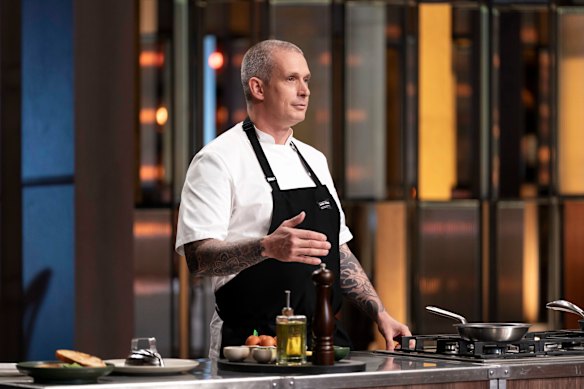
He remembers the moment TikTok chef superstar Andy Hearnden, of the account Andy Cooks, walked into the kitchen. “[The boys are] like, ‘You’re the “hey babe” guy! F— yeah, bro!’ And I’m like, ‘Bro, just tell them how many followers you have.’ He’s like, ‘Four million’, and they’re like, ‘And you’re here for us?!’ ”
Adds Hearnden: “It was the most impressive piece of social work I’ve seen in a long time.” He describes Orr as “firm but fair” with the boys. “[As chefs] we’re very used to dealing with kids like that. You know, kitchens are made up of all kinds of people and you quickly realise how most of the time [people are] just looking for structure. And as soon as you give [it to them], they thrive.”
Sydney chef Morgan McGlone (Bar Copains, Bessie’s, Vin-Cenzo’s) has had his own experience with the law. His brother did a stint in prison, so McGlone took the cautionary tale with him and talked about it as he taught the group how to make spicy fried chicken sandwiches. “I spoke to them very, very bluntly,” says McGlone, who was really -impressed with the boys’ manners and behaviour.
The chef says he’d hire and mentor the right young person. “I would 100 per cent give them a second chance to come into one of our kitchens and work there,” says McGlone. He enjoyed the experience so much, he’s returning to teach students how to make a dessert. “We need the next generation of cooks.”
There are rules of engagement when it comes to taking part. One whisper of bad behaviour, and the participant will be out for the duration of the course. Because the chefs who visit Cobham are quite culturally and experientially diverse, Christie-David is very strict with how the boys behave around the visitors.
“They’re giving you their time,” says Christie-David of what he tells the boys, “but they’re also -giving you their country of origin or something that’s quite personal. Never tease it, never mock it, never belittle it. And you f—ing eat it, right? You can spit it out, but you try everything. Just give it a go.”
There are some restrictions to what they can achieve, says Orr, who organises the day-to-day running of Second Chance Kitchen. Christie-David ($15,000) and Cobham ($5500) fund the program, while the chefs donate their time and the ingredients. Equipment is limited and knives are completely banned.
Christie-David’s long-term goal is to get the young men to a point where they can hold down a job. In those three hours every Wednesday, they enter a kitchen that is disciplined, ordered and clean. There are no shortcuts and inmates must treat the space with respect. The boys are also remunerated at award rate for certain parts of the program, such as the canapé afternoon I attended: a fair day’s pay for a fair day’s work. And Christie-David tells them, “If the only thing you take out of this is how to cook one of these dishes for your family, that is all we want.”
While the six boys picked have usually displayed good behaviour during their time inside, this is not always the case. Christie-David once allowed two young people to participate who had never been allowed in any program, because they were considered high-risk. “It’s a person-to-person conversation,” he says, of putting his trust in them. “Just really looking them in the eyes and saying, ‘What you do out there means nothing to me. When you’re with me, you’re not that guy.’ ” (Each completed the program without incident.)
“You know, I really believe there are so many better ways to tackle these issues than detention,” says Orr. “That’s the system that we have, and that’s the system that these kids have to go through. But Cobham’s got some amazing people working there who put -effort into helping turn the kids’ lives around.”
The centre’s programs supervisor, Shannon Fitzgerald, who helps pick the six participants, has worked there for 27 years. The courses that were running when she first started were mainly movement-based: activities to keep the boys’ bodies active and busy. While physical fitness is still important, there’s now more of a focus on connecting with inspirational role models from the community and creating employment and education pathways.
“Sometimes the moments you don’t expect are the ones that are so powerful,” says Fitzgerald. “At the canapé event, it can be a little bit confronting for the boys who haven’t mixed [with] members from the community for a while. You see them nervously going out [and serving people], then they come back and the confidence just builds. They’ve done an incredible job, and everyone there is so supportive and so lovely, you can just see the growth.”
Christie-David has given letters of submission to courts in the past, committing to employ multiple -inmates after they’re released. “These are good kids, and I know that,” he says. “I know that it sounds -controversial, and some people won’t like it, but I’ve looked these kids in the eyes and I see them. I see them for who they are.”
His Plate It Forward hospitality initiative trains and employs people often excluded from the job market at one of his four Sydney restaurants. In five years’ time, Christie-David’s goal is to open a restaurant run by people who have graduated from the Second Chance Kitchen program. “Someone asked me once, ‘Are you worried about stealing?’ ” he says. “I was so pissed off. There’s not one part of me that thinks they’re going to steal from me. I wouldn’t even think of it.”
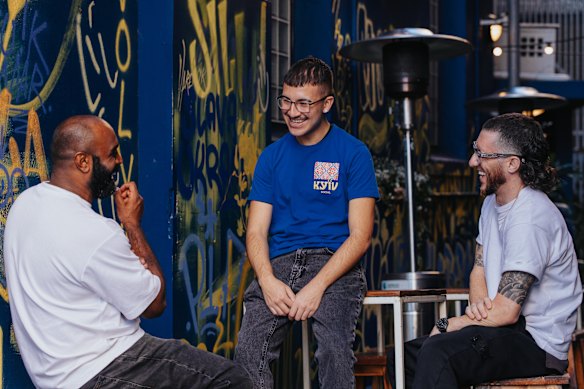
One of the Plate It Forward employees is Alexandre Reis, who was released from Cobham in September 2025 and currently works at Kyiv Social in Sydney’s inner-city suburb of Chippendale. The 19-year-old landed in the justice centre three times between the ages of 15 and 18. Good Weekend can’t detail the crimes of a minor but can confirm his crimes were neither
violent nor sexual in nature.
Reis was born in Brazil to parents who were unable to look after him, and he is no longer in touch with -either of them. Adopted at age two, he moved to Australia with his family when he was 13. That year, he learnt to speak English. The year after that, he started falling in with the wrong crowd. At 15, he landed in Cobham for the first time.
He has been diagnosed with attention deficit
hyperactivity disorder and is medicated to treat it. With medication, he’s able to concentrate – especially when he’s waiting tables at the brightly decorated Kyiv Social restaurant. He’s confident and extremely present, with a slight frame and olive skin, a neat haircut and thick glasses. He loves waiting on tables, and being around people in general. Each day he has a shift, he arrives an hour early just to be part of the atmosphere.
During his last stint inside, Reis celebrated his 18th birthday and completed his Higher School Certificate. Study began as a way to pass the time, but it became a pathway to something much bigger. When he started getting good marks, it spurred him on to push harder and shape his future. To help him reorganise his days, he created a hard-copy binder of goals and life priorities outside of study.
That 18th birthday was a real watershed moment for Reis. He wasn’t a minor any more. Any further infractions would mean running the risk of landing in jail with fully grown men. “Once you’re 18, it’s a completely
different game,” he says. “I feel like that forces you to reflect a lot.
“It’s hard for me to sit here and think back and try to find reasons as to why I did it,” he adds of his crimes. “I’d rather accept that I’ve done it. I’ve coped with the consequences and I’m able to move on to other things in my life.”
Reis is one of the handful of people able to obtain a HSC while serving time at Cobham. Out of the 85 to 90 people who were in the centre at the time, there was only one other boy studying alongside him. He describes the moment he finished his final exam as the most rewarding feeling he can remember having. “I actually cried,” he says. “Over school.”
Armed with an ATAR score of 83, Reis is now studying a double degree in law and criminology at the University of Technology, Sydney. He credits Christie-David and Orr for the help and opportunities that have -allowed him to change his life.
Reis believes the reason Second Chance Kitchen works so well is because of the chefs’ emphasis on interpersonal interaction and connection: “Once you’ve already done that step with the boys and have a good relationship with them, they’ll be more welcoming of the idea of cooking.” He describes the sheer tasting of the food as a game-changer for participants, as the meals inside can get pretty monotonous.
Once Reis finishes his degree, he wants to pay it forward in his own way. “I want to be an influence for young people who still struggle with the system, who may not have been as blessed as me to have these -opportunities. I’ve had some of the best interactions of my life and met some of the kindest souls in there.
“You know, most of the boys accept that they’ve done something wrong and that they deserve the time. But it’s sad that when you ask some of those kids, ‘What do you want to be when you grow up?’ [They say,] ‘I have no idea.’ They have no pathway. Their reality is they’re going to be coming and going in and out of jail their whole life.”
For Reis, the biggest takeaway from Second Chance Kitchen was seeing everyone being rewarded for their hard work: to be remunerated for their efforts was a big deal. “It is a matter of dignity, and I feel like every person deserves to be treated with dignity,” he says. “Once you give that to those boys, you’re showing them a life that is normal and acceptable. [Second Chance Kitchen] was a mind-opening experience for me. I believe it is for all the young people who attend.”
Get the best of Good Weekend delivered to your inbox every Saturday morning. Sign up for our newsletter.
Read more from Good Weekend:
‘People just love hearing about themselves’: The Gen Z yearning for magic fuelling an $8b astrology market
She was one of Australia’s hottest TV stars – then she vanished. What happened to Tania Lacy?
Handcrafted spoons, custom clay bricks: What it takes to open a restaurant