Source : INDIA TODAY NEWS
For almost 70 years, IIT Madras has been synonymous with one thing above all. Engineering. The place you go to build machines, write code, design the systems a country runs on. Standing on the institute’s campus, though, you hear its director describe a very different kind of graduate he now wants it to produce. A doctor.
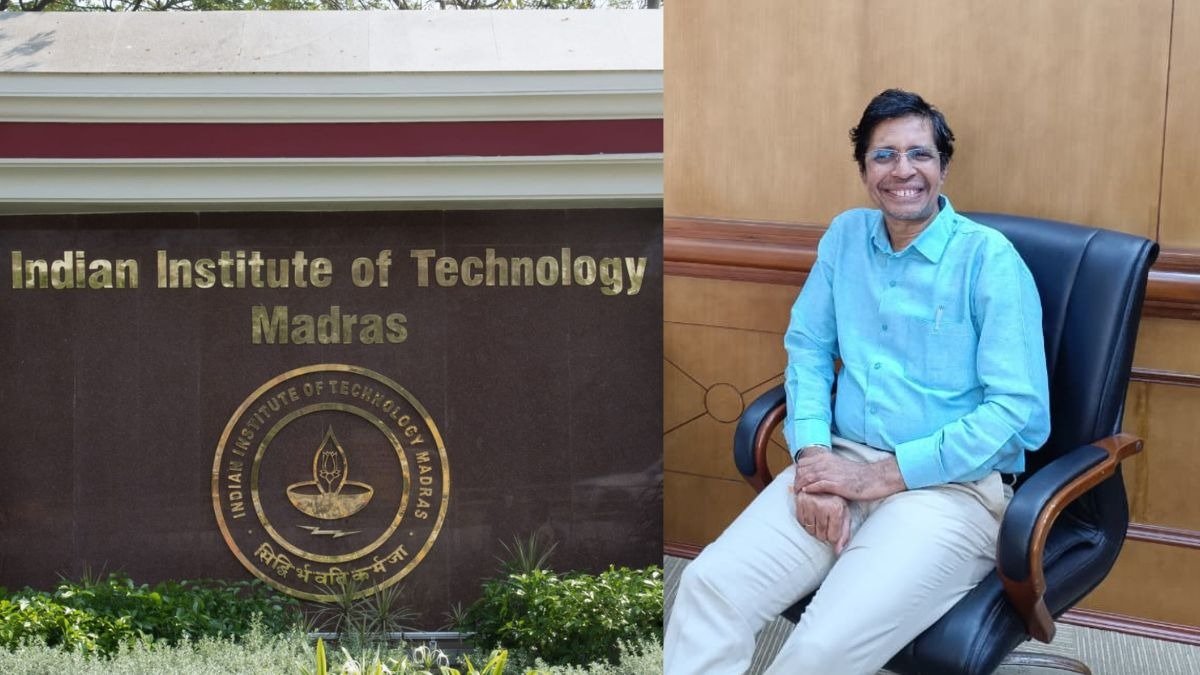
In an exclusive interview with India Today at the IIT Madras campus, Director Prof. V. Kamakoti said the institute would open a school of medical sciences and award medical degrees of its own. “IIT Madras will certainly launch a school of medical sciences,” Professor Kamakoti said. “We want to give medical degrees, and I think that will be something which will make the institute much bigger.”
advertisement
Those degrees, he said, would run the full range, the undergraduate MBBS, the postgraduate MD and the doctoral PhD.
WHAT IS IIT MADRAS PLANNING IN MEDICINE?
The institute is not starting from nothing. In May 2023, it opened a Department of Medical Sciences and Technology, the first of its kind in India, offering a four-year undergraduate degree that trains a hybrid graduate. Part engineer, part biologist. These are people built to design scanners, implants and software, not to treat patients.
That is the crucial difference. The department produces medical technologists and physician-scientists, meaning researchers who understand both the human body and the machine. A school of medical sciences that grants medical degrees would go a step further, and produce practising doctors.
WHY DOES A TECH INSTITUTE WANT TO MAKE DOCTORS?
Kamakoti’s answer is blunt. “Any technology institution must start a medical school,” he said. “Otherwise, as a country, we cannot survive the medical market.”
His thinking traces back to the pandemic, which exposed how much of modern medicine now runs on technology, and how risky it is for a country to buy that technology from abroad rather than build it.
India still imports a large share of its high-end medical equipment. A nation that wants to design its own machines, he believes, must train its doctors and its engineers under one roof, thinking in the same language.
CAN AN IIT ACTUALLY AWARD MEDICAL DEGREES?
This is where ambition meets the rulebook. Medical education in India is governed by the National Medical Commission, the regulator that decides who may run a medical college and grant an MBBS, the standard degree a doctor earns. An IIT cannot simply declare one open. It needs the commission’s approval, and a teaching hospital, a working hospital where students learn while treating real patients.
There is already a map to follow. IIT Kharagpur built its own hospital and won approval to start a postgraduate MD course, the degree doctors take to specialise, while its undergraduate MBBS plan still waits on infrastructure. IIT Madras would have to walk the same long road. Hospital first, regulator second.
It does, though, start with an advantage. Few campuses in India already carry this much medicine inside them, from a healthcare technology centre to a brain-mapping institute. Its 2023 department already partners with leading city hospitals. The engineers are already working beside the clinicians. Professor Kamakoti simply wants the next generation to arrive as both.
– Ends
SOURCE :- TIMES OF INDIA