SOURCE :- THE AGE NEWS
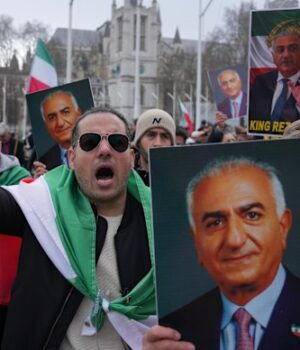
I’ll probably receive death threats because of this column. This has long been the reality faced by dissidents and activists who speak out against one of the bloodiest and most despotic regimes in the world, the Islamic Republic of Iran. But in recent years, it has also become routine for anyone who questions the growing cult of personality which has formed around the son of Iran’s last Shah, Reza Pahlavi.
As an informed observer of Iranian politics, I was interested to learn that the Coalition this month invited Pahlavi to visit Australia. While Shadow Foreign Affairs Minister Ted O’Brien wisely emphasised that it’s “not for Australia to determine who should lead Iran or what form its future government should take,” some of his colleagues were less diplomatic.
Liberal Senator Andrew Bragg gave an interview proclaiming that the Islamic Republic won’t be removed from power “unless we engage seriously with an alternative, and the alternative that we have as a transitional figure is the crown prince”. The Coalition, he added, considers “meeting with the crown prince is one of the most important foreign policy objectives that we have”. That sounds like a tacit endorsement to me.
Pahlavi’s father, Mohammad Reza Shah, was installed to the throne by the US and Britain in 1953 to protect their oil interests after the nationalisation of the country’s oil industry. The Shah was overthrown by the Iranian revolution in 1979, which led to the installation of Iran’s current, hardline regime. His son seemingly also hopes to gain power via a foreign military intervention which has caused ordinary Iranians immense deprivation and suffering.
Liberal MP Julian Leeser then drew an extraordinary parallel between Pahlavi and anti-Apartheid campaigners Desmond Tutu and Winnie Mandela and East Timorese independence leaders Xanana Gusmão and José Ramos-Horta. Pahlavi by his own admission has never held a salaried job and has spent his life trying to wind back the 1979 revolution from his multi-million dollar mansion in Maryland. He hasn’t set foot in Iran for almost 50 years.
Reza Pahlavi is to Desmond Tutu what Prince Harry is to clearing landmines in Africa. Admirable in attracting attention to a worthy cause, no doubt. However, Iranians arguably owe far more to those leaders inside the country who have paid a heavy price for their activism yet lack the dynastical wealth and international profile enjoyed by the son of the former Shah. Leaders which Pahlavi’s inner circle has worked assiduously to discredit.
Detailed investigations published by The Atlantic (and later, Reuters) revealed that Pahlavi’s senior advisers view “crushing the opposition … as important as fighting the regime” and that they “routinely threaten and insult anyone who is not entirely loyal to the man they see as a future king”. Targets include prominent opposition figures like Nobel Peace Prize winner Narges Mohammadi, Nasrin Sotoudeh, Hossein Ronaghi and Toomaj Salehi, all of whom have spent considerable time in prison and have shown immense bravery in standing up to the Islamic Republic while refusing to flee into exile.
Reza Pahlavi does certainly enjoy a large following in the diaspora, bolstered by sophisticated and coordinated online campaigns. While much of this is genuine, some of it has been manufactured. In 2025 the Haaretz newspaper exposed an “Israeli Influence Operation Aiming to Install Reza Pahlavi as Shah of Iran,” while BBC Monitoring identified a pattern of “inauthentic online accounts that have helped shape a wider impression of grassroots backing”.
The Netanyahu government has been unashamedly pushing Pahlavi as leader-in-waiting, particularly after a heavily publicised visit to Israel in 2023. Intriguingly, the US administration has withheld its backing, with Trump rebuffing multiple overtures and expressing doubts over the strength of Pahlavi’s support inside Iran. This comes in spite of his supporters’ efforts to explicitly align Pahlavi’s movement with MAGA, including rebranding as “MIGA” (Make Iran Great Again) and enthusiastically cheering on the current US war on Iran.
Pahlavi’s support for airstrikes on his homeland following January’s massacre of unarmed protesters, many of whom took to the streets in response to Pahlavi’s urging, has raised questions about his fitness to lead.
There are also concerns about the democratic transition plan Reza Pahlavi has presented. In it, he grants himself almost two years of near-absolute authority where he alone will appoint a transitional government and serve as commander-in-chief of Iran’s armed forces. Many fear that Pahlavi, like Iranian Revolution leader Ayatollah Khomeini before him, might promise pluralism and consultation only to consolidate power under himself. Such moves are, after all, something of a family tradition.
I know many monarchists here in Australia. Most are moderate people who care deeply about Iran and believe the prince is committed to building democracy. It’s almost impossible to imagine a more despicable regime than the Islamic Republic, and they are willing to give Pahlavi a chance.
Privately, some express concerns about the illiberal tendencies within their movement, yet few dare voice this publicly. Such behaviour includes openly glorifying SAVAK, the intelligence service of the former Shah responsible for torturing dissidents in Evin prison (also built by the Shah). There have been threats to attack Iranian businesses that refuse to display portraits of Pahlavi in their windows and attempts to shut down non-monarchist anti-regime protests, including some I have witnessed here in Australia. One Canadian activist was allegedly murdered by two Pahlavi supporters after he fell out with the movement.
Ehsan Hakimi of the group Iranian-Australian Republicans believes the Coalition’s engagement with Pahlavi is “an attempt to attract the votes and political support of Iranian-Australians ahead of the next federal election,” especially as the electorates of MPs like Julian Leeser have large Iranian constituencies.
Reza Pahlavi can play a constructive role in efforts to bring an end to the tyrannical, mass-murdering regime ruling Iran. However, he is yet to explain why a democratic transition requires the restoration of the monarchy.
Still want to send me death threats? Go ahead, I rest my case. A movement which cannot tolerate honest debate cannot call itself democratic.
Kylie Moore-Gilbert is a research fellow in Security Studies at Macquarie University and a regular columnist. She is the author of The Uncaged Sky: My 804 Days in an Iranian Prison.
The Opinion newsletter is a weekly wrap of views that will challenge, champion and inform your own. Sign up here.
 Kylie Moore-Gilbert is a research fellow in Security Studies at Macquarie University and a regular columnist for The Age and The Sydney Morning Herald. She is the author of The Uncaged Sky: My 804 Days in an Iranian Prison.