

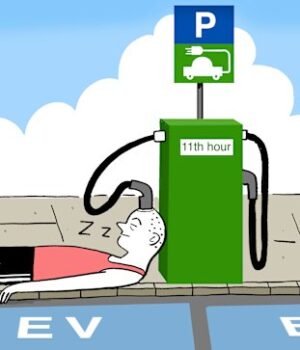
Source : THE AGE NEWS
I confess to being in two minds about climate change. On one hand, I’ll be dead before it gets really bad. On the other, I do care about the potentially unliveable lives we’re leaving for our grandkids.
When I decided to check on our progress in limiting climate change, I discovered the news wasn’t good. But then I realised we’re not dead yet. We haven’t missed the bus; we’re just running to catch up with it.
The first shocking thing I was reminded of in my literature search (a flash name for looking at a bunch of newspaper cuttings) is that it’s become permissible – even fashionable – to be out and proud about being a denier that the climate is worsening and this needs to be prevented.
It probably won’t surprise you that Pauline Hanson is in denial, as is Barnaby Joyce. Anything strike you about this pair? They’re not the sharpest tools in the drawer. It’s hard to imagine how anyone who’d completed high school could be stupid enough to just wave away all the scientific evidence that global warming is real.
What shocked me most was the reminder that the Coalition has dropped its commitment to achieving net zero emissions. Really? And these guys claim to be fit to govern the country?
They should remember this decision the next time they’re wondering why their primary vote has dropped to 17 per cent, its lowest ever. Who wants to be associated with a party that’s opposed to science?
From my friend, this masthead’s Caitlin Fitzsimmons, we learn that the past three years have been the hottest on record, meaning we’re likely to overshoot the Paris Agreement to limit warming to two degrees, and preferably 1.5 degrees, above the pre-industrial average.
This suggests that rather than relying solely on efforts to limit further climate change, we should start considering the other, less satisfactory response of adaptation: what we could change about our living arrangements to make the higher temperature less unbearable.
We’ve still got rising world emissions and, worse, are still approving new coal mines and gas fields. Scientists have warned that two degrees of global warming would make extreme heat 2.6 times worse, raise sea levels by six centimetres, accelerate extinctions, reduce crop yields and global fisheries, and increase extreme weather events.
We’re now seeing in the mid-2020s the sort of changes that climate models were suggesting we would see sometime towards the late 2030s, the scientists say.
But just because we’re now less likely to achieve our target of net zero emissions – that is, where the amount of greenhouse gases entering the atmosphere is balanced by the amount removed – by 2050, doesn’t mean we should give up.
Even if we overshoot the 1.5-degree target, it may be feasible to then come back down. The point is, just because we’re running late doesn’t mean we should give up.
The rollout of large-scale wind and solar farms is not going quite as smoothly. But the shift in recent years has still been extraordinary, putting the country on the cusp of 50 per cent of electricity generation coming from solar, wind and hydroelectricity.
Coal and expensive gas-fired electricity are in decline. The grid coped through periods of high demand last summer without major issues. There are signs that batteries are starting to help ease the cost of electricity, including for households that don’t have them.
In recent speeches, Climate Change and Energy Minister Chris Bowen has had a very positive view of the path ahead. From the need to respond to climate change he can see the foundation for new jobs and new industries. The magic link between the two comes from renewable energy and the opportunities it creates for the manufacture of green metals.
He makes the surprising claim that this latest energy crisis caused by the Iran war is a bigger deal than the oil shocks of the 1970s. Those shocks saw the first serious investments in solar and wind energy – and even the infancy of the electric car.
With the blocking of the Strait of Hormuz, this latest crisis was all about moving fossil fuels around the world without obstruction. Coal and oil and gas are concentrated in particular parts of the world.
Although some countries – including Australia – may have better access to sun and wind than others, every country has its own sun and its own wind, which should greatly reduce the need for, and the cost of, shipping energy around the world.
Whereas renewable energy was an experiment in the 1970s, today it has been proven as cheap and reliable, Bowen says. You may have to pay for solar panels and wind turbines but, after that, sun and wind are free. As well, no greenhouse gas emissions to be dealt with.
The key to cheap, clean and widely available renewables is to turn them into electricity. Bowen says electrification is gaining momentum around the world. An important part of this, of course, is the move to electric vehicles. Last year, world sales of electric cars rose by more than 20 per cent.
According to Bowen, the future belongs to an energy source that is cleaner, cheaper and more reliable. Since the Paris Agreement of 2015, renewable energy has “bent the curve on projected temperature rise”.
In Australia, by the end of last year, more than half of our electricity came from renewables. One in three Aussie homes now capture our abundant sunlight through rooftop solar – the highest rate per person in the world. And now we’re leading the world in battery storage, with 10 per cent of new global battery capacity happening in Australia.
The world of energy is changing markedly as we look on, and Australia is at the forefront of that change.
Ross Gittins is economics editor.
Ross Gittins unpacks the economy in an exclusive subscriber-only newsletter. Sign up to receive it every Tuesday evening.


