


Source :- THE AGE NEWS
If you learn one thing before the Socceroos play on Friday, make it this: Paraguay is not the place to build a radical socialist commune. If it were, Tony Popovic’s squad might be facing some suspiciously Australian-sounding names in their third World Cup group game.
Sometimes, though, things don’t work out the way they were planned. Like a 2-0 loss to the United States. Or a 70-day voyage to what was meant to be a South American utopia, but turned out to be harsh jungle, disease and stringent rules on booze and sex, which in hindsight probably did not suit a bunch of disgruntled Australian sheep shearers.
The latter of these mishaps is quite possibly the lesser known of the two, and yet the bizarre story of the 1893 New Australia settlement – featuring the controversial journalist and socialist propagandist William Lane and his contemporary, the activist, radical poet and literary icon Dame Mary Gilmore, who also appears on Australia’s $10 note – provides an unlikely rich historical thread linking two nations with their football campaigns on the line.
Perhaps even stranger still is that, 133 years later, a couple of thousand descendants of these colonists live in Paraguay today, distinguishable mainly for their fish-out-of-water Anglo surnames. We do not know if they will watch from afar as the Socceroos and Paraguay embark on their first competitive meeting (five friendlies have been played) at Levi’s Stadium. We know only how they came to be there – and why there aren’t many more.
Lane has a lot to answer for in this tale. The England-born reporter migrated to Brisbane with his family in 1885. His coming to Australia is not an unusual narrative in the context of this country’s immigration history; that he left within a decade searching for something better is. He was a prominent figure in the Australian labour movement, a one-time de facto editor of the Sydney Morning Herald and author of rabidly racist rants through his books and pieces in self-founded newspapers Boomerang and the Queensland labour movement’s Worker.
A few factors culminated in Lane’s version of a communist paradise: he already possessed a dictatorial streak, he had no tolerance for alcohol (his father was an alcoholic), and he had mesmerising oration skills.
The tipping point was the disastrous wave of strikes that started with the shearers in 1891 and went on to paralyse shipping, coal and other major industries, galvanising Lane to enact his imagined version of a perfect society: one in which white, English-speaking men could live on the land with their wives and children in equality, sobriety and social harmony. All land and industry would be owned in common, and the proceeds divided equally.
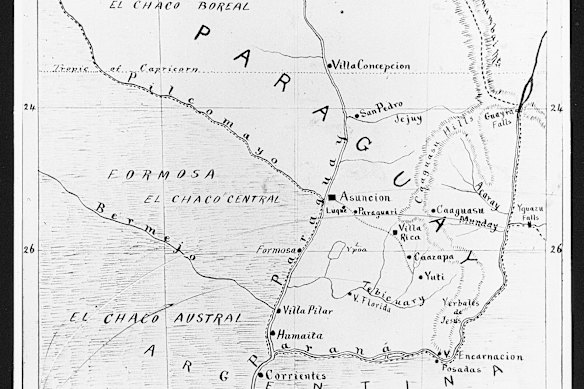
Articles, books and documentaries have traced what happened next. Gavin Souter’s 1968 text, A peculiar people: the Australians in Paraguay, offers detailed insight into how it came to be – and how it all fell apart.
Gilmore, who was Lane’s main assistant in organising the movement, tried unsuccessfully to get a grant of land for their colony in Australia.
“We asked all the state governments, but the only land offered was in the ‘Wilcannia desert’ district in the far west of New South Wales,” Gilmore wrote in the Herald in 1953. “I advised Lane to accept, but he decided that the conditions of the grant were unacceptable, and that South America offered the best prospects.”
So Lane sought to set up his communist nirvana further afield. Paraguay’s population – particularly men – had been obliterated by the War of the Triple Alliance (1864-70), and its government was seeking foreign settlers in a bid to rebuild.
Lane took up the offer of 450,000 acres of free, fertile land and set about rounding up members for his New Australia Movement. As per Souter’s book, membership was granted based on “mateship”. In this context, that meant excluding “any not knowing English”, “any person of colour, including any married to persons of colour”, “any of questionable reputation”, “suffering from any contagious disease” or “objectionable by reason to past disloyalty to the Labour movement”.
Each male member was to contribute all the capital they possessed, at a minimum of £60. Women did not have to pay and, being a supporter of women’s suffrage and all, Lane appealed to single women by stating that neither men nor women would be compelled to marry. It came with the caveat that: “Every single girl who joins us can die an old maid, if it pleases her to be so erratic … but as our bachelors will be as fine a body of men as ever came together in any part of the world … the single girls who go will be less than human if one or other do not win their hearts and make them loving wives and happy mothers.”
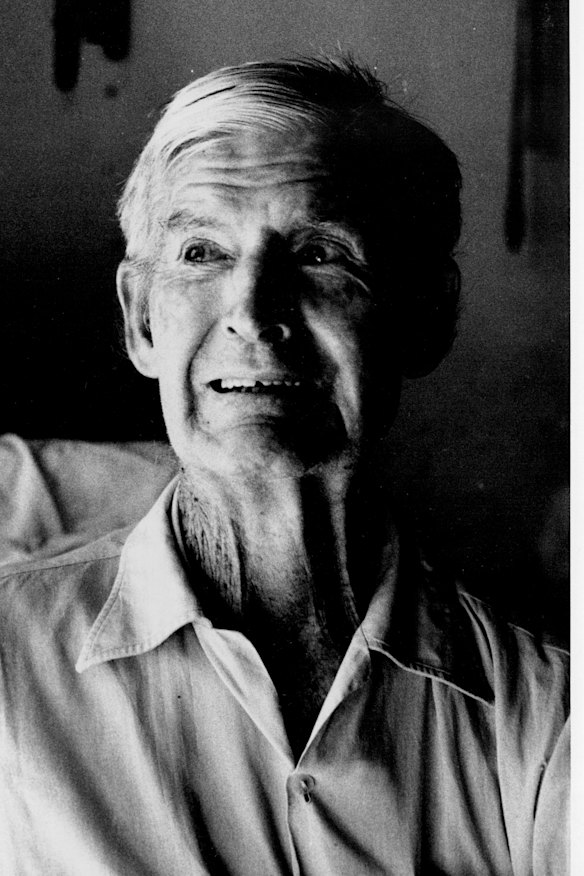
Wood was born at Surry Hills, Sydney, and travelled with his parents to Cosme in 1895.Peter Kevin Solness/Fairfax Media
After a period living together in Balmain, the first voyage aboard Royal Tar took 220 of Lane’s followers to Paraguay, where their colony was founded in September 1893 as Colonia Nueva Australia. Of those, there were 43 unmarried men and seven single women aged over 16. It did not bode well for the Paraguayan government’s requirement they establish 800 families within four years.
Just like the project itself, the voyage was not without hiccups. Contrary to his principle of sex equality, Lane banned single women from being up on deck after 6pm to avoid “promiscuous flirtation”. The people got cranky. Lane resigned as leader. His resignation was not accepted. Lane withdrew to his cabin “like a sulky child”, according to one account, and had a table built just so he could dine separately with his wife and chosen friends. There was “a petty dispute about cutlery” – in short supply after some accidentally went overboard during meals.
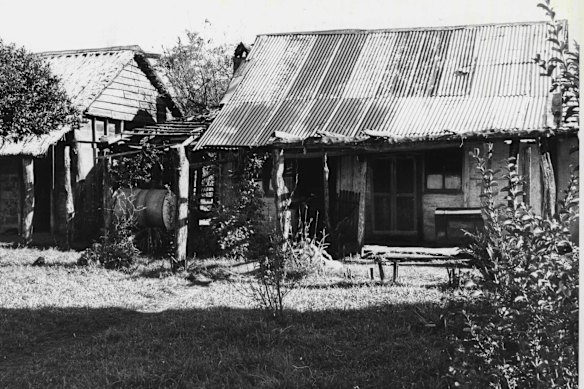
When the already-fractured founders arrived in Montevideo, Uruguay – they would take a river steamer to Asunción, the capital of Paraguay, and then a train and bullock cart to their final destination – Lane went ashore but forbade anyone else to leave the ship until he returned. Several left anyway, with four returning in a state ranging somewhere between “roaring drunk” (according to Lane’s wife) or “a bit merry” (farmer John Rich). Lane’s more loyal supporters called the tourists “scabs”, which prompted a brawl and the drawing of knives (whatever were left).
The whole episode flouted the articles of association stating that “members shall pledge themselves to teetotalism”. As one might imagine, the alcohol abstinence did not work out so well. The other rule flagrantly disregarded by some of the young, single shearers was a ban on fraternising with the local women. Paraguay badly needed men, and Lane was offering the world’s finest bachelors – just not to their women.
Mistrust and disagreements quickly led to a divide – what’s a labour movement without factions? – between Royalists (with Lane, the king) and Rebels (the rule breakers and the suspicious, who had actually travelled to Paraguay “in the hope of bettering themselves materially”). It was not helped by the fact that the wilderness of Paraguay was less a paradise and more back-breaking toil and semi-starvation.
In short, it all fell apart. Some settlers drifted into the cities, and others returned to Australia. A breakaway settlement was formed. New disputes arose when the Royal Tar brought a second batch of nearly 200 New Australians in 1894. The newcomers demanded changes in the administration, and Lane took 45 of his followers to form a third settlement called Cosme, which began its own grim battle for survival.
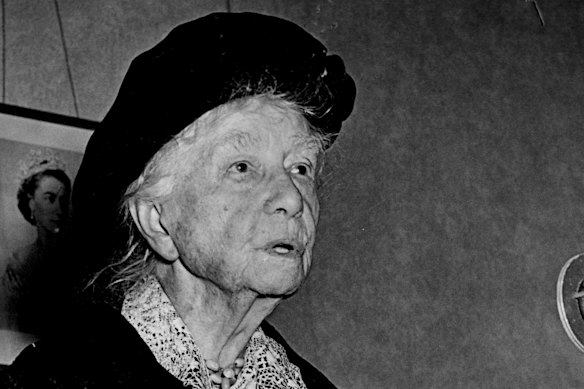
“For two years we lived on vegetable rations – mostly maize, sweet potatoes and beans,” said Gilmore, who went to Cosme as a school teacher in 1895. “But fruit was so plentiful that we fed the pigs on bananas and the cows on oranges. We ate meat only on holidays and special occasions, eked out with a little poultry and eggs.”
After some meagre progression, the lack of single women doomed the Cosme colony to failure, and its population never exceeded about 100. Five years after leaving Australia, Lane threw in the towel and moved to New Zealand, returning to journalism – for a right-wing publication. Some, however, remained, and their descendants still form a small part of Paraguay’s cultural mosaic. They no longer speak English or have Australian accents – and none are in Paraguay’s World Cup squad – but carry physical traits and Anglo names such as Wood and Burke. A few, such as Peter Wood, migrated to Australia in the 1960s and settled in Griffith.
Author Ben Stubbs visited the Griffith family in Cosme in 2012. He also went to New Australia.
“Under the Australian and Paraguayan flags in the plaza I meet the locals, including the Joneses and the Murrays, who are the descendants of Muttaburra horseman Edward Murray,” he wrote for Australian Geographic. “I meet the Butterworths, who ask me if I can help them with visas. I visit the local cemetery with fair-skinned Susan McCreen. She tells me of the Australians who left here to fight with the Allies in World War I.”
Maybe both flags will be flying on Friday.
Get across our World Cup coverage
News, results and expert analysis from the weekend of sport sent every Monday. Sign up for our Sport newsletter.