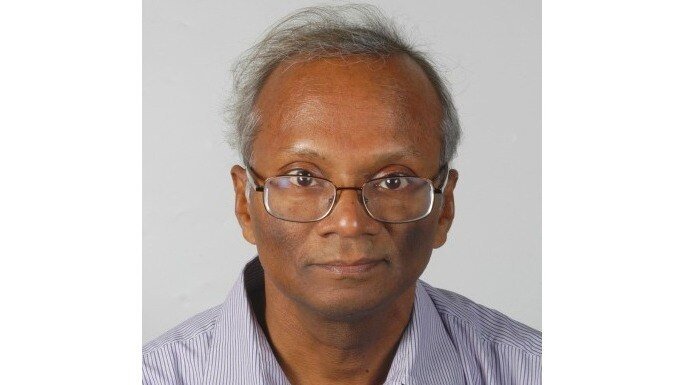
Source : INDIA TODAY NEWS
Deepak Dhar, an IINSA distinguished professor and one of India’s most respected theoretical physicists, has been awarded the 2026 Dirac Medal by the International Centre for Theoretical Physics (ICTP), a recognition considered among the highest honours in the field of physics.
The award, instituted in 1985, has over the decades been associated with some of the biggest names in theoretical physics, including several Nobel laureates. Dhar is among four physicists selected this year for their important contributions to statistical mechanics.
advertisement
HONOUR FOR WORK IN STATISTICAL MECHANICS
ICTP said the 2026 Dirac Medal recognises physicists whose work has significantly advanced the understanding of statistical mechanics, the branch of physics that studies how systems with a very large number of particles behave collectively.
The field is not limited to theoretical research. Scientists say it provides tools that are increasingly useful in understanding artificial intelligence, complex networks, and even financial markets.
Dhar has long been associated with the International Centre for Theoretical Sciences, Bengaluru, and has spent decades working on problems related to complex physical systems.
A JOURNEY THAT BEGAN IN A SMALL TOWN
Born in 1951 in Pratapgarh, Uttar Pradesh, Dhar grew up in a Hindi-medium environment. His mother hoped he would become an IAS officer, but his father encouraged a different kind of curiosity.
He once recalled that his father regularly brought home science magazines.
One magazine in particular, Understanding Science, left a lasting impression on him.
Dhar studied at Allahabad University before moving to IIT Kanpur for his MSc. He later went to the California Institute of Technology (Caltech) in the United States, where he received a Richard Feynman fellowship.
At Caltech, he worked closely with the legendary physicist Richard Feynman and served as his teaching assistant. Dhar completed his PhD in 1978.
For many young scientists, such a path would naturally lead to a career in the United States. Dhar, however, chose to return to India.
RETURN TO INDIA
After finishing his doctorate, Dhar joined the Tata Institute of Fundamental Research (TIFR) in Mumbai. He also served as a professor in IISER Pune for almost 8 years, contributing to the development in the field of Physics and taught hundreds of students.
At TIFR, he worked without a formal mentor but became part of a strong community of theoretical physicists. Over the next four decades, he made major contributions to statistical physics.
Among his best-known achievements is Dhar’s burning algorithm, developed in connection with sandpile models, which has become an influential concept in the study of self-organised criticality and complex systems.
A SERIES OF MAJOR RECOGNITIONS
The Dirac Medal is the latest in a string of international and national honours received by Dhar.
In 2022, he became the first Indian to receive the Boltzmann Medal, widely regarded as the highest honour in statistical physics.
Reflecting on that recognition, Dhar had said:
“While I am the first Indian to win the Boltzmann Medal, I am not the first Indian who has done good work in statistical physics.”
In 2023, the Government of India awarded him the Padma Bhushan, the country’s third-highest civilian honour.
The ICTP Dirac Medal is a prestigious annual award given by the International Centre for Theoretical Physics in honour of physicist Paul Dirac. Started in 1985, it recognises outstanding work in theoretical physics and mathematics.
The medal is not awarded to Nobel, Fields, or Wolf Prize winners, although several past Dirac medallists later went on to receive those honours.
For many in the scientific community, Dhar’s story carries importance beyond awards and medals.
A student who learned English through science magazines in a small town in Uttar Pradesh went on to study with one of the world’s greatest physicists, had the opportunity to build a career abroad, yet chose to return to India and contribute to Indian science.
His latest recognition from ICTP is being seen not only as a tribute to a distinguished physicist, but also as a reminder of how curiosity, persistence, and a commitment to science in India can shape achievements that earn global respect.
– Ends
SOURCE :- TIMES OF INDIA