
Source : the age
Cinema is in a sex crisis. At least that’s what a number of cinephiles and scholars have insisted over the past few years, their headline question being: Why aren’t people engaged in the act on the big screen any more?
With franchise blockbusters and superhero flicks dominating the box office, sex and desire have seemingly become afterthoughts. According to a 2024 study, there’s almost 40 per cent less sexual content in big-release films compared with the start of the century. Gen Z, meanwhile, has apparently sworn off carnal desires, with some studies suggesting the number of young people who haven’t had sex in the past year doubled between 2010 and 2024.
But despite this so-called “puritanical era”, 2026 has delivered a lot of raunch. In Harry Lighton’s Pillion, a timid parking warden experiences a sexual awakening with a dominant leather-clad biker, including the raunchiest picnic encounter imaginable. In Olivia Wilde’s The Invite, meanwhile, a disillusioned married couple are introduced to the world of polyamory and group sex through their free-loving neighbours.
Sure, blockbusters like The Odyssey are still largely sexless. But that hasn’t stopped indie films – and even certain larger titles such as Wuthering Heights and Marty Supreme – from reviving cinematic smut.
“We’re in a moment where there are real, material threats to sexual expression and gender identity,” says Dr Astrid Lorange, a senior lecturer at UNSW Sydney’s School of Art & Design. “Indie films might be responding to audiences’ tendencies to moralise sex on-screen by attempting to show more nuanced and complex representations of sex, desire and fantasy.”
To be sure, sex never disappeared from screens. Even during the “dry spell”, the likes of Poor Things, Challengers, Babygirl and Saltburn all tested boundaries around desire and sexuality.
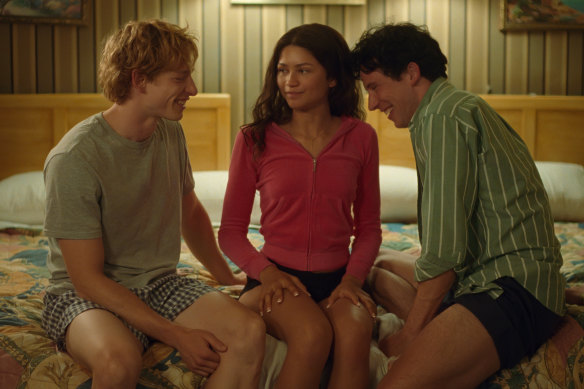
Yet, this year’s “sexy” films seem different – they adopt a far messier, and more realistic, approach to sex.
In Gregg Araki’s I Want Your Sex, art world intern Elliot (Cooper Hoffman) becomes swept up in a workplace affair with his older, domineering gallerist boss (Olivia Wilde). Despite the obvious abuse of power, he develops a liking for being spanked, whipped and chastised. Sex underlines everything in the film, from the phallic art displayed to the conversations around Gen Z “wokeness” destroying pleasure. Its strength comes from the imperfection it reveals – experimenting with sex can be awkward, embarrassing and confusing. It can also be liberating.
Jane Schoenbrun’s Teenage Sex and Death at Camp Miasma explores similar themes, though with a somewhat lighter touch. A young queer filmmaker is hired to reboot her favourite ’80s slasher, so she attempts to recruit the franchise’s original “final girl”. But what begins as a filmmaking exploit becomes a journey into shared sexual repression, the psychological heft of queer desire, and a search for genuine intimacy.
“Influential concepts like the male and imperial gaze, as well as trends towards broader media representation, have changed fundamentally how we see, interpret and judge films for their approach to sex,” Lorange says.
“There’s a greater awareness of the way sex is a site in which power relations are reproduced and contested, as well as a site in which fantasy comes into contact with the real. As such, there are more nuanced mainstream accounts for sex in relation to racism, homophobia, transphobia, ableism.”
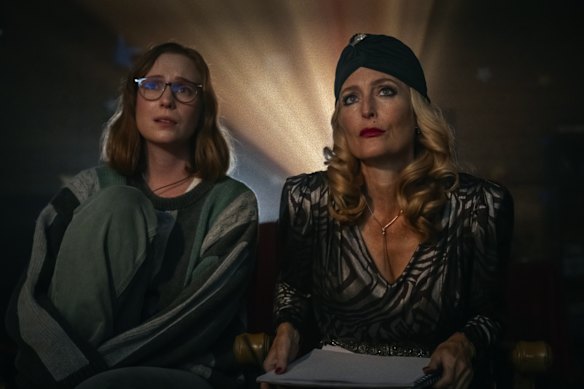
These films aren’t just showing sex just to titillate. Dean of RMIT’s School of Media and Communications Lisa French says the sex instead feels intentional and timely.
“Our screen content always reflects the preoccupations of the culture that produced it. This is potentially about intimacy and its difficulties, fuelled by a world where the digital rather than the human occupy more time than they did before.”
This is probably helped by the fact that many of the directors are female and/or queer – their sex scenes don’t cater to the traditional male gaze. For example, Olivia Wilde’s The Invite doesn’t show the women as passive objects of desire; rather they’re as sexually curious as the men.
This shift is clever for two reasons. First, studies have already suggested zoomers aren’t as interested in seeing sex on-screen, but they could be more intrigued by nuanced, realistic conversations around why that is in the first place, as seen in I Want Your Sex.
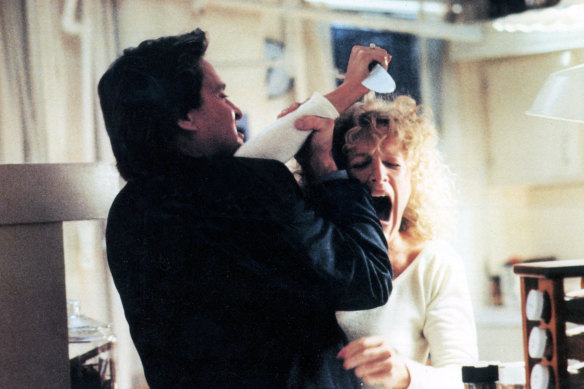
Second, today’s sexy films would struggle to meet the steaminess of ’80s and ’90s erotic thrillers such as Fatal Attraction and Basic Instinct. They were so intent on being “sexily subversive” that ethics largely went out the window. In comparison, this year’s films seem genuinely interested in pleasure – they don’t shame kinks or desires, and usually operate within consensual parameters. They’re also more likely to hire intimacy co-ordinators, Lorange notes.
“We need to be able to critically engage with sex on-screen, as well as be afforded the opportunity to find pleasure, humour and insight in how cinema grapples with sex. It’s never ‘just’ sex. It’s always about many other things, like gender, race, class, power and history. A good film recognises this.”
There are exceptions, of course. Will Gluck’s One Night Only is set in a dystopian reality where premarital sex is illegal except for one annual 12-hour window (The Purge, but with sex). However, instead of focusing on repressed singletons discovering liberation through fornication, it opts for a more traditional approach wherein two people seek only innocent connection on sex purge night. There are subsequently no explicit sex scenes – arguably a missed opportunity.
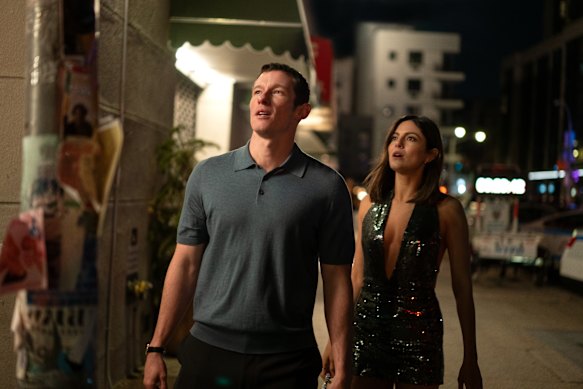
Meanwhile, French says some recent films are still sexually gratuitous or violent, particularly against women.
But most of what younger people see isn’t on the big screen. Lorange notes that in “an era of platform media and algorithmically organised social media feeds”, the impact of the film industry on sexual norms is arguably less.
If audiences are looking for sex done well on-screen, French suggests turning to TV. “Shows like Sex Education opened up space to see the complexities across generations and also give it the awkward reality of how teens encounter it. Sexual identities are also more fluid in that show.”
Similar could be said of Heated Rivalry and its approach to queer eroticism, or Dying for Sex and its exploration of mortality intersecting with desire.
Nevertheless, sex has still clearly been on the minds of many filmmakers this year. The true beauty in these iterations is in how “unsexy” the sex is. Whether it’s Seth Rogen throwing his back out right before getting groovy with his neighbour in The Invite, or Cooper Hoffman falling too deep for his boss-turned-dom in I Want Your Sex, these films depict the oftentimes messy, complicated side of pleasure. It’s largely through this mess that many of the characters – and we ourselves – discover what we really want, and how we feel about our place in the world. It’s self-enlightenment via eroticism – what’s sexier than that?
Must-see movies, interviews and all the latest from the world of film delivered to your inbox. Sign up for our Screening Room newsletter.