

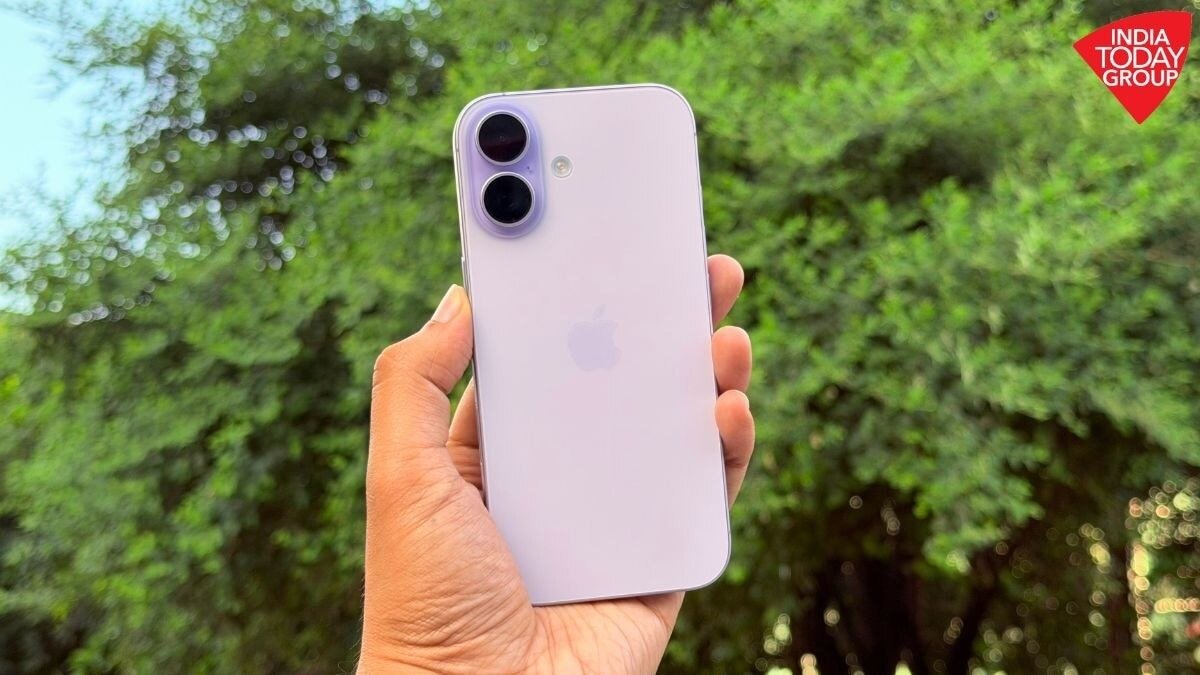
Source : INDIA TODAY NEWS
Historically, birth rates usually fall in a region or society as living standards improve. But researchers have noticed something different happen over the past two decades. Since 2007, global birth rates have seen virtually a similar rate of decline despite different economic and social conditions. But how could this happen? Two recent studies claim that your iPhone may be the culprit.
advertisement
A recent study published by the National Bureau of Economic Research states that the US general fertility rate stayed roughly constant at 65 to 70 births per 1,000 women from 1980 through 2007. But then it began a sharp, sustained decline. By 2024 it had fallen to 54 – a 22 per cent drop over 17 years.
But measuring the impact of the iPhone in declining birth rates is tricky. There are multiple factors that could be at play, including major global events such as the 2008 financial crisis. The study focusses on the potential impact the iPhone may have had on birth rates in the US between 2007 and 2011 – when the device was available only via carrier AT&T.
Birth rates fall in areas with iPhone connectivity
From its launch in June 2007 through February 2011, the iPhone was available in the US only through AT&T. This means a county’s exposure to the iPhone during those years was determined by the reach of AT&T’s mobile broadband network. The researchers used this as a natural experiment, comparing counties with near-universal AT&T coverage against those with little or none.
They found that iPhone access reduced births by 4.5 to 8 per cent among women aged 15 to 19, and by 3.2 to 6.6 per cent among women aged 20 to 24. Taken together, these estimates imply that the iPhone explains 33 to 52 per cent of the decline in the general fertility rate among women aged 15 to 44 during the 2007–2011 period.
Between 2007 and 2024, birth rates fell by 70 per cent at ages 15 to 19 and 47 per cent at ages 20 to 24, but only 7 per cent at ages 30 to 34, while rates at ages 35 to 39 actually rose by 14 per cent.
In counties without AT&T coverage, teen births fell by 13.8 per cent, compared with 18.9 per cent in counties with partial coverage and 26 per cent in counties with near-universal coverage.
Did the iPhone impact birth rates?
The researchers state that while the iPhone may not be the only factor at play, it likely played a big role in falling birth rates. It is believed that as the iPhone and other modern smartphones gained popularity, people started to spend less time with friends in the physical world, with a fall in sexual activity alongside rising consumption of pornography, which the researchers described as a possible substitute for sex.
Google searches for ‘porn’ more than doubled over the study period, while the share of respondents in the University of Chicago’s General Social Survey who said they had watched an X-rated film in the previous year rose at every age from 25 to 44 between 2000 and 2018.
iPhones may have given young people better access to information on avoiding pregnancy, including contraception and abortion.
Not just the US, iPhones may have done this globally
Another study, by University of Cincinnati economists, looked at smartphone penetration and teenage fertility rates in 128 countries using World Bank data. The study found that countries with very different healthcare systems, welfare regimes, abortion laws, religious traditions, recessions and demographic trends all saw similar breaks in the same period.
“Whatever caused it was something global — something that arrived in roughly the same form in all of these places at roughly the same time,” researchers wrote, concluding that the evidence pointed to a “common global technology shock.”
In countries including Iran, Costa Rica, Guatemala, Chile, Mexico and Turkey, they found that teenage fertility declines accelerated once smartphones became a mass phenomenon. They also tested the idea in the United States using data on wired broadband and 4G mobile networks, and found that teenage fertility fell fastest in counties with better high-speed access.
The study also found that in-person socialising and communicating fell from 68 minutes per day in 2003 to 38 in 2019 – a 44 percent decline. On the other hand, people were spending more time on computers – from 22 to 96 minutes per day – a 336 percent increase.
Both studies acknowledge that the iPhone is far from the only factor in declining birth rates. However, the studies come at a time when birth rates are falling in both rich and poorer countries. The US fertility rate is at an all-time low, while Canada recorded a fertility rate of 1.25 children per woman in 2024, placing it below the 1.30 threshold cited there alongside countries such as Japan, Singapore and Spain.
Leading Asian economies are also facing shrinking populations. China ended its one-child policy in 2016, while Japan and South Korea have spent heavily on pro-natal policies with little effect. Although some of the world’s poorest countries, including in sub-Saharan Africa, still have high birth rates, middle-income countries such as India and Brazil are also seeing fast declines.
– Ends
SOURCE :- TIMES OF INDIA