Source : the age
On February 22, 2012, in an upbeat double-act, then-Liberal frontbencher Christopher Pyne and former Howard government minister Amanda Vanstone teamed up as subjects on the first episode of Kitchen Cabinet. They were the game guinea pigs for an idea tailored to the skills of the host, Canberra press-gallery journalist and enthusiastic baker Annabel Crabb. Vanstone, recently returned from her ambassadorship in Rome, made tomato pasta; Pyne, a self-confessed clueless cook, barbecued a couple of steaks; Crabb provided a Persian love cake. And an enduring homegrown format was born.
“For as long as I’ve written about politics,” Crabb explained in the opener, “I’ve noticed that you can always get more out of people if you sit down to eat with them. Even the most disciplined politician will soften if there’s food and wine involved. The very best way to get to know someone is in their own kitchen.”
Much has changed in the social and political climate and in the media between the initial, six-episode season and the recently concluded eighth series. In that time, Kitchen Cabinet has become one of the staples of the ABC’s light-entertainment line-up.
Yet, from the start, there have been brickbats: that it’s soft and doesn’t pose tough questions; and that it’s a PR gift for the guests. One 2015 episode, in which then-social services minister Scott Morrison cooked a Sri Lankan curry but wasn’t grilled about his previous policies as immigration minister, drew notable heat. More recently, the critical chorus has included the complaint that the show is old, tired and past its use-by date.
Yet, in these fractured and often-febrile times, we need what this show serves up more than ever. The perspective that it presents on our politicians is different from that available elsewhere. The charges that it’s soft overlook its attributes. And, importantly, it presents a view of politicians as people like us: with homes and families and formative experiences. As well as kitchens. Removed from the combat of political contest, separated from the soundbites and scripted press calls, the subjects are presented as human beings.
Maybe how they cook a curry is irrelevant to how they do their jobs, but having a fuller appreciation of who they are is beneficial.
That’s a valuable perspective because the world is overloaded with ugly and dismaying examples of what happens when we fail to see those with whom we might disagree, or even actively oppose, as people rather than targets. And the accounts from politicians – especially women – attest to the vile threats and abuse that result from this mindset.
Over the years, I’ve rarely seen an episode of Kitchen Cabinet that didn’t tell me something I didn’t know about its guest or portray the pollie serving the meal – some nervously, some smoothly assured – in an unexpected and illuminating light.
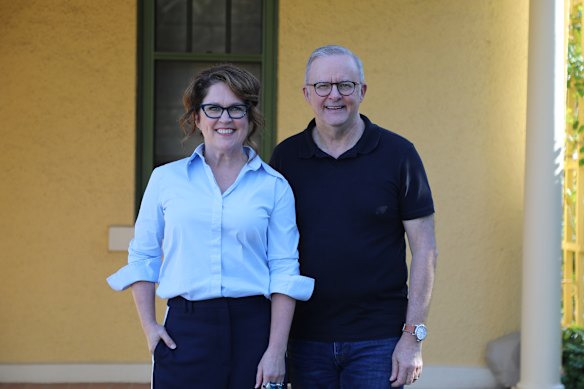
Perhaps, for some viewers, the generally convivial nature of the interactions masks their productive candour. The show set out to be conversational, not confrontational, and it was never intended to be 7.30, Insiders or, back in the day, Lateline or Q&A. It complements the news and current-affairs programs, it’s not endeavouring to duplicate them.
Beyond cheesy publicity stunts – think babies, hard-hats or high-vis vests – politicians are typically seen through a narrow lens: attack or defence positions, policy statements. Maybe how they cook a curry is irrelevant to how they do their jobs, but having a fuller appreciation of who they are, and why they do what they do, is beneficial.
In recent years, mistrust of political leaders and major parties has escalated; changes in media have allowed the audience more latitude to choose the type of information that they wish to receive amid an unceasing news cycle. As social media and streaming services have mushroomed, heritage media has haemorrhaged. Meanwhile, the rising popularity of podcasts has presented a new arena for politicians – although the recent “melongate” controversy demonstrates its potential pitfalls, even for a seasoned player like the Prime Minister.
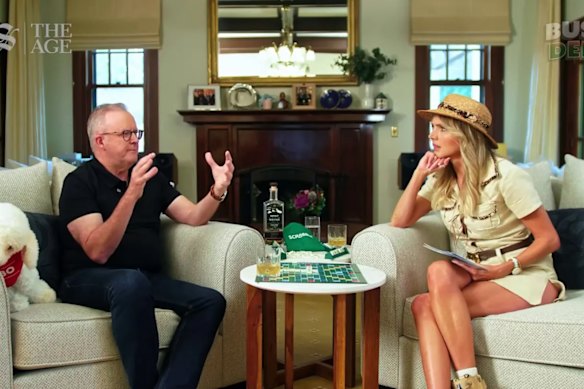
It’s understandable that pollies and their minders might view some of these newer options as attractive, a way to reach those who no longer bother with broadcast networks and ideally, to connect with younger voters. But it’s also a niche audience and arguably one that has the participants preaching to the choir, while Kitchen Cabinet, screening in primetime on the national public broadcaster and then freely available on ABC iview, offers broader possibilities.
It’s no cakewalk though, and charges that the show goes soft on its subjects can be unfair. The atmosphere isn’t antagonistic – although it can get tense – and probing questions are posed. This season, for example, Crabb quizzes Opposition Leader Angus Taylor about his statements on Insiders about “taking people from bad countries”.
“Be very careful with this,” he cautions, clearly tensing up. “I am being,” she responds. “Long interview, full of context.” The exchange is framed in strained smiles, but the sensitivity of the subject flashes like a warning light.
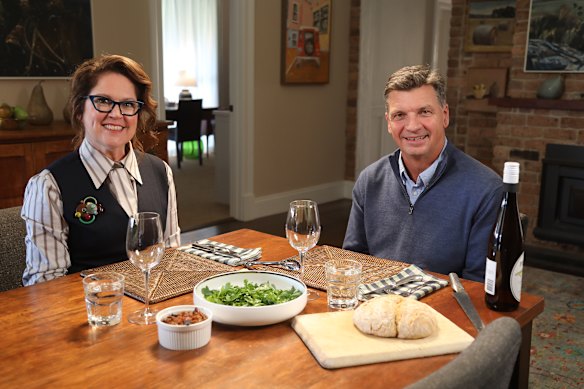
Jewish Labor MP Josh Burns is asked how he and his partner, Victorian Animal Justice Party MP Georgie Purcell, navigate their relationship given their differing views on the Middle East. Nationals deputy leader Darren Chester is asked how voters can differentiate between his party and Pauline Hanson’s when its former leader, Barnaby Joyce, defected to One Nation.
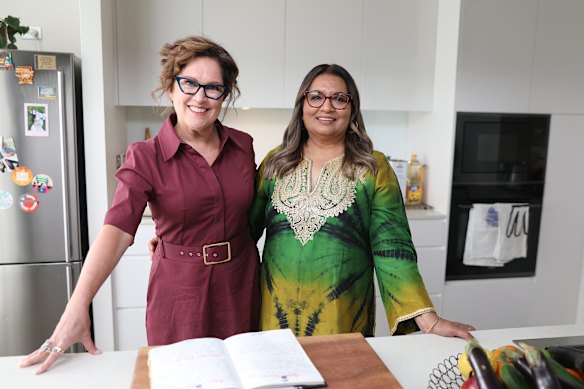
After she identifies the way in which Muslims are often simplistically regarded as a homogeneous group, Greens deputy leader Mehreen Faruqi is asked, “When you hear commentary about how Muslim people think or what their characteristics are as a group in the parliament, what does that feel like as a workplace?” Faruqi describes how she’s marginalised and how her religion is denigrated by colleagues: “In which other workplace would even a skerrick of this be tolerated?” she asks, radiating anger and pain.
Beyond the dialogue, there are also the insights that come from seeing someone on their home turf. I still remember the 2013 episode with Labor MP Jenny Macklin and her meticulously arranged, readily accessible spice drawer, a clear indication of a person who organises things efficiently.
The same year, SA independent senator Nick Xenophon prepared taramasalata and tzatziki in his office kitchen before taking Crabb to a local Greek cafe, where he grilled octopus. Explaining his failure to invite her to his home, he said that he lives alone and his house is “pretty messy”. So we saw a man married to his work, keen to for the opportunity to explain it and endeavouring to contort himself into the requirements of the format.

The 2015 episode with Victorian senator Ricky Muir, from the micro Australian Motoring Enthusiast Party, had him cooking trout and vegetables over a campfire in front of a bush cabin near his home and speaking with more common sense than much of his portrayal in the media had allowed.
That the show offers these glimpses, creating impressions that become indelible, is a notable asset. Part of its value for me has been that I’ve regularly come away from an episode with a grudging respect for someone about whom I’d previously had only unkind thoughts.
Over many years, Kitchen Cabinet has offered politicians some risk along with the possibility of beneficial reward. Which also suggests that it’s achieved Crabb’s goal outlined at the outset of offering us an opportunity to get to know her subjects better.
Yet for the 2026 season, even the possibility of an empathetic profile wasn’t sufficiently enticing to persuade Pauline Hanson to break bread with Crabb. Her shunning of the ABC might have cost the One Nation leader a chance to present herself in a different light to an audience that might not be her traditional support base. And the ratings – Kitchen Cabinet is a regular top 20 program – indicate that it’s still a substantial one.
Kitchen Cabinet is streaming on ABC iview now.