Source : THE AGE NEWS
For almost a century, they were the one-stop shop providing a sense of opulence and occasion that drew reliable foot traffic into shopping centres across Australia.
But the slow, then sudden, demise of David Jones has thrown into question the symbiotic relationship that underpinned decades of prosperity for both department stores and malls.
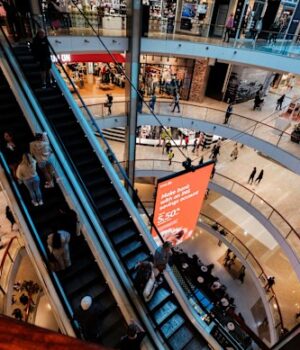
Now, operators of suburban shopping centres are facing their own identity crisis, as they try to figure out how to re-engineer their offerings and layouts to thrive in an era without the anchor tenants that built them.
Thursday’s decision from David Jones’ chief executive and board of directors to hand over control of the company to voluntary administrators and receivers, and the looming closure of potentially most of its stores and thousands of associated job cuts, contained echoes of a trend seen across the world in recent years as the department store concept loses relevance.
World’s oldest department store
Founded in Sydney in 1838, David Jones holds the title of the world’s oldest department store still operating under its original name.
However, its glamorous history and current strife form the hallmarks of a global narrative arc – complete with retail legend and obituary – that have already been written overseas.
They all begin in a similar way. Opening an initial shop on a high street in the 18th or 19th century and subsequently booming as a centre of high-end fashion and consumer goods through the first half of the 20th century.
“Department stores were the high street under one roof,” said Gary Mortimer, a professor of retail and consumer behaviour at the Queensland University of Technology.
Big name brands sold exclusively through different department stores. Shop windows were erected to celebrate holidays and woo customers and children ahead of Christmas. Bathrooms and other services meant people, especially women, dwelled longer.
“It was iconic, you’d walk into the Elizabeth Street David Jones [in Sydney] and there’s a pianist playing, you’d go downstairs for the champagne and oyster bar, you’d wander around, try on. It was a sense of occasion,” he said.
In the United Kingdom, the obvious parallel is with Debenhams, which began as a high street shop in 1778 and expanded to more than 100 locations across the country and became a household name. In the United States, it was the likes of Macy’s, Nordstrom and Saks Fifth Avenue, which grew to consume rival Neiman Marcus.
In the 1960s, David Jones was the epicentre of Australian high society. “It was the place to see and be seen,” 90-year-old Laudie Sneddon, who worked as a graduate pharmacist at the flagship Elizabeth Street store in Sydney in its heyday, recalled to this masthead.
Push into the suburbs
Then came the expansion into suburban shopping centres. These stores were often less flashy outlets to capitalise on the explosion of malls and car travel in the years after World War II.
“In the past, having a Myer, Grace Brothers or David Jones was vital for a shopping centre, but it’s become less vital.”
Gary Mortimer, professor of retail and consumer behaviour at the Queensland University of Technology.
However, this was ultimately the first of several waves of change that would spell upheaval for Australia’s department stores, Mortimer said. The next wave was brands opening their own stores instead of selling through the likes of DJs, Myer and Grace Bros, followed by the more brutal waves of e-commerce and cheap fast fashion, he said.
“You didn’t need to go to the department store any more,” Mortimer said.
Sales began slowing, and attempts to compete with cheap new retail players with much lighter, cheaper retail and staffing costs proved difficult. The COVID-19 pandemic accelerated the shift away from bricks and mortar.
In 2021, Debenhams entered administration, with all physical shopfronts subsequently liquidated. It exists solely as an online retailer today.
Meanwhile, in the US, Macy’s store count has shrunk dramatically, while Nordstrom is closing its legacy high-end stores to open more of its Rack discount offshoots.
And in January this year, Saks Global filed for bankruptcy, with just a fraction of its stores emerging from the process.
Similarly, while David Jones managed to push its online sales to 20 per cent of its overall revenue, this wasn’t enough to help meet its bricks-and-mortar rent payments.
From here, many observers say a slimmed-down version of David Jones could emerge from administration, perhaps limited to its flagship CBD locations plus certain others at boutique, profitable shopping centres. Focussing on its legacy of prestige and grandeur will be key, Mortimer believes.
London’s Harrods and Selfridges, and Paris’ Galeries Lafayette and Le Bon Marché have been flagged as models of success for historic department stores thriving in the modern day.
Malls move on
Just as their fortunes were intertwined in the good years, the global decline of department stores had coincided with a downturn for shopping centres.
“In the past, having a Myer, Grace Brothers or David Jones was vital for a shopping centre, but it’s become less vital,” Mortimer said.
Data from Scentre Group, which operates Westfield centres, show David Jones was charged less than half the rent rate per square metre compared to other customers renting its retail spaces. Without the pull from the likes of David Jones, many suburban centres will have to do much more to justify their premiums.
While the death and the rebirth of the mall has been well documented over the past decade, experts say there are green shoots in the future for shopping centres – providing they innovate.
After years of issues, a new report released by Urbis and the Shopping Centre Council of Australia notes retail sales grew three per cent over the year to June 2026, with customer foot traffic at shopping centres up by 2 per cent nationally.
Younger shoppers are driving the trend. PwC research found shopping centre foot traffic among consumers aged 14 to 29 rose by 57 per cent year-on-year.
Elissa Stewart, director at Urbis, said most centres have actually seen an increase in foot traffic in the post-department store era, with curation of new tenants key. She gives the example of replacing three levels of a David Jones-type department store with three “mini-major” tenants such as a supermarket, a JB Hi-Fi, Rebel Sport or a Mecca.
“You’ve got to ensure balance, but the combined power of those three tenants can be more than a department store to draw people in,” Stewart said.
Discount retailers are also a promising trend. Mortimer said that as cheap fast fashion was a factor in the demise of department stores, outlets such as Kmart, Big W, TK Maxx and Harris Scarfe “have suddenly become the ideal tenant”.
A third space
Services that draw people in are another trend for centres, notes Vanessa Rader, head of research at Ray White. Entertainment businesses, fine dining, activities, and gyms are sought after as they bring customers in during typically quiet late nights and early mornings. Installing EV chargers in a car park also draws in potential shoppers with time to kill while they wait.
Healthcare and libraries are another growth opportunity, Mortimer predicts, for centres that successfully innovate.
“Despite interest rate increases, people are still spending on small luxuries, on what they eat or a fun activity to do,” Rader said. “Wellness is a big area too. We still spend on gyms and float tank facilities.”
Ultimately, the goal for centres now is to get customers to spend more time dwelling in between activities. “It’s about removing some of the sterile elements that we think of with shopping centres,” Urbis’ Stewart said.
Seizing an opportunity to be a go-to “third space” – a term for environments outside of home or work where people can spend time comfortably while spending little or no money – is an important way to stand out, Stewart said. “Enhancing that sense of place, bringing the outdoors and nature inside, water features, lighting, better food options, lounging and creating that space where people actually want to be.”
Malls have previously held this role, especially for teens after school and retirees whiling away a day. However, with the cost of everything going up, and investment in centres capitally constrained, “it’s not an easy fix,” she said.
With Courtney Thompson
The Business Briefing newsletter delivers major stories, exclusive coverage and expert opinion. Sign up to get it every weekday morning.
 Elias Visontay is a National Consumer Affairs Reporter at The Sydney Morning Herald and The Age.Connect via email.