

source : the age
The abandonment of Queensland’s clean energy target and delayed closure of coal-fired power is driving away investment in renewable energy, the industry peak body will warn in a speech revealing of the increasingly hostile relationship between the sector and the Crisafulli government.
Smart Energy Council chief executive David McElrea’s keynote address to the body’s conference on Tuesday will accuse the LNP administration’s energy policy of contradicting the shift towards solar, batteries and clean energy in the business sector and households.
“The Queensland government is moving in the opposite direction,” his speech will say.
“The Crisafulli government has repealed the legislated renewable energy targets, abandoned a firm coal timetable, committed to running state-owned stations to their technical lives and left open further extensions.”
Last year, Treasurer and Energy Minister David Janetzki scrapped the former Labor government’s plan to end the state’s reliance on coal-fired power by 2035, delaying the closure of the publicly owned assets to at least 2046.
The LNP’s energy plan included a five-year spend of $1.8 billion to upgrade the state-owned coal-powered assets.
The government retained the net zero emissions by 2050 goal but repealed the renewable energy target, while the state’s energy policy shift included new laws to seek greater community consultation to approve major clean energy projects.
Last month, Premier David Crisafulli successfully secured an exemption from national cabinet to enable Queensland to power AI data centres with coal and gas, despite the Albanese government’s insistence they be exclusively fuelled by new renewable energy sources.
McElrea’s wide-ranging critique claimed the “most damaging” impact of the state’s energy policy was a deterioration in investment certainty.
“Without firm closure dates, renewable investors cannot confidently price future output or reach financial close,” he will say.
“The overall strategy of the LNP government is clear: remove targets, erase closure dates, protect coal, make renewable investment harder and let the project pipeline thin – then point to the shortage you created as proof renewables cannot do the job.
“That is a self-fulfilling strategy to make renewable energy uninvestable. It is ideology, not economics or engineering.”
But Janetzki refuted the claims, noting the Clean Energy Council’s latest quarterly investment report which showed Queensland has the largest volume of large-scale renewable generation financially committed or under construction.
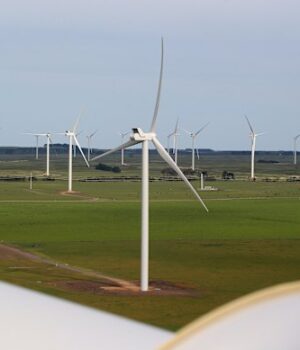
The treasurer also pointed to last week’s green light of a $1.7 billion Gawara Baya wind farm in North Queensland by Danish investment giant Copenhagen Infrastructure Partners – the eastern seaboard’s largest wind farm in more than two years.
“Queensland leads all states in large-scale wind and solar projects financially committed or under construction and the Crisafulli government continues to encourage private sector investment in new generation and storage under our open for business approach,” Janetzki told this masthead in response to questions.
Grattan Institute energy policy expert Tony Wood said there were broader market and political sentiment issues that had contributed to an investment drought in the sector.
But he said the state government’s suite of policies “certainly created a significant barrier” to investments.
“All these announcements that have happened [since forming government in 2024] – keeping coal running longer, having less aggressive renewable projects and effectively, from a planning perspective, throwing a lot of the renewable projects into at least doubt.
“The end result is it creates significant unpredictability for investment.”
The industry body will also use the Smart Energy Queensland Conference to call for coal-fired power stations to be brought properly into the Safeguard Mechanism, which would impose costly carbon credit demands on assets operating beyond previously proposed closure dates.
This would apply to previously announced closures of Queensland assets, including Callide B (2028), Tarong (phased from 2032), Tarong North (2033), and Stanwell (2033).
“Renewable energy, storage and transmission projects require billions of dollars of long-term investment,” McElrea said.
“Investors and lenders need to know when replacement power will be required. Every time a coal closure date is pushed back, that investment becomes harder to finance.
“That delays new generation, delays jobs and creates worker uncertainty, and leaves consumers exposed to the cost and unreliability risks of ageing coal.”
Start the day with a summary of the day’s most important and interesting stories, analysis and insights. Sign up for our Morning Edition newsletter.
 James Hall is the News Director at the Brisbane Times. He is the former Queensland correspondent at The Australian Financial Review and has reported for a range of mastheads across the country, specialising on political and finance reporting.Connect via X or email.

