Source : INDIA TODAY NEWS
India’s satellite broadband race is entering a decisive phase, but the biggest challenge for Jio and Bharti Airtel may not be getting regulatory approvals or signing up customers.
It is building a constellation at a scale that could compete with Elon Musk’s Starlink, which has already established a formidable lead in space.
SpaceX operates more than 10,000 Starlink satellites, giving it an enormous advantage in orbital infrastructure, network coverage and the ability to expand services. Its ambitions extend much further: in July 2026, SpaceX filed with the US Federal Communications Commission (FCC) seeking authorisation for 100,000 next-generation Gen3 Starlink satellites.
advertisement
The FCC has already approved 7,500 additional Gen2 satellites in January, taking the authorised Gen2 constellation to 15,000.
These are proposed and authorised constellation numbers, not satellites already deployed. But they underline the scale of Starlink’s ambitions and the challenge facing potential competitors.
For Jio, which wants to build its own satellite broadband capabilities, the question is whether it can move quickly enough to establish a meaningful presence before Starlink consolidates its position in India. For Airtel, which backs Eutelsat OneWeb, the challenge is different: translating an existing satellite network into a competitive broadband service in a market where Starlink has greater scale and a rapidly expanding technology platform.
MANUFACTURING AND LAUNCH CHALLENGES
Jio’s 1,600-satellite ambition faces a major manufacturing and launch challenge, given the current pace of development and launch cadence in India.
The plan to develop a constellation of around 1,600-1,650 low-Earth-orbit satellites over the next two to three years is ambitious. The network is intended to provide broadband and potentially direct-to-device connectivity, extending internet access to areas where terrestrial networks struggle to reach.
But building satellites is only one part of the challenge. They must be manufactured at scale, tested, launched and integrated into a functioning network, supported by ground stations and user terminals.
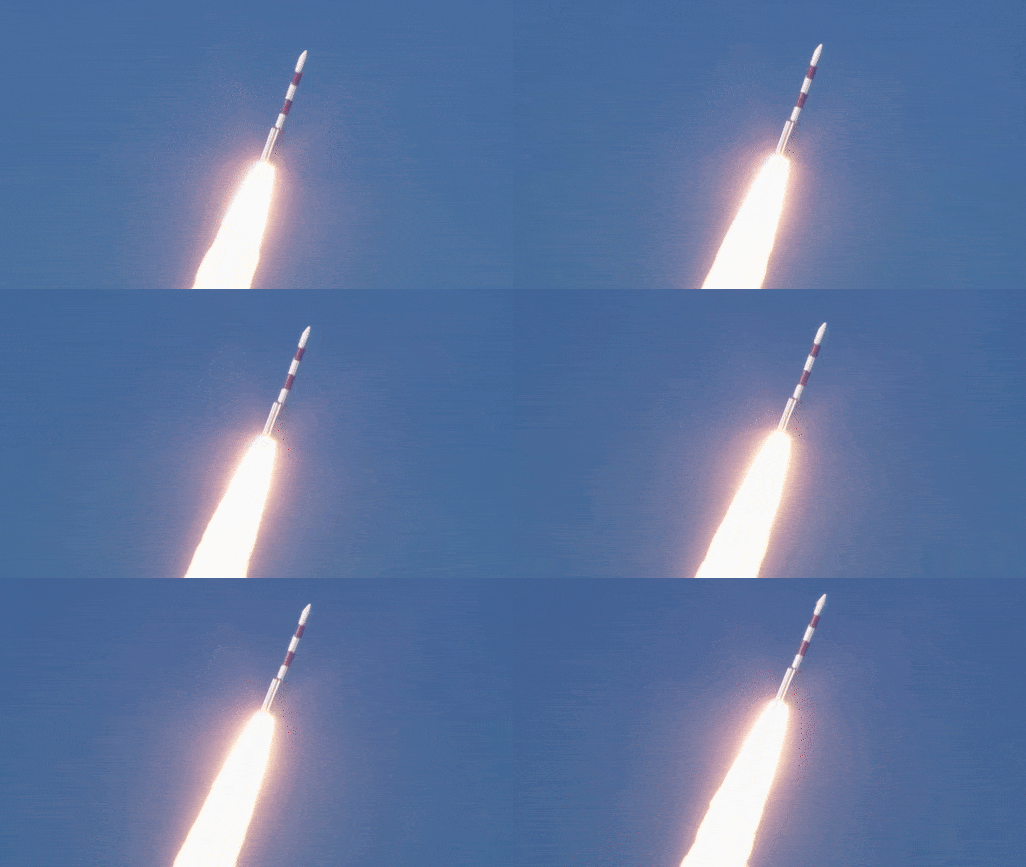
India’s launch industry is growing, with private companies such as Skyroot Aerospace and Agnikul Cosmos developing rockets. Yet it does not currently match SpaceX’s launch cadence, vertically integrated manufacturing or ability to deploy large batches of satellites using reusable rockets.
That creates a potential strategic vulnerability for Jio.
If its satellites are ready before India’s launch capacity can accommodate the required deployment schedule, the company could face pressure to look abroad for launch services.
SpaceX, with its Falcon 9 rockets and extensive experience deploying large constellations, would be an obvious commercial option.
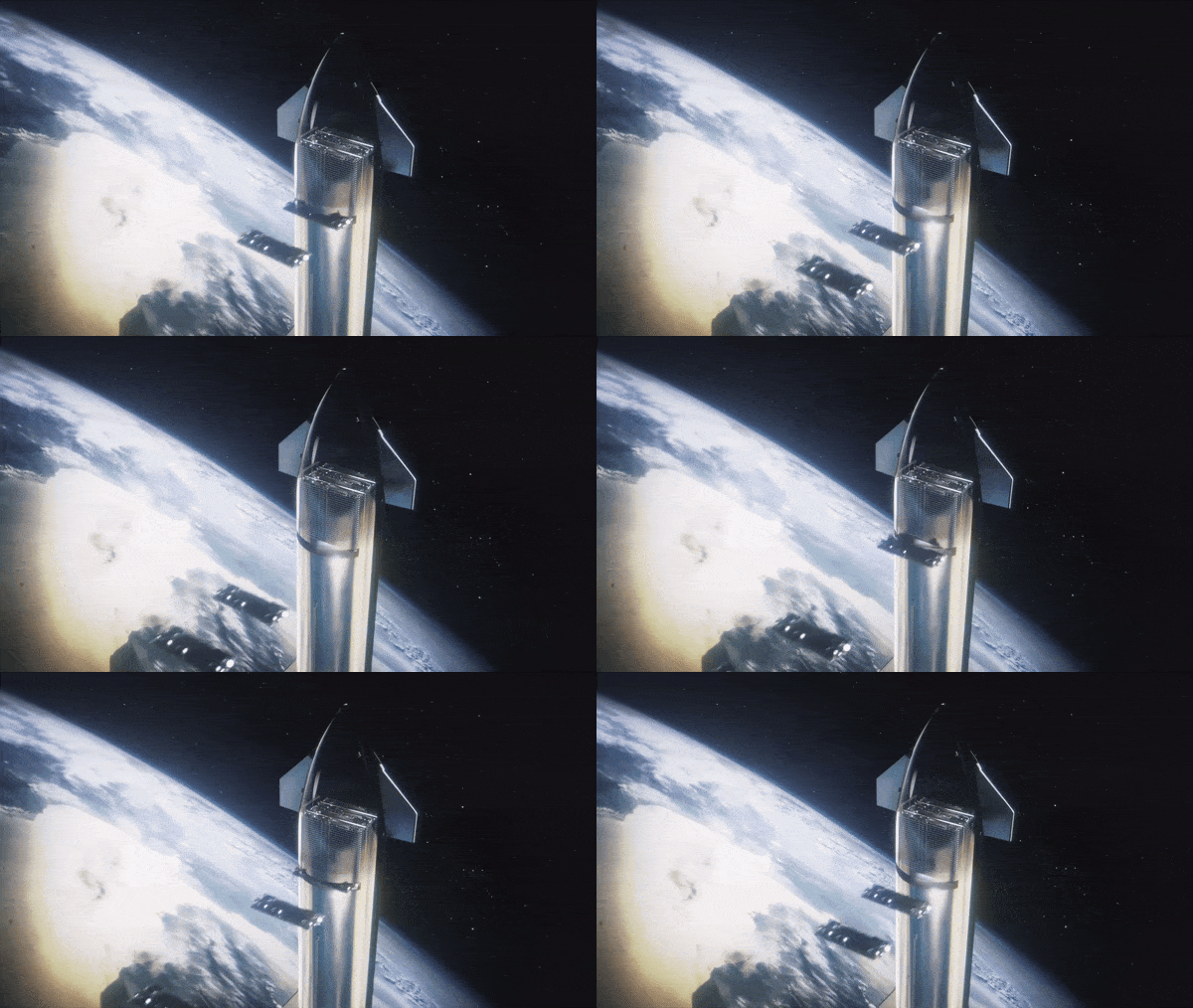
There is an irony here: Jio could eventually depend on the launch infrastructure of the very company it wants to challenge in satellite broadband. Such a relationship would not necessarily be unusual in the global space industry, where competitors sometimes buy launch services from one another.
But it could create commercial dependencies around launch schedules, costs and access to capacity.
OneWeb had to go to SpaceX to launch its satellites in 2024 after Russia denied launch services following sanctions from the UK and the US over its invasion of Ukraine. Interestingly, OneWeb satellites were on the launchpad when the sanctions hit, and eventually SpaceX came to its rescue.
AIRTEL HAS A HEAD START, BUT STARLINK SETS THE BENCHMARK
Bharti Airtel has an advantage through its investment in Eutelsat OneWeb, whose constellation is already deployed in orbit.
However, having satellites in space does not automatically translate into a commercially available broadband service in India. OneWeb and Starlink have both faced outstanding regulatory requirements, including spectrum allocation and security clearances.
The competition is therefore not simply about satellite counts. It is about coverage, capacity, latency, terminal costs, pricing and the speed at which services can scale.
Starlink’s existing network gives SpaceX a substantial head start. Its proposed Gen3 expansion could widen that gap further if approved and deployed, although the 100,000-satellite proposal remains a plan rather than an operational constellation.
For India, the stakes go beyond the rivalry between billionaires. Satellite broadband could connect remote villages, islands, border regions, ships and disaster-hit areas. Domestic capabilities could also strengthen technological autonomy.
The central question is whether Jio can build and deploy its network fast enough to compete, or whether Starlink will become the infrastructure benchmark that Indian operators must buy from, partner with or compete against.
If Jio eventually hires SpaceX to launch its satellites, the rivalry could become even more complicated: competitors on Earth, customers in space.
– Ends
SOURCE :- TIMES OF INDIA