

Source : the age
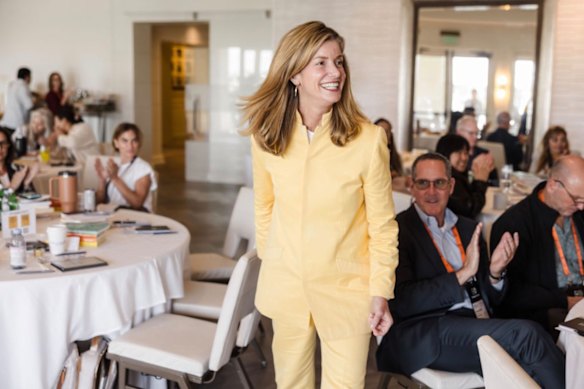
Kerry Burnight has seen both sides of the ageing journey.
For 20 years, the gerontologist worked with people who were profoundly lonely, people who had been neglected or financially or physically harmed, as she led the United States’ first centre for elder abuse.
What she witnessed tracked with the stereotypes many people hold about ageing as a negative and sad experience. But she knew that wasn’t the only way to grow old.
She knew people in later life who thrived despite their struggles, including her radiant 96-year-old mother, Betty. And it wasn’t as though these people had breezed through life unscathed or lived like monks.
Betty, for instance, has painful arthritis and was left dealing with bankruptcy when her husband died. She has never been particularly athletic, and she enjoys dessert and a cocktail.
So, what was it that set those who thrive apart from those who suffered in later life? Burnight calls it joyspan.
“Joyspan is not the absence of hardship, it does not require perfect physical health,” she says. Rather, it involves a daily choice to find the good in life and tend to four pillars:
- Grow: Continue to expand and explore.
- Connect: Put time into new and existing relationships.
- Adapt: Adjust to changing and challenging situations.
- Give: Share yourself.
“When we’re attending to those, we will notice a difference,” says Burnight, author of New York Times best-selling book on the subject, Joyspan: The Art and Science of Thriving in Life’s Second Half.
When people start to think that the best days of their lives are over, and that they have nothing to give, it becomes a self-fulfilling prophecy. They stop bothering to try anything new (adapt and grow); they stop making the effort to see friends (connect); and they assume no one would want to learn from them or that they have nothing to offer (give).
“It impacts you physiologically, too, because you’re not moving as much, and you’re not using your brain. It all goes in the same direction.”
Conversely, there are people who proactively reject the idea that ageing is all decline and recognise that there are things that get better as they get older. They also realise they care less about what others think and so are willing to try new things.
“Then you reach out to that person and connect, and that stimulates your brain, and you have to go to the effort of getting ready and getting out the door so you move your body, and it too is a cycle but, it’s a continued growth cycle.”
Despite her challenges, Betty still finds joy, connection and growth picking roses from her garden, reading, regularly playing cards with friends, grandparenting and baking pies.
The thing about joyspan is that, so long as the four areas are being addressed in some small way, there are no rules for how to do it. And we don’t have to wait until later to start.
Shake up your routine
In her mid-50s, Michelle Bridges is planning for the rest of her life by trying something new. She is swapping the gym floor for the dance floor.
Bridges, known for her intense, structured approach to training, acknowledges it’s a shift, at least from her public persona on The Biggest Loser.
“I don’t like being tarnished with this brand of, ‘Oh, all she ever talks about is hard, long training,’ ” she says. “I’ve always been a champion of women moving regardless of the intensity.”
But, as she thinks about how she wants to feel for the next 30 years of her life, she is shaking up her routine.
A skiing accident that left her dependent on her 10-year-old son, Axel, gave her pause to consider the realities of getting older.
Bridges was also inspired by the ABC show Keep On Dancing, which followed a group of people over 65 as they learnt to dance. By the end of 12 weeks in the hands of choreographer Kelley Abbey, they were fitter, healthier and better at cognitive tasks.
“I was transfixed,” she says. “They managed to completely change the trajectory of their lives.”
So, Bridges phoned Abbey, who agreed to help create a dance component for her 12WBT “Future Proof” program, which launches on Monday.
It feels joyful
Dance helps to keep our brains youthful because we get a double pleasure whammy from synchronising music and movement, plus a double stimulation whammy from physical activity and cognitive learning (as we pick up and recall steps, navigate space and socialise).
One study, published in the New England Journal of Medicine, compared the effects of different activities on people’s cognition later in life. They looked at everything from playing cards, playing music and doing crossword puzzles to tennis, walking and dancing.
The hobby that came out on top was dancing.
People who danced more than once a week had a 76 per cent lower risk of dementia two decades later than those who did so rarely.
“It wires the brain in no other way,” Bridges says. “And it feels joyful and fun and not like exercise.”
Bridges is known to bust a move on the dance floor at parties and weddings and in the living room with Axel.
“But, to really move the needle [you have to] learn some choreography.”
Demonstrating that we continue to learn, grow and have fun as we age is a message Bridges suspects many people need to hear, herself included.
“The way in which we think plays a massive role into the way in which we live,” she says.
For her, it’s also about challenging the stereotypes around ageing and showing the next generation that it need not be negative or scary. She wants to show her son, she says with a chuckle, “She is not fading into oblivion. She is a force, and don’t f— with her.
“Life in our 60s, 70s, 80s, and beyond, can look very, very different to what our grandparents’ era looked like. I find that very exciting.”
Make the most of your health, relationships, fitness and nutrition with our Live Well newsletter. Get it in your inbox every Monday.
 Sarah Berry is a lifestyle and health writer at The Sydney Morning Herald and The Age.Connect via X or email.