

Source : the age
Older Australians whose aged care needs are determined by an algorithm will be guaranteed a new layer of human oversight, after Labor conceded to parliamentary pressure and promised to reassess its controversial automated assessment regime.
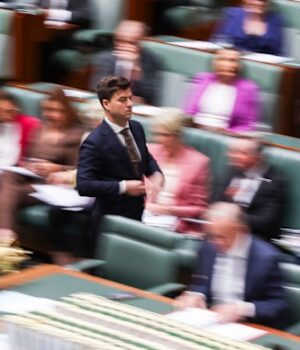
The government was embarrassed in the Senate on Thursday when the Greens and crossbenchers voted for a Coalition bill to wind back automated aged care assessments. While the laws won’t pass the lower house because Labor has majority, it is rare for the government to lose a vote in that way.
It is the second time that non-government senators have banded together to force change on aged care, after uniting last year to pressure the government into fast-tracking the release of 20,000 home care packages. The Greens and Coalition also teamed up this week to send the government’s gambling advertising laws and social media bill to an inquiry over the winter.
The subject of Thursday’s vote was the automated “Integrated Assessment Tool” that was introduced as part of the government’s home care reforms last year designed to help older people remain at home for longer.
The tool relies on an algorithm to assess a person’s appropriate level of care, and has been subject to a Commonwealth Ombudsman investigation after advocates raised concerns about the lack of ability to reverse erroneous determinations. The Human Rights Commission has also warned of the dangers of automating such decisions, alluding to the robo-debt scandal in which more than 500,000 Australians were hounded for welfare repayments they did not owe.
While assessments can be reviewed, MPs have sounded the alarm that their constituents are still dying while waiting for appropriate care.
Aged Care Minister Sam Rae tried to get ahead of the Coalition’s bill in a Radio National appearance on Thursday morning, saying the government would over the winter parliamentary break develop a new way to speed up decisions.
Rae said trained staff were evaluating the clinical needs of older Australians before the data was entered into the assessment tool, which automatically applied the rules for care.
“This is where the confusion starts to lie – subjective clinical data collection and then objective application of the aged care rules against that clinical data,” he said.
Rae said he wanted to consult over the winter break, but he thought the organisations conducting the assessment would identify any complex cases where the assessment tool might not have captured the nuance of a person’s needs.
He said of the 260,000 assessments between September and March, only 0.5 per cent had sought a review. He said this suggested only a few cases would need to use the new review.
Those who were not satisfied with their assessment could be reviewed, he said.
Asked about the Senate’s push for reform, Rae said he had already listened to older people. “I make regular changes to the way this system operates to get better outcomes,” he said.
Opposition aged care spokeswoman Anne Ruston said Labor should not have to be forced into protecting the interests of older Australians.
“This isn’t the first time the Senate has had to do this work – we constantly see this in aged care,” she said.
The Coalition pursued the issue in question time on Thursday, saying more than 200,000 Australians were waiting for care. “Today, Labor was defeated in the Senate, which passed the Coalition’s bill to put people back in charge of aged care decision-making,” Opposition Leader Angus Taylor said.
Greens spokeswoman for older people, Penny Allman-Payne, said Rae’s announcement did not go far enough because it would only apply in outlier cases.
“It’s only a partial measure. There are still going to be thousands of older Australians who will be subject to an aged care assessment done by an algorithm with no control,” the senator said.
Ageing Australia chief executive Tom Symondson welcomed the move after his organisation provided the government with cases of more than 150 examples of older Australians struggling with the new system.
“Every situation is different, and everyone’s needs are different. Allowing a system’s governor to have the final say on assessments brings that much-needed human element back to the process,” he said in a statement.
Cut through the noise of federal politics with news, views and expert analysis. Subscribers can sign up to our weekly Inside Politics newsletter.
 Brittany Busch is a federal politics reporter for The Age and Sydney Morning Herald.Connect via email.
 Natassia Chrysanthos is Federal Political Correspondent. She has previously reported on immigration, health, social issues and the NDIS from Parliament House in Canberra.Connect via X or email.