

Source : the age
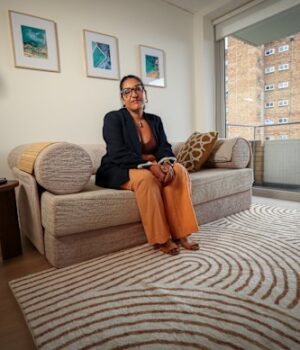
When Sole Ferreyra moved to Sydney from Melbourne recently, she thought she had a handle on the cost of renting in Sydney. After all, she had lived here before.
“I knew it would be more expensive than Melbourne by 25 to 30 per cent, but I found it was about 40 per cent more expensive than Melbourne when comparing similar offerings,” she said.
In the market for a one-bedroom apartment, the 43-year-old architect wanted to live in an area with a village feel that would not be too far from her office in Surry Hills. With a budget of $850 per week, she started looking at inner-ring suburbs.
“The [good] properties come on the market and then they are out of the market, sometimes within minutes,” Ferrerya said. “It can be stressful. There was a property that was listed on one day and I organised an inspection for the next day and they called me the next morning to say it had been leased to someone else.”
Domain’s September quarter Rent Report revealed that while vacancy rates have eased slightly to 1.2 per cent – the highest level recorded since September 2021 – the rental market is still extremely tight.
“Rental conditions remain tight,” Domain’s chief residential economist Dr Nicola Powell said. “But that modest increase in available rental stock has given renters more choice.”
Although the latest report showed no increase in house rents across 28 suburbs, and price falls in 29 suburbs across Sydney (for units, 20 suburbs held firm and 10 recorded drops) Sydney rents overall remain at record highs with 441 suburbs across the city seeing an increase in prices.
Powell said it was a reflection of broader cost of living pressures for both renters and landlords.
“There are many tenants in survival mode,” she said.
Landlords were also under pressure, she said, as interest rate hikes take their toll.
“We are all being impacted by cost of living increases when most of the rental supply is from mum and dad investors and they are sensitive to changes in the market such as interest rates,” Powell said. “Holding an investment is going to be more challenging.”
Abbotsford saw the greatest increase in rents for houses, up 47.2 per cent to $1325 per week in the year to September, while nearby Concord West now has a median unit rent of $650 per week, up 25 per cent on last year.
Areas where unit rents have “flatlined” in Sydney include Stanmore, Lindfield and Sylvania, while rents have fallen in Thornleigh, South Granville and Ramsgate, among other suburbs.
For houses, Kenthurst recorded the greatest fall of 12 per cent, while suburbs such as Greenwich, Annandale, Double Bay and Avoca Beach also saw a drop.
Chief economist for Ray White, Nerida Conisbee, said pressure on renters and investors is set to continue with rents expected to increase.
“We know rents will rise with fewer investors around,” Conisbee said. “Prices have come back significantly in Sydney, so affordability is improving but we have had four rate rises this year and we have cost of living pressures as well. It is impacting people’s ability to save.
“A lot of people are treading water at this point.”
The full effects of federal government initiatives earlier this year to encourage more people to move out of the rental market were yet to be felt, she said, as many “anxious” first home buyers take a wait-and-see approach.
“A lot of them are sensible [and] not jumping in when prices probably have further to fall,” she said.
Urban Renter’s Agent director Terry Christianos said winter was traditionally a quiet period and that inquiries typically peaked during the spring/summer season.
“In some areas [of Sydney the number of rentals available] is closer to demand and supply, other areas there are line-ups of 20, 30, 40 people to see a one-bedroom apartment,” she said.
Christianos said, in some cases, potential tenants were in and out of inspections in seconds because of the discrepancy between the way the property was advertised and how it appeared in real life. She noted that landlords seeking steady yields needed to stay on top of property maintenance.
For Ferreyra, the search for a new home in a high-demand area meant refreshing listings on an hourly basis. Last week, she moved into an airy, light-filled apartment in Kirribilli. But she visited quite a few dumps first.
“Some of them had old kitchens or mould and old pipe work or the joinery was falling apart or the balcony doors didn’t open properly. I was losing hope,” she said.
“At some point, I could not see the light at the end of the tunnel. I didn’t know if I was being picky but the agent said ‘you need to remember you will be living here’.”
 Robyn Willis is a property reporter and the former lifestyle editor for The Sydney Morning Herald and The Age.

