

Source : INDIA TODAY NEWS
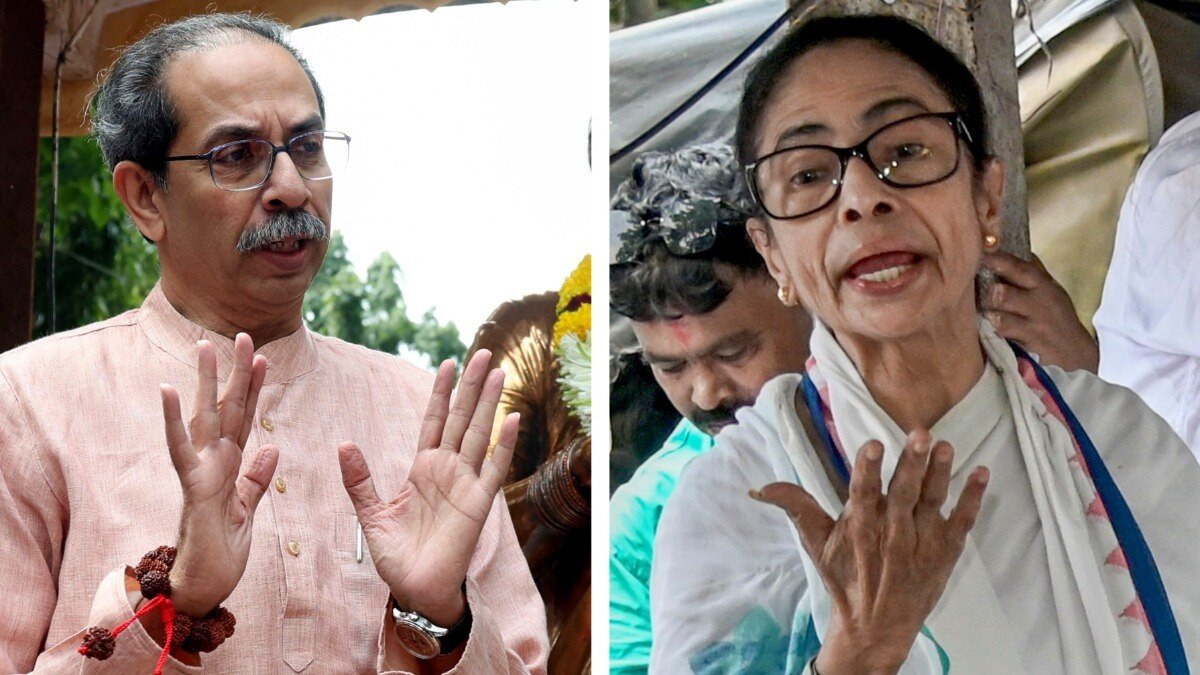
Are splits in political parties appearing more cordial than how acrimonious they were just a few years ago? This could seem so because of the way the MLAs and the MPs of the Trinamool Congress (TMC) and the Shiv Sena (UBT) have rebelled against their leaders. There was no public from the rebels directed at their top leader, Mamata Banerjee and Uddhav Thackeray, while the two have refrained from attacking the rebels.
advertisement
Just a few years ago, party breakups were accompanied by bitter accusations of betrayal, ideological abandonment, and political treachery. Today, rebels increasingly insist they still respect their leaders, while party chiefs appear reluctant to launch personal attacks on those walking away.
The contrast becomes evident when comparing the current rebellions in the Mamata-led TMC and the Uddhav-led Sena with Maharashtra’s political chapter of 2022.
THE BITTER BREAKUP OF SHIV SENA IN 2022
In June 2022, Maharashtra witnessed one of the most dramatic political revolts in recent history when MLA Eknath Shinde rebelled against then-Chief Minister Uddhav Thackeray. Objecting to Shiv Sena’s alliance with the Congress and Sharad Pawar’s Nationalist Congress Party (NCP), Shinde first moved a group of MLAs to Surat before shifting them to Guwahati.
Within days, he secured the support of 40 Shiv Sena MLAs and 10 independents, eventually toppling the Uddhav-led Maha Vikas Aghadi (MVA) government.
The fallout of the split was fierce. Uddhav loyalists accused Shinde of betraying Bal Thackeray’s legacy, while the rebels argued that the party under Uddhav had abandoned its core Hindutva ideology. The dispute escalated into legal battles that continue even today over the anti-defection law.
The split eventually led to the Shinde faction being recognised by the Election Commission of India (ECI) as the leader of the “real” Shiv Sena, while Uddhav’s faction became Shiv Sena (Uddhav Balasaheb Thackeray), or Shiv Sena (UBT).
Soon after the vertical split of Shiv Sena, Sharad Pawar’s NCP witnessed its own ugly breakup, marked by public confrontations and sharp exchanges between rival factions.
Cut to 2026, and India is witnessing fresh political rebellions. Yet the tone appears markedly different.
THE TMC REBELLION: BEGAN WITH MLAs, FOLLOWED BY MPs
The first signs of trouble for the TMC emerged after its defeat in the 2026 West Bengal Assembly elections, ending Mamata Banerjee’s 15-year rule.
The immediate trigger was a dispute over the appointment of the Leader of the Opposition (LoP). While Mamata Banerjee nominated veteran leader Sovandeb Chattopadhyay, newly elected MLAs Ritabrata Banerjee and Sandipan Saha alleged that signatures on the paper recommending Sovandeb Chattopadhyay’s name for the post, had been forged.
The party expelled Ritabrata and Sandipan on June 1 for “anti-party activities.” However, the move backfired within the party.
In the days to follow, 58 of the TMC’s 80 MLAs rallied behind Ritabrata Banerjee and submitted a letter to the Assembly Speaker nominating the MLA as the LoP. The Speaker accepted the claim, marking the first successful challenge to Mamata Banerjee’s authority over the party’s elected representatives since the TMC was founded in 1998.
The rebellion reflected growing frustration among legislators after the electoral defeat, complaints about the functioning of the party leadership, and concerns over the lack of internal democracy.
Yet despite engineering a split, many of the rebel legislators continued to insist that Mamata Banerjee remained their leader. Ritabrata suggested that Mamata Banerjee become the legislative party’s “chief advisor”.
The rebellion eventually spread to Parliament, with a section of TMC MPs extending support to the BJP-led NDA. Even then, the rebels largely avoided personal attacks on Mamata Banerjee.
EVEN MAMATA BANERJEE TARGETED THE BJP, NOT THE REBELS
TMC supremo Mamata Banerjee’s response was also equally striking. Rather than attacking the dissidents directly, she blamed the BJP for orchestrating the split.
“I know many will leave for other parties. They may have their own compulsions. Whoever wants to go may go. I do not believe in forcibly holding anyone back,” she said after the election defeat.
As the rebellion deepened, her criticism remained focused on the BJP rather than the defectors.
“You [the BJP] had split the ruling party [Shiv Sena] in Maharashtra. You are doing the same here,” she alleged at a protest rally.
Mamata also accused central agencies and authorities of intimidating the TMC legislators.
“The Police are telling TMC MLAs to form a new party. Police are going to the homes of MLAs facing corruption charges and threatening them with federal agency investigations. Is this democracy?” she asked.
The rebels, meanwhile, continued to maintain that their dispute was with the functioning of the party, not with Mamata herself.
THE UDDHAV THACKERAY-LED SHIV SENA’S SPLIT 2.0
Like the TMC’s breakup and the reaction, a similar pattern unfolded in Maharashtra. Six of Shiv Sena (UBT)’s nine Lok Sabha MPs have merged with the Eknath Shinde-led Shiv Sena, thus joining the NDA fold.
The rebel MPs argued that Uddhav Thackeray’s leadership has drifted away from the ideological foundations laid by Bal Thackeray, particularly Hindutva and Marathi identity politics. They have also expressed concerns about the party’s growing closeness to the Congress.
Yet even as they prepare to leave, they have largely avoided the sharp rhetoric that characterised the 2022 rebellion.
The MPs have framed their move as a return to Shiv Sena’s original political path rather than a rejection of Uddhav Thackeray personally.
Nagesh Patil Ashtikar — UBT Sena’s MP who joined the Shiv Sena led by Shinde — cited development concerns as a key reason for switching sides.
He said that as an opposition MP, he was unable to secure adequate funds for his constituency and that development works had stalled, making it necessary to align with the ruling side for the benefit of the people. While he emphasised that he was moving “from Sena to Sena” and not abandoning the party’s ideology, the other rebel MPs largely justified their move on ideological grounds, accusing the Uddhav faction of drifting away from Bal Thackeray’s principles.
The merger route also provides a possible anti-defection shield while allowing the MPs to remain within the broader Shiv Sena ecosystem under the recognised party name and symbol controlled by Eknath Shinde.
UDDHAV THACKERAY CHOSE EMOTION, NOT CONFRONTATION
Uddhav Thackeray’s response has been more emotional than confrontational about the MPs breaking away.
Speaking on Shiv Sena’s 60th foundation day, Uddhav offered to step down as party chief if workers no longer had faith in him, saying he had “no lust for leadership” and had spent over a decade defending the organisation.
Rather than attacking the defectors aggressively, Thackeray apologised to voters who had elected the rebel MPs and argued that Shiv Sena (UBT) remained committed to Hindutva and Marathi pride.
He dismissed allegations that the party was preparing to merge with Congress and instead suggested that the BJP might eventually absorb the Shinde faction.
Uddhav had also said that MPs who wished to leave were “free to go”.
CORDIAL AND SUGARCOATING: A NEW STYLE OF DEFECTION?
The political consequences of the TMC and Shiv Sena (UBT) rebellions might be just as severe as previous splits. Both threaten the authority of long-established regional leaders and could reshape state politics.
What appears different this time is the language that the defectors and the party chiefs have opted for.
Both groups of rebels are criticising leadership decisions rather than leaders themselves. Party chiefs are accusing external forces rather than directly attacking defectors.
Whether this is genuine restraint, strategic messaging, or simply a more sophisticated way of managing defections remains unanswered.
But from West Bengal to Maharashtra, India’s latest political rebellions increasingly resemble carefully managed separations and, that are more cordial rather than the all-out political divorces that once dominated the country’s regional politics.
– Ends
SOURCE :- TIMES OF INDIA