Source :- THE AGE NEWS
Long before he became chief executive of the Sydney Swans, Matthew Pavlich was a cultural architect.
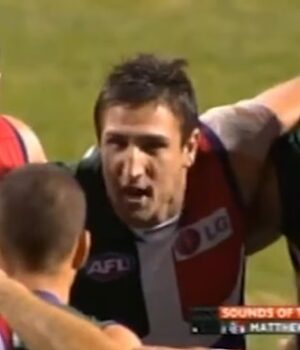
Once upon a time, back in the olden days – round eight, 2009, to be precise – Pavlich, in his capacity as Fremantle captain, delivered an impassioned pre-match speech to his teammates, which included an unsubtle nod to the city’s working-class port side history.
The full impact of what he said would not be felt or even understood until almost two decades later.
“What a great opportunity this is, boys,” Pavlich told the huddle, just before Fremantle’s clash against Hawthorn at Subiaco Oval.
“This is the moment we’ve been waiting for all this season. Here’s our chance to gain momentum again, but it has to be underpinned by our hard work. How much fun has it been by working hard the last couple of weeks? How much fun has it been?
“Enjoy the moment, enjoy winning the hard ball. Ay – put on your Superman capes boys, it’s wharfie time!”
Whatever Pavlich was trying to achieve with that attempted rev-up, it definitely didn’t work. Hawthorn won 13.9 (87) to 9.11 (65); thus began a nine-match losing streak for the Dockers, who finished 14th that season. For the second season in a row.
For most of the club’s 32-year existence, that’s pretty much been the vibe. The dorky Dockers have long been regarded as the AFL’s loveable losers: pitied by rivals who deemed them nonthreatening and harmless, defined by cult heroes like Clive Waterhouse and Shaun McManus rather than superstars, and followed by loyal fans accustomed to heartbreak or embarrassment, often both at once. Freo did not win a final until their 12th season, and have reached one grand final, which they did not win; they sit behind only St Kilda with the competition’s longest-running active premiership drought.
For a time, it was even believed that the giant anchor on their guernsey was physically weighing them down, holding them back from success – hence the sober rebranding of 2011, when the chevrons replaced the anchor as the club sought a cleaner, more serious identity.
Times, however, have changed. This year, Fremantle have won their first actual thing, finishing top of the ladder to claim the minor premiership after a club-record 19-win season. The anchor guernsey, which they occasionally dig out of their closet for special rounds, is no longer considered kitsch, but a prized collector’s item which many fans would like to see return permanently.
And now they are not only closing in on that long-awaited maiden flag, but they’ve also become – dare we say it – quite cool.
Wharfie Time has a lot to do with it. These days, it’s a proper noun, and in 2026, it is undefeated.
Admired and feared in equal measure, Wharfie Time is an “activation” for Fremantle home games at Optus Stadium, strategically deployed in close games to energise Dockers players and fans to help them get over the line. It’s the AFL’s equivalent to Hulk Hogan’s famous comeback sequence, when he would begin “Hulking Up” by no-selling his opponent’s moves, ripping off his shirt, feeding off the energy of the crowd and producing a seemingly unlikely victory out of nowhere.
When the loudspeakers at Optus Stadium sound a deep gong, followed by the intro to AC/DC’s Hells Bells, while the big screen displays a graphic of a boat tackling massive waves, it usually spells trouble for the visiting team: twice this year, someone at the ground has pushed the big Wharfie Time button, and on both occasions, it has shifted the energy and resulted in a Freo win, most recently in last week’s semi-final against Geelong.
And that’s just what happens at the end of their home games. At the start, just before the first bounce, high up on a platform raised 42 metres in the air, a trio of musicians playing the guitar, bagpipes and didgeridoo perform the closing section of another AC/DC classic, It’s a Long Way to the Top. A more theatrical, toe-tapping lead-in to a sporting event, you will struggle to find anywhere. (The late Bon Scott grew up in Fremantle, in case you were wondering about the connection.)
The good news for the Swans – and Pavlich – is that they won’t have to worry about any hard rock covers or stadium activations inspiring the Dockers in Friday night’s preliminary final because it’s a Sydney home game.
The bad news is that Wharfie Time is also, broadly speaking, a state of mind. It’s adjacent to “Flagmantle”, the initially light-hearted rallying cry which emerged during their 2022 finals run. It’s the name for the momentum that Fremantle have gathered behind them, backed by neutral fans who see them as the least worst remaining option to win the flag.
To safely prevent its onset at the SCG, there are a couple of blokes who the Swans will need to worry about – and they, too, have cool nicknames.
Key forward Patrick Voss is the “Prancing Pony”, a habitual line-stepper who shushes crowds, taunts opponents and celebrates his goals by strutting around like he owns the place. Imagine a plus-sized Tom Papley, and you’re somewhere near the mark.
What’s better than a “Prancing Pony”? A unicorn. That’s Luke Jackson, their star ruckman who earned that label because of his size, aerial prowess and ground-level dominance, a combination of attributes that is as common as the magical horned horse – although Brodie Grundy may have something to say about that.
This is the strange monster Pavlich helped create. Now the Swans must slay it.
News, results and expert analysis from the weekend of sport sent every Friday. Sign up for our Sport newsletter.