

SOURCE :- SIASAT NEWS
Hyderabad: Today, women directors are making blockbuster films and winning international awards. Names like Zoya Akhtar, Meghna Gulzar, Farah Khan, and Gauri Shinde are celebrated across the country. But very few people know that the path for these filmmakers was opened nearly 100 years ago by one extraordinary woman, Fatma Begum.
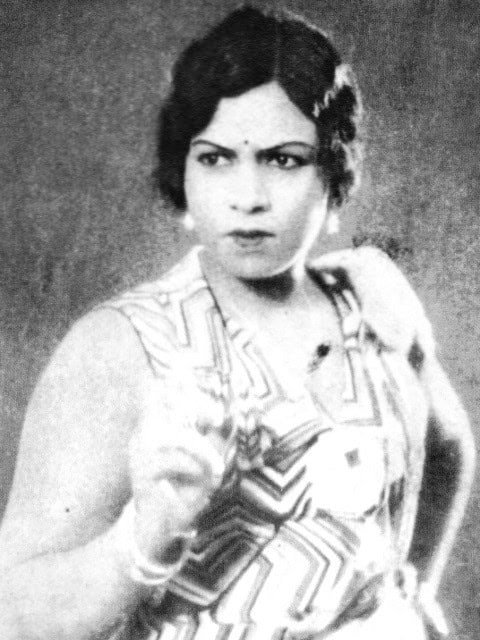
Meet Fatma Begum, India’s First Female Film Director
At a time when Indian cinema was still in its infancy and women were rarely allowed to act in films, Fatma Begum dared to dream bigger. She was not just an actress. She became a writer, producer, studio owner, and India’s first female film director.
Born in 1892, Fatma Begum entered the film industry when it was almost entirely controlled by men. In those days, acting was not considered a respectable profession for women, and female characters were often played by male actors. Breaking into the industry itself was a challenge. Becoming a filmmaker was almost unimaginable.


Yet Fatma Begum did exactly that.
The Film That Made History
In 1926, Fatma Begum directed Bulbul-e-Paristan, making history as the first woman to direct an Indian feature film.
What made the achievement even more remarkable was that she did not stop at directing. She also wrote the screenplay, produced the film, and used innovative visual effects to create a magical fantasy world on screen. For audiences of that era, the film was unlike anything they had seen before.

Nearly a century later, Bulbul-e-Paristan remains an important milestone in Indian cinema.
How Fatma Begum Broke Barriers for Women
Fatma Begum’s success proved that women could do much more than act in films. She showed that women could lead film productions, tell stories, manage studios, and make creative decisions behind the camera.
She founded her own production company, Fatma Films, later known as Victoria-Fatma Films, becoming one of the first women in India to own a film studio.
At a time when society placed countless restrictions on women, Fatma Begum built a space where women could dream bigger.
Her influence extended beyond her own career. Her daughter Zubeida later starred in Alam Ara (1931), India’s first talkie film, creating another historic milestone for the family.
More importantly, Fatma Begum’s courage inspired future generations of women filmmakers to enter an industry that had long been dominated by men. Every woman who directs a film in India today is, in some way, walking through a door that Fatma Begum helped open.
Sadly, none of her films are known to survive today. Much of her work has been lost to history. Yet her impact remains impossible to erase.
Fatma Begum was not just India’s first female director. She was a pioneer who challenged social norms, shattered barriers, and changed the course of Indian cinema forever.
SOURCE : SIASAT