

SOURCE :- THE AGE NEWS
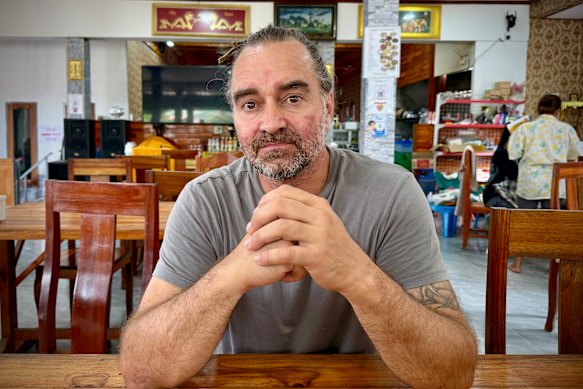
Phanchai village, Laos: The mission to extract five survivors trapped in a flooded cave complex in Laos hinges on centimetres. In one particularly long passage, Finnish diver Mikko Paasi will make himself thin, arms stretched long, and chin tucked tight. “That one’s feet-first all the way in,” he says.
Some nooks along the route to the men, who have been inside the cave since May 20, have only the smallest of air pockets. With minimal oxygen in the tanks, “if it rains, you’re going to drown there”.
“Tham Luang was easy compared to this because of the claustrophobia in these tunnels,” Paasi says, referring to the famous 2018 Thai cave rescue, of which he is a veteran. “This thing will fill in half an hour. Tham Luang was such a big space – it takes two hours to fill with a flash flood. So it’s scary as f— to be in there.”
Paasi and rescue co-captain, Thailand’s Norrased “Ben” Palasing, who also helped rescue the 12 boys and their football coach from the Thai cave, have explored about 95 per cent of the complex, finding five relieved men on Wednesday afternoon huddled together on a chamber rock.
But getting them out may take days, Paasi says. Rescuers need to bash and chisel open some of the more restrictive passageways.
If the survivors become unconscious or too weak to help themselves, the dive elements become “almost impossible”.
Another two men – Bay, who is still a teenager, and Lup 33 – are unaccounted for somewhere in the remaining five per cent.
One of the spaces still to be searched is filled with water. “So that’s a body recovery if we go in there someday,” Paasi says. “But it has to be also a very slim person. I cannot fit in there.”
Moving is slow and done with fingertips and toes. Paasi says the farthest chamber is about 200 metres from the cave’s mouth. Reaching it takes almost an hour.
Search teams originally believed the seven men, from three separate villages, had gone in together. “But we interviewed the people inside, and they were like, they had never seen these two. They had no recollection or no knowledge about them,” he says.
This masthead spoke to an eighth man – the one who made it out – and he confirmed there were two groups working independently inside the cave.
Keo Huangpasert, 33, says he went in with Bay and Lup about 7pm on May 20. It had been raining since early morning, but Keo was not thinking of danger. Only a week earlier, in his first mission to find gold in the cave, everything had gone smoothly, netting him the equivalent of about $60.
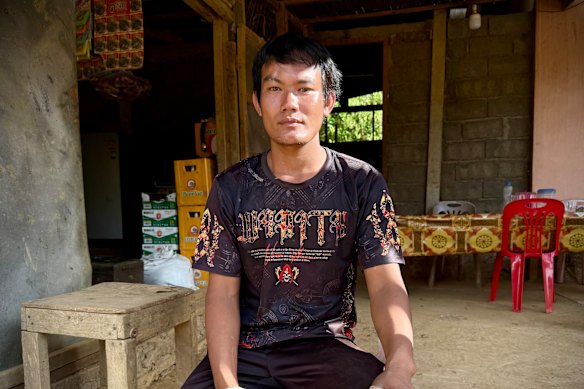
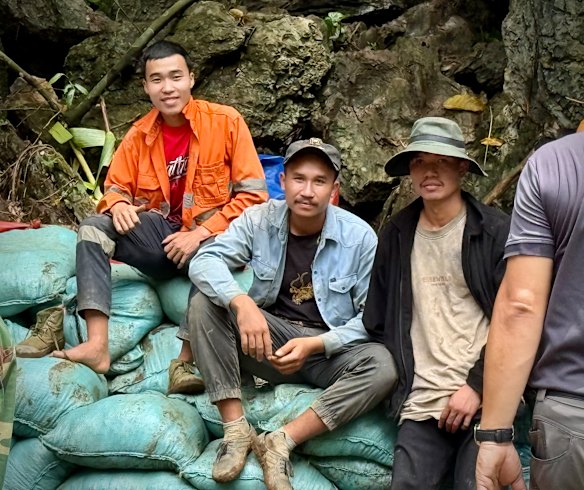
For an unemployed husband and father of two, this is a lot of money. Like him, Bay and Lup live only on what they can grow and kill themselves, he says. Fossicking for cave gold, then, became an appealing, new venture for young men short on cash.
On bad legs from a serious traffic accident several years ago, Keo told the other two to go first into the cave. Soon, he was alone. “About 100 metres into the cave, it was narrow, and I couldn’t get my legs through,” he says.
He stayed in that area through the night, unsuccessfully searching for gold, until about 9am on May 21. That’s when the water started making him nervous. “Some of it was gushing from a big hole in the wall of the cave,” he says.
From deeper in the complex came a terrifying roaring, “like thunder and lightning”. The way he had come into the cave was blocked, so he dived into the water, emerging into a chamber with more air.
For hours, Keo fumbled through the labyrinthine complex, thinking he was about to die. “I had to fight my way out,” he says.
When he emerged from the cave, it was 6pm, he says, nine hours since he had decided to leave.
He never heard a sound from his teammates, he says, nor from the five other men who were found alive a week later.
The cave is on land marked out for a joint China-Laos mining operation, locals say, and despite feeling a collective sense of ownership, they are now prohibited from going there.
Citing “local accounts”, state-controlled media reported people held off publicising the emergency online out of fear of being punished for illegal gold mining and wildlife hunting. But fear does not explain why, according to Keo’s account, the villagers informed local authorities soon after he made it out alive on the evening of May 21.
Villagers tell this masthead that the first search-and-rescue teams did not arrive until sometime on May 23.
The Lao government has been contacted to clarify the timeline and offer a comment.
The divers had war-gamed scenarios before they went in. Finding seven dead bodies was their expectation, Paasi says. That or a mix of decomposing corpses and traumatised survivors forced to suffer through the mingling smell of dead companions and their own faeces. High carbon dioxide levels and low oxygen might have made survivors paranoid, Paasi says. “They might have axes and shovels and attack us.”
As it turned out, the divers found five relieved and relatively healthy men, spared worse by rationing the snacks, water and headlamps they had packed for a couple of days’ worth of fossicking through the cave system. When the news came down, the families and villagers waiting anxiously by the staging area, a few kilometres from the cave mouth via a steep and treacherous jungle track, cheered and hugged.
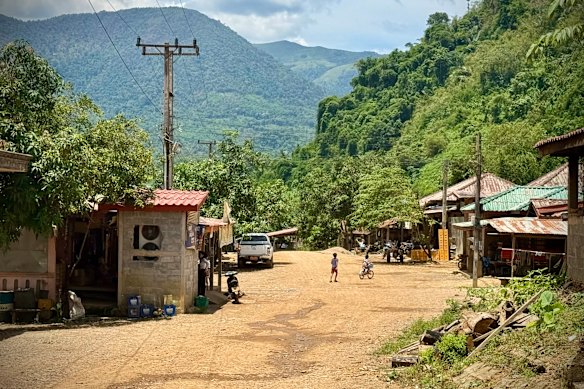
“It was a big smile – and I could see big smiles on them,” Paasi says of the moment he and Palasing made it into the chamber.
Attempts so far to pump out water have been unsuccessful. Still trying, dozens of Lao support crew members are packing sandbags to contain expelled water, buoyed by the arrival of a new generator. Even more volunteers are traversing the track, sometimes multiple times a day, to deliver food, water and tools.
More expert divers are arriving soon, including Australian Josh Richards. Not only do they need to save the five known survivors, but time is also running out for the two missing. If it has not already.
Get a note directly from our foreign correspondents on what’s making headlines around the world. Sign up for our weekly What in the World newsletter.


