Source : the age
Children in state care are being recruited by criminals into offending, setting them on a course through the justice system that can leave them with long-lasting psychological trauma.
An inquiry by the Victorian Commission for Children and Young People into the experiences of under-14s in the justice system found residential care is a recruiting ground for criminals who ply vulnerable kids with money, drugs and cynical affection.
Children told the commission that residential care – which houses Victoria’s children who cannot safely live with their families or find a place in foster care – conditioned them to crime and “gets you used to jail”.
The commission’s With us, not against us inquiry, tabled to parliament last week, examined the lives of 26 children aged under 14 who passed through the justice system between 2023 and 2025.
It urged the government to raise the age of criminal responsibility from 12 to 14 and devote greater resources to early-intervention programs. It also cautioned against punitive custodial sentences for children.
However, it comes at a time when both state political parties are announcing crime crackdowns and children are overrepresented in violent crime statistics.
In the year to March 2026, they made up more than 60 per cent of robberies, and about half of all carjackings and home invasions.
Police Chief Commissioner Mike Bush has said that many young offenders are “focused on impressing their mates and have no idea of the consequences of their offending on the victims, themselves, their families and the community”.
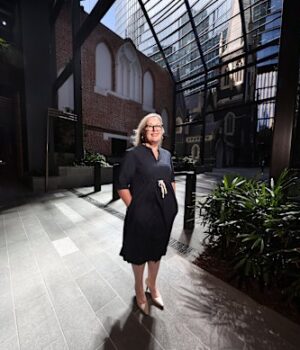
Commissioner for Children and Young People Tracy Beaton, said children in residential care were highly vulnerable and often exploited.
“It is actually really important that you look to see how you can best decriminalise behaviour of children … and give them hope, and actually hold adults to account for children,” Beaton told The Age.
Archer, a 25-year-old who previously lived in residential care, told the inquiry he was exposed to “proper criminals” who know how to manipulate vulnerable children.
“They know how to talk, how to convince you,” he said. “They make it sound easy and safe. They influence your decisions without you realising it.”
Chris, a 16-year-old and former occupant, told the commission that children in residential care were sometimes forced to commit crimes by adults who got them addicted to drugs or money. “A lot of stuff gets blamed on kids now, but a lot of the time it’s adults,” he said.
A spokesperson for the government said it had made significant investments in child protection, including by creating access to therapeutic supports for all young people in residential care.
“It is important to recognise that residential care provides a home where children live and is not a custodial setting,” they said. “As is appropriate, children in care should be free to engage in social and community activities outside of the home, in the same manner as their peers.”
Victoria has the lowest use of residential care nationally.
The inquiry found current practice is failing to rehabilitate young offenders and said it was limited because Labor had not publicly released a report the government commissioned almost three years ago into keeping young Victorians out of the justice system.
The commission’s report was tabled four months before a state election where both major parties are burnishing their tough-on-crime credentials. In his first speech as premier, Ben Carroll said crimes committed under his government would be “dealt with to meet the community’s expectations”.
Then-premier Jacinta Allan backflipped on her promise to raise the age of criminal responsibility to 14 after a series of high-profile and violent youth crimes. Allan also introduced “adult time for violent crime” laws that remove the assumption of bail for juvenile offenders and allow courts to treat children as young as 14 charged with select violent crimes as adult offenders.
Shadow attorney-general James Newbury last week said the Coalition, if it wins the state election, would add theft of a motor vehicle, attempted carjacking and reckless conduct endangering life to the laws.
“We’re going to get tougher on crime, tougher on youth offenders,” Newbury said.
Beaton said research showed longer, harsher sentences on child offenders did not reduce crime and the community would be safer if a more rehabilitative approach was taken. She said whichever party was in government, she hoped they made evidence-based policies.
“It feels really tricky when people say, we should be tough on crime,” she said. “We are not saying that you shouldn’t ask children to wear the consequence of their behaviour, we’re just saying that there’s a different way of doing that.”
Commissioner for Aboriginal Children and Young People Dallas Widdicombe said children who entered the justice system before the age of 14 overwhelmingly came from disadvantaged backgrounds and had histories of family violence, poverty and homelessness.
“[They] have not been able to be children,” he said.
Youth mentor Lueth Akue, who worked on the inquiry and serves on the commission in an advisory role, spent time in custody when he was 16. His family fled a war-torn country, but their trauma followed them to Melbourne. His mother coped through substance abuse, and his father walked out when he was 10.
Poverty, homelessness, racism, family violence and a lack of intervention or support saw Akue enter the justice system.
It was only after he hit “crisis point” that support became available. Akue worked closely with a case worker and developed a strong support network which allowed him to turn his life around.
Akue, now aged 26, said the psychological impact of going through the justice system as a child was still with him.
“It’s hard for you to step back into pro-social groups … because you feel different: you feel like you don’t belong,” he said. “It’s much easier for you to go back to where you feel like you belong, which is in a negative social group.”
Start the day with a summary of the day’s most important and interesting stories, analysis and insights. Sign up for our Morning Edition newsletter.
 Angus Delaney is a state political reporter at The Age. Email him at angus.delaney@theage.com.au or contact him securely on Signal at angusdelaney.31Connect via email.