Source : Perth Now news
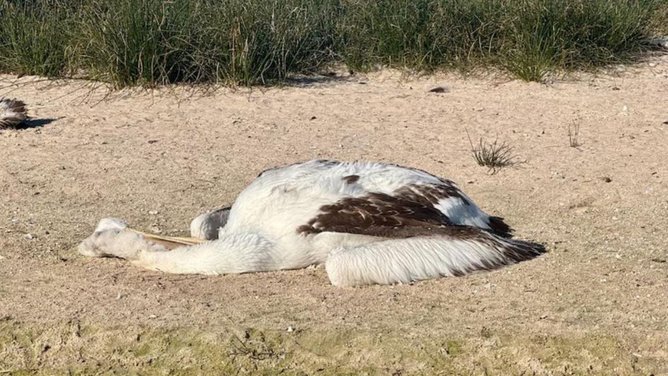
Hundreds of native pelicans have dropped death at a highly significant wildlife wetland, with authorities left scrambling to explain what killed them.
Wetland Revival Trust Ecologist Damien Cook made the shocking discovery at Lake Cawndilla in NSW, which is part of the Darling River’s Menindee Lakes system near Broken Hill, earlier this month.
The area is an important bird and fish habitat in the Kingchega National Park that attracts rare waterbirds such as brolgas, water fowls, freckled and blue-billed ducks, about 1070km west of Sydney, according to the NSW National Parks and Wildlife Service.
Mr Cook said he was “pretty shocked” to find 400 dead pelicans at the lake.
Investigations have ruled out H5 bird flu as the cause.
“It didn’t come back as bird flu, but I think it’s quite hard to get a positive identification if the birds have been dead for a while,” he said.
“Bird flu or not, it was still pretty shocking to find there.”
Mr Cook said authorities were trying to determine a cause of death, but it was not unusual for pelicans and other rookeries to die in large numbers when their food sources ran out.
He said when parents could not feed their chicks through fledging, younger birds could not fly off with their parents and perished.
“That sometimes happens at Lake Eyre, and it happened last year at Cawndilla, but it didn’t seem to be the case because there was still lots of healthy pelicans,” he said.
“There were young pelicans that had just made it through and were obviously fledged and hanging out with the adults, and there were still lots of other lots of other fish-eating birds.
“I even found a few, little fish called bony bream in in the lake there.”

Mr Cook said Lake Cawndilla was fairly remote so it was unlikely the pelicans died from pollution or toxins.
“Perhaps another disease, although other birds at the wetland seemed healthy,” he said.
The Department of Primary Industries and Regional Development (DPIRD) Deputy Chief Veterinary Officer Rhys Powell said the cause of death would be investigated over the next fortnight.
“Some tests have a very long lead time and botulism is one of those where it can take three to four weeks to get a diagnosis,” he said.
“We’ll arrange for a local veterinarian to go out and conduct some post-mortems and look inside the animals, just to see if there’s any markers of disease.”