Source : Perth Now news
Five Australians have now reportedly been found alive in flood-ravaged Nepal, delivering a major boost of hope as the desperate search continues for 38 Australians still unaccounted for.
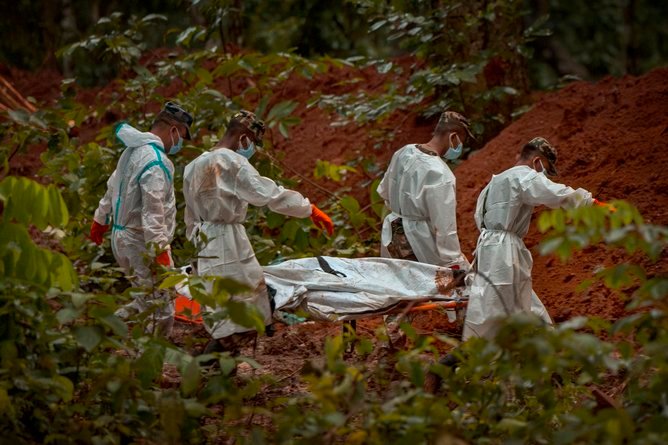
The encouraging update emerged on Wednesday morning, nearly a week after catastrophic floods tore through Nepal’s Himalayan border region with China, killing more than 1000 people and leaving thousands missing.
Rescuers are continuing to scour devastated towns, hydropower projects and collapsed tunnels, with heavy machinery, helicopters and specialist international teams deployed in the increasingly urgent hunt for survivors.
While the discovery of five Australians alive has offered desperately needed good news, the fate of another 38 remains unknown.
Hundreds trapped in tunnels
Some of the most desperate rescue efforts are centred on devastated hydropower projects, where hundreds of workers remain stranded or trapped underground.
At least 639 people remain stranded at hydropower stations, according to Nepal’s disaster management authority, while rescuers are attempting to reach nearly 300 workers believed trapped inside tunnels.
Prime Minister Balendra Shah said 279 workers had already been rescued from hydropower projects.
But collapsed tunnels and floodwaters have made reaching some of those still missing extraordinarily difficult.
“Our first rescue observation at Trishuli Hydro Power plant shows that it is not humanly possible to go into the tunnel,” mountain guide Asish Gurung, who is helping with the rescue, told Reuters.
“We need machines like bulldozers and excavators … There may be about 500 people trapped inside,” he said.
More than 11,000 people have now been rescued across Nepal, while power and communication lines have been restored in some areas.
For survivors, however, there is little left to return to.
“We did not have the time to grab anything before fleeing,” one survivor from the badly hit Rasuwa district said.
“What we were wearing is the only pair of clothes we have. And even they are wet from rain.”
Scale of devastation emerges
A preliminary United Nations Development Program estimate found the floods left behind at least 2.2 million tonnes of debris, including parts of buildings, rocks and sediment.
“The amount of debris shows the scale of the destruction and the challenge communities face as they clear homes, roads and public spaces and begin to rebuild,” it said.


International assistance is also ramping up.
China will send DNA testing experts and another shipment of relief supplies, including drones and water purification equipment, while South Korea is deploying a 44-member emergency relief team.
More than $US42 million ($A59 million) in aid has already flowed into Nepal.

As rescuers continue digging through the devastation and Australian families wait anxiously for news, Mr Shah said the disaster was also a warning about the growing risks facing the Himalayan region.
“The time has come for us to strongly raise before the international community the disasters we are experiencing as a consequence of climate change,” he said.
– With Reuters