

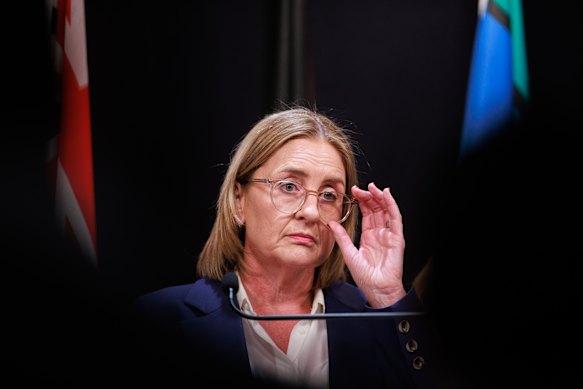
source : the age
We’ve all heard someone wax lyrical about the “declining influence of traditional media” as if it is some kind of undisputed fact.
Well, today I write to you to dispute it.
It’s a common lament but one that, from where I sit, doesn’t stack up.
The media landscape has changed, undeniably. People consume news in different ways and, yes, in different places. But they still consume news. And where does most of that news come from? Traditional media. Much of which is not so traditional these days; our podcast team, social media video experts and live bloggers can tell you more about that.
Although audiences seek news on a range of platforms that only science fiction fans would have predicted just a couple of decades ago, people are still consuming news, publications are still speaking truth to power and, importantly, decision-makers are still listening.
We need only reflect on the week’s events to prove that point.
On Monday, Premier Jacinta Allan announced her intention to bolster the investigative powers of Victoria’s anti-corruption watchdog in the next term of parliament. This was undoubtedly a positive step for anyone who cares about fair and proper use of public money. It was also a startling change of course from a government that until this week had refused to take any meaningful action to prevent the haemorrhaging of money from taxpayer-funded projects. The amount that has ended up in the pockets of criminals, bikies and corrupt union officials was estimated at $15 billion by the anti-corruption lawyer tasked with investigating allegations for the federal administrator.
The government announcement – and indeed the federal government-imposed administration of the CFMEU – follows a slew of tenacious reporting led by Nick McKenzie under enormous pressure from nefarious actors wanting to shut down the story. McKenzie was supported in this painstaking investigative work by colleagues across the newsroom, but also from other mainstream media outlets, namely The Australian Financial Review and 60 Minutes, which like The Age are owned by Nine.
While it was pleasing to see the Victorian government begin to treat the issue with greater seriousness (Queensland is holding a commission of inquiry to investigate union corruption), nothing has been added to this state’s corruption fighting toolkit, nor will it be in this term of government under current plans. Nor has any form of inquiry been held in this state, beyond referrals to Victoria Police’s Taskforce Hawk, which was set up to investigate criminality in the construction industry.
As McKenzie said in his analysis of the government’s announcement, filed after his to-and-fro with the premier at her Monday press conference: “The problem with Allan’s Monday afternoon announcement is that Victorians learnt IBAC must wait until the end of 2027 to get powers it desperately needs to identify which bikie gangs and members of Melbourne’s underworld have lined their pockets care of the infrastructure scheme the premier previously oversaw as minister.”
Separately, our editorial on Wednesday asked: “If a government promises to have a committee report back on something after an election, is it actually a promise?”
That editorial also reserved criticism for the Jess Wilson-led opposition, which had been enthusiastically scoring points off the government’s failure to properly address this issue. The opposition has committed to legislate in December, if elected, to address corruption on the Big Build, give IBAC “follow-the-money powers”, lower the threshold for public hearings and hold a royal commission.
However, Wilson would not initially commit to broadening the watchdog’s definition of corruption. As Chip Le Grand reported, integrity experts cite that as the single most important change required to fight back against corruption in this state. Two days after our editorial said the opposition “cannot credibly position itself as an anti-corruption champion in the coming election while maintaining support for the narrow definition that currently prevents IBAC from investigating misuse of taxpayer funds or complicity in misconduct”, Le Grand reported on a change of heart from Wilson.
Outside of politics, there was a flurry of action from Taskforce Hawk with raids on the home of Melbourne’s most famous underworld figure, Mick Gatto.
The arrest of Gatto at his Mount Martha property on Wednesday came just days after officers raided the Point Cook property of his associate and Big Build subcontractor Nic Maric. No charges have been laid against either man. The Age has published numerous articles about how the pair’s dealings have attracted the attention of authorities.
Strata management – an issue that affects one in four Victorians – was another focus of The Age this week. Rachael Dexter has fervently pursued this story for months, and on Sunday she revealed a confronting recording of a strata manager brazenly asking for kickbacks from a building services contractor, in a corrupt practice that will leave every apartment owner and renter seething.
Again, the Victorian government responded with a proposal for change following a review that began before the latest reporting by The Age. We should also acknowledge the role played by the ABC’s Four Corners and its former reporter, now Media Watch host, Linton Besser in bringing the issue to public attention. Another “traditional media” outlet.
The government’s proposal stopped short of banning some practices found to be costing owners. Today, our editorial argued in favour of a more aggressive approach to cleaning up this sector in a state where the government is actively encouraging more of its citizens to embrace apartment living.
Before the federal government’s crackdown on extremism by neo-Nazis, which is currently the subject of a High Court challenge, The Age and others reported extensively on the growing boldness of these extremists in the community. That kind of reporting, such as this piece from Sherryn Groch this week revealing their wealthy associates, matters. Please note the use of the present tense.
Examples such as this are not uncommon. The Age or another publication puts an issue in the spotlight and governments, police, businesses or others in positions of power tend to act.
I am not arguing the media deserves applause or congratulations. The credit should go to those who speak up, speak out and reveal hard truths to the world by telling us their stories, sometimes at great personal risk.
What I am arguing, and what the above examples highlight, is that publications such as ours, which operate with a conscience and commitment to the public interest, still have the power to influence the public conversation for the better.
So the next time someone talks about the declining influence of “traditional media”, send them this link. Better yet, tell them to subscribe. That is the best way to bring more issues like these into the public gaze.
Thank you for helping us do that this week.
Start the day with a summary of the day’s most important and interesting stories, analysis and insights. Sign up for our Morning Edition newsletter.