

Source : the age
Two decades ago, I sat in my office at Sydney University and watched an incredibly fit young man in his late 20s break down in heaving sobs. He was an elite footballer at the top of his game playing with one of the leading NRL clubs.
He’d asked to meet. He said he wanted to get something off his chest. At the time, I was a pro bono gender adviser to the National Rugby League and was working with a team of researchers to understand the off-field culture of the game following an alleged group sexual assault in Coffs Harbour.
When the then CEO of the NRL, David Gallop, approached me in 2004 about conducting education with the players, I told him that there was no point running programs that were not grounded in real-world scenarios. So we surveyed all the players about off-field behaviour and we followed up with in-depth interviews. We repeated the research every five years and designed and evaluated education programs based on what we learnt.
What surprised me most was the honesty of the players. Many of them wanted to talk. In the case of the man sobbing in my office, he wanted to clear his conscience. He told me about staying in a hotel on an away game and becoming aware that a group of his teammates had taken an extremely inebriated young woman back to a hotel room.
He said he wanted to intervene but hesitated because one of the guys was a star player. The next morning, he saw the young woman stumbling down the hallway in tears. “That’s stayed with me,” he said. “Her expression. I knew something really bad had happened. The look on her face will stay with me forever.”
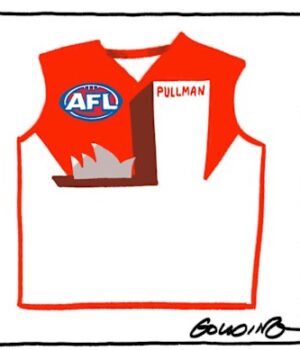
The Sydney Swans are currently facing their own reckoning over off-field culture with five players stood down for breaching the club’s standards. There are also allegations that a sexual assault occurred. No-one has been charged.
It’s heartening to see that much of the media commentary, including by the AFL, has focused on the importance of supporting any woman who might have been harmed. And that’s a big shift from the days when women who partied with footy players were dismissed as “groupies” and the only thing that mattered was what happened on the field.
We’ve come a long way since I started working with the NRL. I clearly remember an arrogant corporate type laughing at me for suggesting there should be an elite women’s league. He thought “breasts” were not designed for body contact sport. Seriously?
What we are still not discussing is what we know about making lasting change in the male-dominated world of elite football. Without ever excusing gendered violence or harassment, it is critical to see that young men playing elite sport are thrust into a culture of extremes.
On one hand, they are disciplined to within an inch of their lives when it comes to training, diet and performance. On the other, they are expected to adapt overnight to making money their everyday peers can only dream of, to fame, to the desire to “cut loose” after a big win and to lots of people who want to party with them.
How they adapt varies with the level of support they get from senior players and their clubs. Education programs have to be grounded in real-world scenarios that they encounter off the field in their surreal lives.
I’ve long held that we owe it to these young men to give them a chance to talk openly about real-world situations they face off the field with educators they can relate to. At the NRL, we used ex-players working alongside professional educators.
Education that works is sustained, engaged and delivered by people who are motivated to make lasting change around the horrific rates of gendered violence. Dannielle Miller, director of education at Women’s Community Shelters, is a good example. Her programs focus on understanding young men rather than simply lecturing them.
Former Swans player Brandon Jack has written a compelling novel, Pissants, about the brutal and misogynistic culture that sometimes defines off-field bonding in the AFL. But it is equally a book that examines male loneliness and uncertainty in the face of an enormous pressure to fit in with the group.
In Helen Garner’s latest book, The Season, she follows her much-loved grandson’s under-16s footy team. A passionate AFL supporter, she sees “a kind of poetry” in the grit and grace of team spirit. Garner’s book is characteristically generous, reflective and insightful. It’s a book that asks a critical question: what is it like to be poised on the brink of manhood today?
As for the five key Swans players stood down for breaching their club’s code of conduct, the club and the AFL should be commended for acting swiftly and putting the broader culture of the game ahead of what happens on the field.
Catharine Lumby is a professor of media at the University of Sydney. She was a pro bono gender adviser to the National Rugby League for 15 years.
Get a weekly wrap of views that will challenge, champion and inform your own. Sign up for our Opinion newsletter.
 Catharine Lumby is a professor of media at the University of Sydney. Her latest book is Frank Moorhouse: A Life.

