

Source : the age
Not long ago, playing Dungeons & Dragons was considered akin to making deals with the devil. The role-playing game inspired immense panic in the 1980s, with some parents and fundamentalist religious groups worrying it would expose children to dark, demonic whims.
This panic didn’t last forever, of course. Concerns subsided as psychologists and players pushed against the ludicrous claims. However, even as it became more socially acceptable, the game remained largely relegated to the periphery of society – something only “nerds” would play.
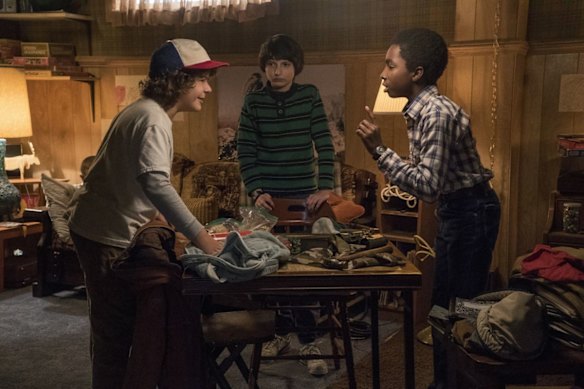
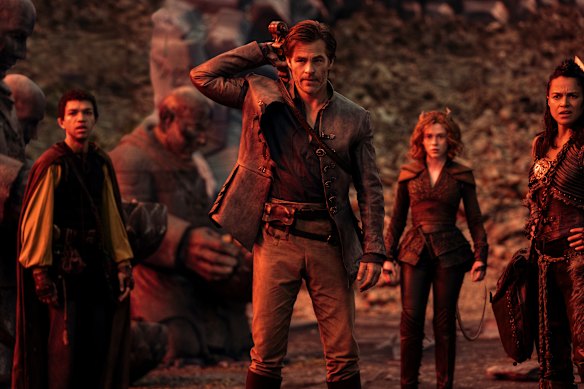
Thankfully, being “nerdy” no longer means what it used to. Nowadays, D&D is everywhere – the teens of Hawkins play it in Stranger Things, Chris Pine lives through it in Dungeons & Dragons: Honour Among Thieves, and voice actors master it for millions of viewers in Critical Role. Even Vin Diesel has played it. Over its 50 years, the game has gone from a satanic ritual or nerdy pastime to an all-out pop-cultural juggernaut.
While the game itself is everywhere, less is known about the people driving it. D&D wouldn’t be possible without its dungeon masters (DMs), those who build and lead the fantastical adventures. They’re so sought after there are Australian online marketplaces, helping players connect with experienced D&D masters across the country.
So, what exactly does it mean to be a DM, and what does it take to be at the forefront of an ever-growing cultural phenomenon?
Matt Hillman
Fantasy always appealed to Matt Hillman, a 44-year-old game master at Melbourne’s HP Gamemasters. It eventually led him to D&D in high school, where he’d play with a group of friends during lunch. However, it wasn’t until the COVID-19 lockdowns, when he suddenly had ample spare time, that the game really took hold of his life.
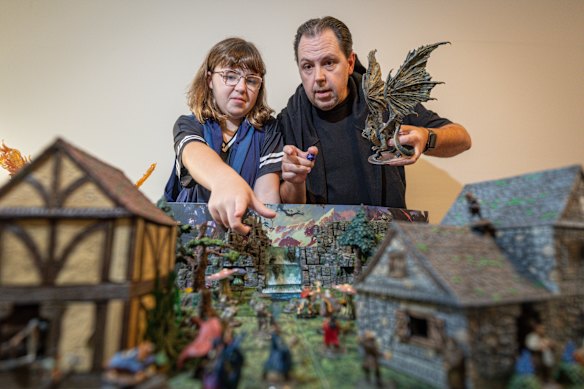
Being a DM is now Hillman’s full-time job. Each week, he spends around 15 to 40 hours planning “home-brew” campaigns (adventures based entirely on his own imagination rather than pre-written journeys), some of which he releases for other groups to enjoy.
So detailed are his campaigns that he sometimes fills out three entire notebooks with character traits, notes on narrative developments, setting descriptions and so forth. One of his favourite campaigns, “Tyranny of the Dragons”, ran for over a year, with its war finale lasting 16.5 hours.
There is some debate over whether DMs should be paid for this kind of work, Hillman says. However, it’s becoming more common, particularly given the time people like himself invest.
“It’s meant to be a hobby, but the benefits of having a paid DM is you then have someone with experience,” he says. “They have materials, kit and supplies to make the experience more spectacular. They’re also not necessarily a friend, which is good because sometimes when you’re DMing for friends and something goes wrong, that can be friendship-breaking. People get very passionate about this, particularly if you have a problem player at the table.”
D&D isn’t just Hillman’s job, it’s also a way for him to bond with his 12-year-old daughter. She was in one of his first-ever campaigns, during which she just repeatedly set fire to everything with fireballs. She has since focused, Hillman says, and recently requested a D&D-themed birthday party. She’s even running some of her own games.
“Anyone can be a DM,” he says. “There’s no prerequisite. You just have to be willing to sit behind the screen, plan out what’s going to happen for your players, and help drive the collective story you’re telling. There’s no real rules.”
Alicia Warren
Alicia Warren’s first D&D campaign ended in literal flames. The curtains were drawn while they played, and when they opened them hours later, a fiery red sky from the 2003 Canberra bushfires greeted them.
“It was almost like the D&D universe had followed us back into our universe,” Warren says.
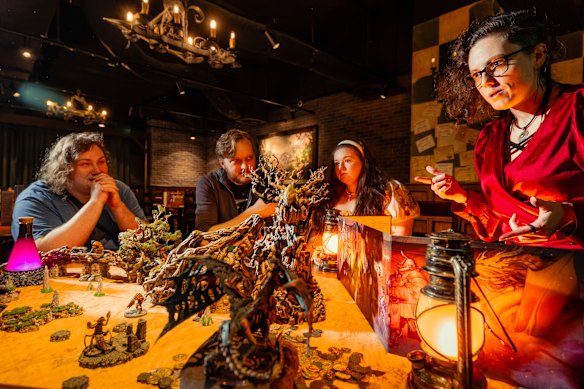
This experience immediately hooked her, leading to the establishment of Geek on a Leash, a Sydney-based business that helps connect people with game masters for various role-playing games. Nowadays, Warren runs around four to five games a week, for which she’s paid on average $40 to $80 per hour.
“You just need the drive to do it, and the capacity to either learn a pre-written module or understand the structure of the world enough to be able to create a story for your players,” Warren says. “It helps if you’ve got a passion for performing. If you bring enthusiasm to the game, it’s almost impossible for your players not to be drawn in.”
Clear communication skills help too, whether you’re a meticulous planner or a looser improviser. You can hone these skills by watching other DMs in action, she says, either in-person or via webseries like Critical Role. A short improvisation course could even help, Warren says.
It isn’t necessary, though – you can ultimately draw inspiration from anything.
“I can be staring at a blank page for a long time before something will finally spark inspiration. It can be the strangest things. I could be walking my dogs, and a thought comes to mind after seeing a native bird,” Warren says. “Other times, it’s the lyrics of a song. I’m in the middle of completing a four-week campaign inspired by the lyrics to the Eagles’ Hotel California.”
The only real challenge, she says, is co-ordinating times to play. The game also used to have a reputation for gatekeeping, being a pastime largely dominated by white men. However, Warren says this has changed significantly over the past decade.
“When you look at the statistics of who plays D&D, many are of minorities and different neurodiversity. You get a lot of people coming together. It’s a co-operative game where there’s a lot of acceptance and love of people just as they are,” she says.
“People share their experience of using D&D to help discover more aspects of their own self and personality that they weren’t otherwise aware of or didn’t feel comfortable expressing in the real world. It’s helped some people really discover themselves and feel more complete.”
Lachlan Jones
Lachlan Jones began playing D&D at the tail-end of the “satanic panic”. He was nine years old, and had just discovered a neighbour’s beginners’ box set. This didn’t sit well with his other neighbours, however, who advised his parents to stop him from playing such “devilish” games.
Thankfully, his parents didn’t heed this advice, and Jones is still playing to this day. He also runs games around twice a month, taking players on all kinds of adventures, from Pirates of the Caribbean-themed escapades to battles against gargantuan sharks with laser-beam eyes.
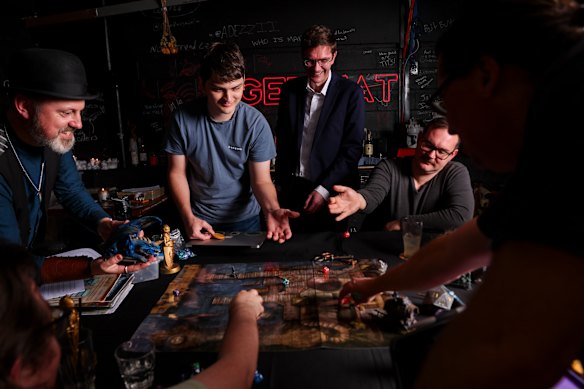
The “nerdiness” associated with DMs hasn’t disappeared, Jones says. In fact, he calls himself “nerdy in every possible sense”. The difference now is that “nerd” or “geek” labels don’t carry the judgemental heft they once did.
Shows such as Critical Role, a massively successful web-series in which voice actors play D&D, have played a significant role in shifting these attitudes, encouraging a growing number of people to try it. This has subsequently lifted the barrier of entry, Jones says – even if it didn’t intend to.
“Critical Role’s popularity puts some of the people who run the games on such a pedestal that it can actually dissuade others from wanting to try running a game themselves,” he says.
“You have that added pressure to live up to those who are famous for doing it, especially because you have an audience when doing it. Even if it’s just your friends, you always have an audience … That’s why I take the opportunity whenever I can to tell people that anyone can run a game.”
Jeremy Vine
Jeremy Vine, a Sydney-based DM at Masters of Alchemy, has been playing D&D since the ’80s. He’s therefore seen its appeal ebb and flow over the decades, but he doesn’t see its popularity ever disappearing.
“It’s tempting to see it as just another fad, but humans as a species love the concept of play-pretend and storytelling. D&D has been able to unlock that joy in multiple generations,” he says.
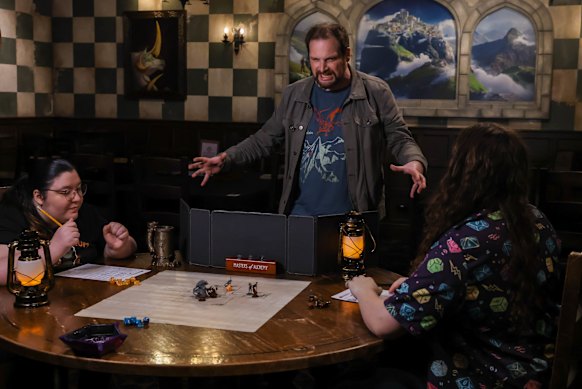
“It’s a game where people can create their own world, and play the game the way they want. That in itself makes it something people can shape to their own enjoyment, and create their own ways of keeping it fresh and enjoyable.”
A great DM helps facilitate this, Vine says. Instead of controlling the game, he says they should become fans of their players’ characters. Keeping an open mind to player contributions is also key, as things rarely go as planned.
“I think the last decade has been one of upheaval, and people will always be looking for escapism during that time,” he says. “It also coincided with an incredibly strong version of the game being released and the wave of people who had played the game in their youth now reaching the age where they make decisions and have the opportunity to create the culture.”
Must-see movies, interviews and all the latest from the world of film delivered to your inbox. Sign up for our Screening Room newsletter.


