

Source : THE AGE NEWS
In a lightning-fast transformation, Larvotto Resources has crossed the development finish line and joined the producer ranks, firing up gold and antimony production at its 100 per cent-owned Hillgrove mine in New South Wales.
The milestone anoints the company as Australia’s second – and by far its largest – antimony producer, with Hillgrove expected to supply seven per cent of global demand and more than half of supply outside China-controlled sources.
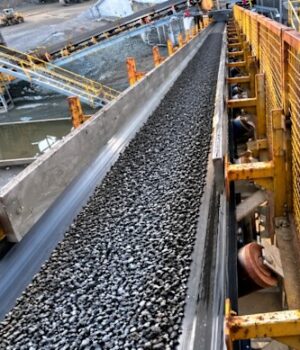
With the processing plant now fully up and running, the operation is forecast to produce 4900 tonnes of antimony and 40,500 ounces of gold annually over an initial eight-year mine life. Adding to its credentials, routes to market are already established, with a seven-year Glencore gold concentrate offtake expected to cover 15,000 dry metric tonnes annually, alongside an antimony concentrate arrangement with Wogen Resources.
The story behind Larvotto’s remarkable rise is almost as compelling as the mine itself. It was only in mid-2023 that management first knocked on the administrators’ door for the dormant Hillgrove operation. With no rival bidders stepping up to the plate, the company swooped with an opportunistic $8 million offer – including a $5 million environmental bond – and walked away with what would prove to be a brownfields bargain.
‘Becoming Australia’s biggest antimony producer is a significant achievement, particularly when securing reliable supply of antimony, has become a strategic priority for governments around the world.’
Larvotto Resources managing director Ron Heeks
Less than three years later, the mothballed operation has been transformed into a producing gold-antimony mine and the market has come along for the ride. Larvotto shares have blasted from just 9.5 cents to a high of $1.67. Even at the current $1.14, the company boasts a thumping $587 million market capitalisation – a spectacular re-rating from a deal struck for relative pocket change.
The project came with a sizeable inheritance, giving Larvotto a head start most mine developers could only dream of – underground workings, a processing plant, grid power and water systems, after previous operators sunk more than $150M into infrastructure.
The company completed a prefeasibility study in August 2024 and a definitive feasibility study in May 2025, prior to funding, underground development, plant refurbishment, and staged commissioning. The first development ore from the underground Metz mining area reached surface stockpiles in May, three months ago, before crushing and screening were commissioned in July.
Larvotto has also added the operational and technical expertise to capitalise on those foundations, growing its workforce beyond 180 people, with 95 per cent of Hillgrove’s operations crew based in NSW’s New England region.
The 254-square-kilometre historic Hillgrove project, 23 kilometres east of Armidale, packs a hefty 1.7-million-ounce gold-equivalent resource across six key mining areas, with its antimony-gold riches locked up in a network of structurally controlled hydrothermal veins.
Larvotto Resources managing director Ron Heeks said: “In less than three years, we have taken Hillgrove from acquisition, resource and reserve assessment, PFS, DFS, funding and construction to production, establishing Larvotto as Australia’s largest antimony producer and a globally significant new source of this essential critical mineral.”
With the start-up in the rear view mirror, focus is now firmly on developing avenues to add future mine feed as Larvotto pursues a multi-decade operation centred on the existing processing hub. The company has resource growth opportunities around established mining areas such as Metz, as well as exploration targets elsewhere across the wider Hillgrove field.
There is also scope to broaden the project’s production mix, with near-term plans to produce tungsten concentrate. Its tungsten occurs as scheelite within its broader mineralised vein systems and an already installed, though currently dormant, gravity circuit offers a potential pathway to add a third metal to the gold-antimony mix.
Hillgrove is also intended to anchor a broader critical-minerals portfolio. Larvotto’s other assets include its Mt Isa copper, gold and cobalt project in Queensland and Eyre multi-metals and lithium project near Norseman in Western Australia, providing growth exposure beyond NSW.
However, it’s the company’s timing at Hillgrove that has the tongues wagging. New production is poised to ride a wave of booming antimony demand across renewable energy, electronics, artificial intelligence and defence as the West scrambles to secure alternative supply.
The metal is one of three minerals prioritised alongside rare earths and gallium under Australia’s $1.2 billion Critical Mineral Reserve Strategy. China’s 2024 export restrictions have tightened the supply picture and Larvotto says no new ethically mined Western supply is expected in the near term.
Hillgrove’s potential role in diversifying global antimony supply has been noticed. Larvotto is now part of the international push for reliable supply outside China-controlled sources, having recently engaged in high-level discussions with government and industry stakeholders in Australia, the US, Taiwan and Japan.
From a fortuitous call to the administrators in October 2023 inquiring about the historic and dormant mine to a humming processing plant with first revenue on the horizon, Larvotto has successfully navigated the difficult transition from developer to producer. The job now is to ramp output, bolt on tungsten and turn an initial eight-year mine into a multi-decade operation with Hillgrove firmly planted on the global critical-minerals stage.
Is your ASX-listed company doing something interesting? Contact: mattbirney@bullsnbears.com.au


