Source : Perth Now news
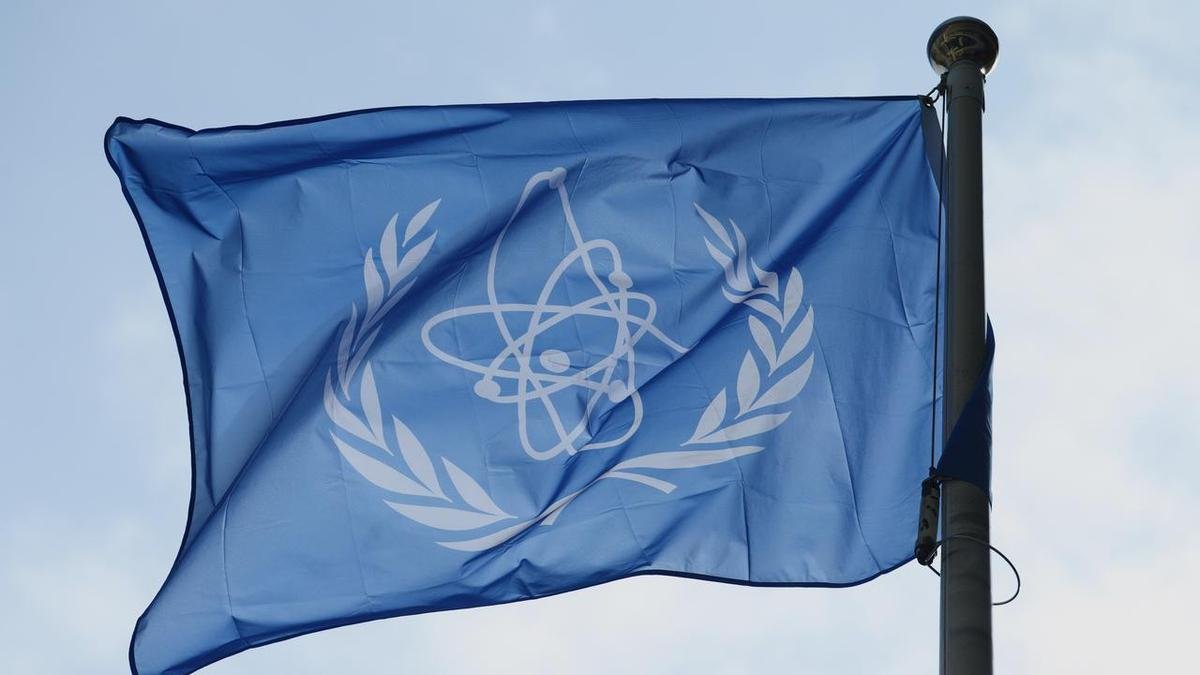
The United Nations nuclear watchdog’s 35-country board of governors has passed a resolution reporting Iran to the UN Security Council for the first time in 20 years for breaching its non-proliferation obligations, diplomats say.
The resolution follows a previous one passed on June 12 last year – the day before Israel started bombing Iran’s nuclear facilities, soon followed by the United States – that concluded Iran was in “non-compliance” with those obligations.
Reporting it to the council for that breach required another resolution.
The Security Council is unlikely to take concrete action against Iran since its allies Russia and China are permanent veto-wielding members.
Iran warned on Monday it would retaliate if the resolution passed.
An initial reaction by Iran’s mission to the International Atomic Energy Agency, however, did not mention retaliation.
“Once again, a political resolution on Iran is nonconsensually adopted by the IAEA BoG (Board of Governors),” it said on X, referring to the fact the resolution was voted on rather than adopted without any country objecting.
“The current situation is created solely because of the criminal acts of aggression by the U.S. and Israeli regime. The delusional objective of the US to force the great Iranian nation into ‘surrender’ and to plunder its oil will never happen,” it added.
The resolution text, proposed by the United States, United Kingdom, France and Germany, passed with 23 votes in favour, three against and eight abstentions, said diplomats at the closed-door meeting, adding that those that opposed it were Russia, China and Niger.
“(The board) requests the (IAEA) Director General to report this resolution and the previously adopted resolutions … to all Members of the Agency and to the Security Council and the General Assembly of the United Nations, in accordance with the relevant provisions of the IAEA Statute,” the text read.
While the finding of non-compliance predates the war between the United States and Iran and concerns an Iranian failure to explain uranium traces found at undeclared sites that the agency spent years investigating, there is now another stand-off over IAEA access to the sites bombed by Israel and the US.
Iran has not let IAEA inspectors return to its bombed sites, including the three uranium-enrichment plants at the heart of its nuclear program that were destroyed or badly damaged in the military strikes.
Iran has also not accounted for its stock of enriched uranium, some of which was enriched to up to 60 per cent purity, a short step from the roughly 90 per cent of weapons grade.
“The agency’s lack of information about these facilities and associated nuclear material and our inability to conduct verification activities at these facilities is a matter of serious proliferation concern,” IAEA chief Rafael Grossi told his agency’s board on Monday.
“The situation needs to be rectified with the utmost urgency,” he added.
The IAEA estimates Iran had 440.9 kg of uranium enriched to up to 60 per cent before the US-Israeli attacks.
That is enough, if enriched further, for 10 nuclear weapons, according to an IAEA yardstick.
How much has survived is unclear although the IAEA has said it believes more than 200kg remains at one site.
Iranian authorities said on Wednesday its armed forces had attacked 10 ships near the Strait of Hormuz after the US sank five Iranian oil tankers.
The attacks sent the price of oil surging, with benchmark Brent crude futures breaching $US100 a barrel for the first time since July.
At least one seafarer aboard a tanker was reported killed and another listed as missing.
Iran also said it had fired ballistic missiles at a base used by US forces in Jordan.
The Revolutionary Guards said they would sharply escalate their response to any further attacks, hitting 20 targets if the enemy struck two or three.
Iran would soon release maps of a new, enlarged off-limits zone at sea that would extend as far as Chabahar on the far reaches of Iran’s coast near Pakistan, the Guards said.
UN Secretary-General Antonio Guterres appealed to all sides to “exercise utmost restraint” and avoid inflaming the already volatile situation in and near the Strait of Hormuz.