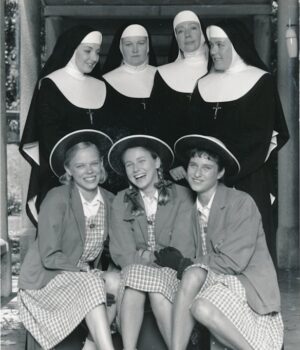
Source : the age
Brides of Christ is officially a middle-aged woman this month, the landmark miniseries having screened on the ABC over six scintillating and controversial weeks in 1991. Have mercy on me, O Lord, but I still think it might just be the best six hours of Australian television ever made.
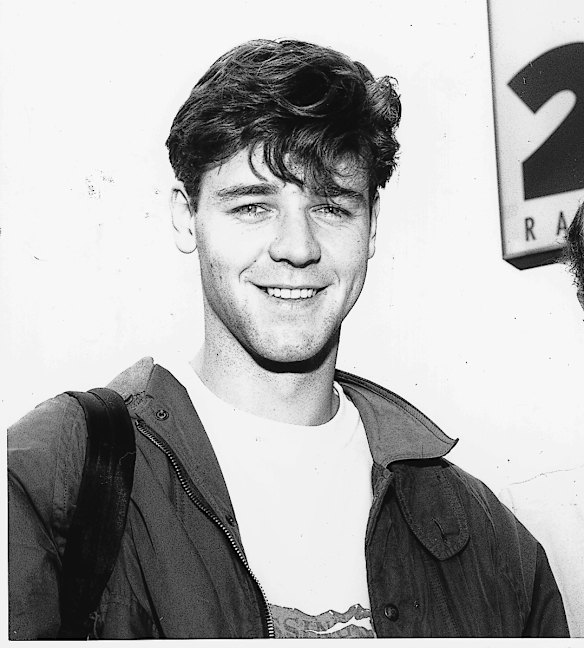
When it premiered 35 years ago on September 4, it all felt rather radical: Nuns and Catholic schoolgirls trying to be the women they want to be in a changing Australia, while the church and society are trying to keep them on a leash (except for a pre-phone-chucking Russell Crowe, who needs some sexual tutelage before flying out to the jungles of Vietnam).
Brides of Christ heading into middle age, however, comes with a remarkable discovery: we can age with it.
I first watched it as rerun at about age 13, and spent the coming years terrified about sex – my BOC interpretation was that sex looks awful, being a nun would suck and why (35-year-old spoiler alert!) couldn’t Sister Paul make it with Father Jack?
In my 20s, my viewing was angry at the Catholic Church and all the ways it tethered the women trying to live within it. In my 30s, it was all about the technical brilliance of the series – the economy of the writing, beauty of the cinematography and truth in the performances.
Now in my 40s, watching Brides of Christ is a profound experience: one where I realise every single character is drawn with compassion. Where once Brenda Fricker’s Sister Agnes was a cross taskmaster, I see her as a woman whose security and self-worth comes through playing by the rules and wanting the same for those around her. Where Kym Wilson’s Rosemary was once the mean girl I feared at school, I see her vulnerability and desperation to find a place in the world where she feels like she belongs.
The miniseries was the brainchild of producer Penny Chapman, inspired by her school days in the Catholic school system at St Bede’s at Braidwood and St Scholastica’s at Glebe. It tells the stories of three generations of women being educated or existing within a fictional order of nuns.
Chapman told ABC Local Radio she pitched the show to the ABC, having experienced nuns as “very independent thinkers” during her own education and wanting to explore why “feminists like Germaine Greer and Susan Ryan credit the nuns with a great deal of their formation” despite the restrictions placed on women by the Catholic Church.
“I wanted to make a series about women and authority,” Chapman said. “A show about how a particular group of women deal with authority and the politics of that.”
The show is set firmly in the mid-to-late-1960s, but the only thing “swinging” in this world on screen are the rosaries adorning the nun’s habits. It’s a pre-Whitlam Australia: young men are still being sent to war via the birthday ballot, the White Australia Policy hadn’t been completely dismantled and the 1967 Indigenous referendum was yet to happen.
It’s also a time of great upheaval within the Catholic Church. The Second Vatican Council (or Vatican II to most) was debating ways on bringing the church into the modern world. It’s also the decade where women finally got a bit of control over their reproductive rights, with the birth control pill introducing more sexual freedom, even though the Catholic Church would officially reject it in 1968, reaffirming its use as a mortal sin.
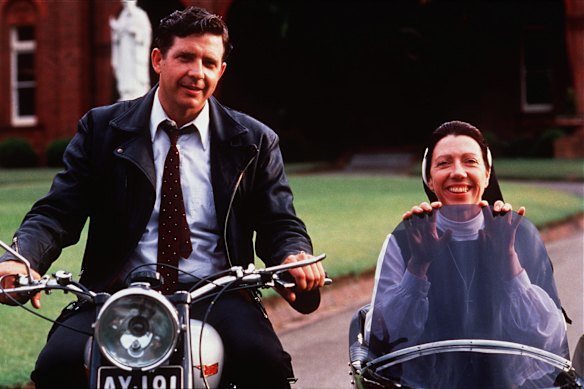
This is the societal backdrop in which Brides of Christ asks us to follow the stories of Diane (the university graduate who ends her engagement for the convent), Frances (a young Naomi Watts dealing with the shame and confusion of divorced parents), Ambrose (the mother superior who begins to question everything), Rosemary (the rebel with the raging hormones), Paul (the all-heart innocent nun who falls in love with a man) and Catherine (the former Diane, now finding her place in a church denying birth control untenable) – and the many nuns, students and women (and occasionally men) in the Church community.
These stories were expertly woven by writers John Alsop and Sue Smith, who crafted each hour’s episode to include the personal emotional journey of the character whose name is on the episode and the wider community implications of the issue within.
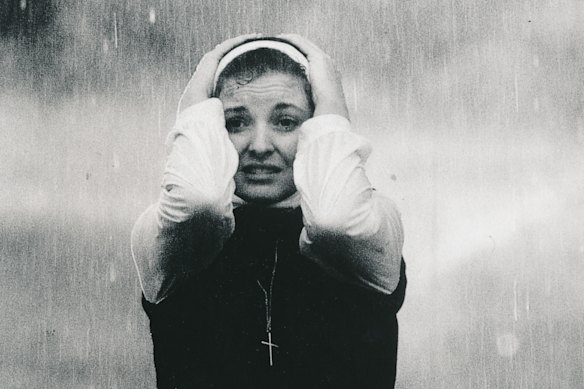
The writing is so good and the performances so truthful, it’s only on reflection you realise the personal is always political. It’s a truly great drama: tickling your funny bones one moment with cheeky nuns making jokes about each other, leaving you in floods of tears moments later when a middle-aged nun has a breakdown over the new post-Vatican II uniform requirements.
While it made young actors Josephine Byrnes and Lisa Hensley into household names, Brides of Christ is a rollcall of incredible Australian talent, and talent that would go on to huge international success – Watts and Crowe have featured roles showcasing some thoroughly relatable teen angst. If you look carefully, you’ll find a young Alex Lloyd leading the rock band at the school dance!
The miniseries was made for just over $6 million, which, converted to today’s money is about $14 million – a similar budget to what a six-part limited series could be made for today. A co-production with the UK’s Channel 4 and RTE Ireland, it quickly became the ABC’s most viewed drama ever, and went on to reruns on the ABC frequently.
In 1992, it swept the Logies, winning the “most popular” and “outstanding” awards for a miniseries, which means it was really popular, and also really good. By the time it won its fifth award that night, the whole of Australia could hum its evocative and enticing theme tune written by Mario Millo.
Seemingly, Brides of Christ could seem like an extremely niche subject matter – Catholic women in the 1960s, and their lives within the confines of the school and convent. Somehow, it’s this that gives the show its wide appeal: by focusing on the minutiae of these women’s lives, we see that humanity, and that humanity shows us that ultimately we’re all striving for the same things: security, community and a little bit of happiness and joy.
Brides of Christ’s huge mainstream success and wide appeal says something about the audience that is still relevant today: women want to see their stories told truthfully on screen. Women are half the population, and when the series was being made, women were being massively under serviced. Nine out of the top 10 films of 1991 were men’s stories (the one that wasn’t was a Disney cartoon about a young bookish woman being held hostage by a beast).
This is a high-end drama series unapologetically centring women’s stories. These women exist in relation to each other, not as an afterthought around a man or men. Their stories are taken seriously. In Brides of Christ, women are more than appendages – they’re intelligent, big-hearted and have aspirations that come up against the church status quo. At the same time, for some of the characters, the church is a safe space of tradition and security. The complexities of the church mirror the complexities of living within the patriarchy.
It’s also the Catholic Church of women: priests are little more than featured extras, the institutional sexual abuse we’ve come to know of since isn’t delved into. There’s a sexual safety to the nuns of this order, even if there isn’t always an emotional safety to their actions.
And that’s the thing with Brides of Christ, and why it has, for 35 years resonated so strongly with the women of Australia: every one of us wants to live a life of her own choosing, and feel secure in the community in which she lives – regardless of the limitations our gender may place on us.
Brides of Christ is six hours of vastly differing women in age, class and intellect, all striving to do just that.