

SOURCE :- THE AGE NEWS
Children always give me hope. Their natural openness, their curiosity about the simplest of things, and their ability to wonder, dream and play remind me of the very best qualities of humanity.
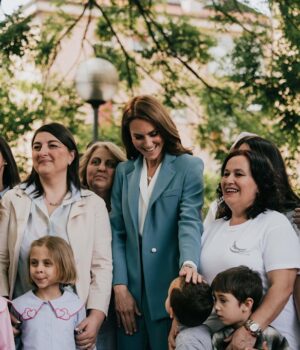
The children I met on my recent trip to Reggio Emilia radiated such qualities. Their innate ability to connect and communicate in all sorts of different ways made me feel immediately welcome, as they accepted a complete stranger with confidence and joy. The Italian city is globally renowned for its unique approach to early childhood. Since World War II, it has understood children as equal members of society.
Children are treated with genuine respect and encouraged to express and share their ideas through their own “100 languages” – the many verbal and non-verbal ways they have of expressing themselves. This approach has created a wider community of care, where all generations are valued equally and work together for the greater good.
The city’s approach is built on humility: a mindset that encourages empathy, selflessness and curiosity – the social and emotional skills needed to build healthy relationships. The people of Reggio Emilia have shown that happy childhoods are the foundation of happy communities, and that genuine connection begins with listening and understanding.
In an increasingly digitalised world, where so much of life is mediated through screens, the need for genuine human connection has never been greater. Many of us yearn to reconnect with ourselves, with others, and the natural world.
I believe that connection grounds us. It brings us back to our sense of self, to the present moment, to what is real and felt rather than abstract and distant. By spending time in nature or being creative, we can nurture the very skills and emotions that cannot be digitised: awareness, empathy, humility, and above all, love.
These foundational qualities help us relate to others, understand our place in the world, and ultimately find meaning in life. All of them echo a way of being we knew instinctively in childhood, marked by openness, curiosity and emotional immediacy.
What makes childhood so special? It is often described as a time of innocence, but perhaps what we are really sensing is something deeper. Before they learn to separate thought from feeling, or become inhibited by self-awareness and social expectation, there is a kind of openness that feels both intuitive and whole. They move naturally between imagination and reality, instinct and expression, presence and connection. What we recognise in them is not only innocence, but a way of being in which mind, body, and spirit exist quietly together through the felt world.
In this sense, childhood can be understood as the state in which we come closest to our true selves. As life unfolds, we learn to organise, interpret and make sense of the world through structure and language. These are essential and valuable skills, but they can also create distance from that early sense of connection. We become more aware of how we are seen, more careful in how we express ourselves, and often less anchored in that natural state of openness. Perhaps this is why so many of us, at different moments in life, feel drawn back toward stillness, toward nature, toward creativity and reflection.
Childhood, then, is not only a beginning: it is also a reference point. A reminder of our true nature – and one that, even as adults, we might try to rediscover.
It is vital to preserve the spirit of childhood alongside healthy development. Childhood is foundational in developing a healthy balance between mind, body and spirit. But children are not simply learners of information. They don’t analyse joy but live it; they don’t intellectualise connection, but embody it. They experience the world through feeling – through love.
Healthy social and emotional development is shaped through relationships with people and places. This happens everywhere, all the time: through movement and play, curiosity and interaction. When children are encouraged to explore, to question, and to express themselves freely, they develop not only understanding, but a sense of self and belonging.
Nature provides one of the most inspiring environments for such exploration. Giving children the time and space to engage with their landscapes, surrounded by natural light and the rhythm of the seasons, helps them develop a more grounded and intuitive relationship with the world. It is, in many respects, an early introduction to the restorative qualities of nature and the importance of feeling connected to something beyond ourselves.
Creativity, too, allows children to express thoughts and feelings that exist beyond words. Drawing, making, dance and play help them process experience and emotion in ways that feel natural to them, fostering confidence, resilience, curiosity and shared understanding. Creativity here becomes not just a skill, but a pathway to self-awareness and a richer way of life.
Attentive caregivers can deepen this sense of connection by creating conditions for children to think, feel and discover. Through close observation, careful listening and quiet reflection, we can cultivate an early sense of mindfulness: a capacity to be present, to notice, and to engage deeply with experience.
Early experiences of care, connection and play create the conditions for love to flourish. Nurturing a more integrated sense of wellbeing by focusing on environments which combine a connection to nature, creative expression, and mindful presence helps to support children in forming balanced relationships between thought, feeling, and physical experience and in turn the social and emotional skills that will prove so valuable throughout their lives.
In a world that can often feel fast-paced and fragmented, it is important to consider the environments in which children learn and develop. Healthy development needs to be holistic. It should reflect the whole child, beyond physical or cerebral milestones, acknowledging the importance of early relationships, experiences and environments.
By allowing children to feel connected from an early age, we can help them carry that sense of balance into adulthood. If healing later in life is about rediscovering our most important connections, then perhaps the real task is to ensure that they are never lost in the first place.
Last week, a parent at my children’s school asked me if we could all do just one thing, what would it be? My answer is simple: to prioritise love. I’m not talking about overly sentimental and romantic gestures, but love that is quiet and unconditional, built on time and patience: the joy found in ordinary things; the everyday magic of life itself.
This is how we stay well, remain connected to our inner selves and create the lasting relationships that nourish us throughout life. If we can surround children with nurturing, loving environments, we can help them build the human capabilities they need to thrive in the world today.
Get a note directly from our foreign correspondents on what’s making headlines around the world. Sign up for our weekly What in the World newsletter.


