

Source : THE AGE NEWS
Energy giant AGL has warned that One Nation’s plan to force it to keep Victoria’s largest coal-fired power station open beyond its scheduled 2035 closure will increase operating costs and the risk of unplanned outages, which experts say will backfire on consumer bills.
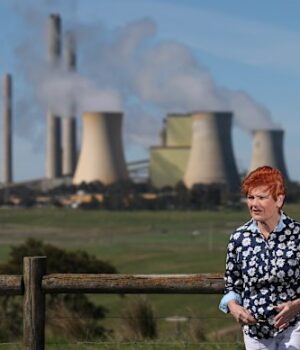
One Nation leader Pauline Hanson and her party’s Victorian leader, Warren Pickering, campaigned outside AGL’s Loy Yang A power plant in the Latrobe Valley this week, pledging to mandate its continued operation if elected.
AGL, one of Australia’s largest power companies, remains firmly at odds with the idea, confirming that its 2035 closure timeline for the facility is unchanged.
By 2035, Loy Yang A would be more than 50 years old, placing it among the oldest coal-fired power stations anywhere in the world, the company said.
An AGL spokesperson warned that forcing the ageing plant to remain operational as it neared the end of its technical life posed significant reliability risks. Because Loy Yang A often accounts for up to 30 per cent of Victoria’s electric grid, any increase in reliability problems and unexpected outages would raise the threat of price spikes or blackouts for consumers across the network.
“While AGL continues to invest in the safe operation of its assets, as ageing coal-generation fleets approach the end of their operating lives, they become increasingly costly and complex to maintain, with greater engineering, operational, safety and reliability challenges,” the company spokesperson said.
While coal still supplies about half of eastern Australia’s electricity market, its years left powering the grid are numbered. More than half of the remaining coal-fired generators are scheduled to close by 2035 as their owners grapple with rising maintenance costs, declining reliability and competition from cheaper renewables, especially during daylight hours.
AGL’s Liddell coal-fired power station in NSW, which was demolished earlier this year, was more than 50 years old before it was retired in 2023, and was frequently suffering sudden breakdowns.
However, speaking to reporters in the Latrobe Valley on Monday, Hanson claimed it had been a lack of investment that had resulted in companies wanting to shut down their coal plants.
“They’re reaching end of life because they haven’t put the money into doing the maintenance on them,” she said.
One Nation’s Pickering said he hadn’t spoken to AGL executives before launching the policy to keep Loy Yang open for “years to come”.
One Nation failed to respond to further questions from this masthead on Wednesday.
Energy industry experts warned that political interventions to prop up ageing coal infrastructure could often create the exact power crises and price shocks they were seeking to prevent.
Stephanie Bashir, the head of consultancy Nexa Advisory and a former AGL executive, said using public funds to keep failing coal units on life support would derail the rollout of renewables at a critical juncture, triggering a “disorderly transition”. Forcing Loy Yang A’s extension would lead to more frequent breakdowns, huge power price swings, and an increased reliance on costly gas-fired power generation to plug supply gaps, Bashir said.
“The only way forward for Victoria is to stay the course,” she said. “Anything else means that homes and businesses will pay the price in their bills.”
To ready the grid for the future, energy companies and governments have been pouring billions of dollars into building wind and solar farms, batteries and transmission lines to stitch together a bigger and more complex grid. AGL has a target to build 12 gigawatts of backed-up renewables over the decade.
There are signs the shift is having a positive impact. The Australian Energy Regulator recently credited record renewable contributions and battery installations for bill reductions of up to 10 per cent for hundreds of thousands of customers on retailers’ default power plans.
However, the transition is still lacking the speed that energy executives and the Australian Energy Market Operator deem necessary to compensate for the next decade’s wave of coal plant closures and ensure stable power supply during all weather conditions, meaning a further increase in investment in the transition remains critical.
There are particular concerns that not enough wind farms and high-voltage transmission links are being constructed quickly enough as developers run into rising costs, permitting delays and significant opposition from regional communities.
The Business Briefing newsletter delivers major stories, exclusive coverage and expert opinion. Sign up to get it every weekday morning.
 Nick Toscano is a business reporter for The Age and Sydney Morning Herald.Connect via X or email.
 Benjamin Preiss is The Age’s regional editor. He was previously state rounds reporter and has also covered education for The Age.Connect via X or email.

