Source : Perth Now news
Controversial reforms to carbon offsets opposed could generate more than $100m in key NSW electorates held by One Nation and The Nationals, new data has revealed.
A parliamentary briefing note provided by the Australian Climate and Biodiversity Foundation revised the expected statewide revenue in NSW from carbon offsets up by about $100m to an estimated $1.6bn over the next 15 years.
However, that revenue is dependent on the introduction of the Improved Native Forest Management method, which allows state governments to earn Australian Carbon Credits Units – economic offsets for emission production – by voluntarily ceasing forest harvesting in key public forests.
The method is currently stalled in the Senate ahead a September 15 vote on a disallowance motion introduced The Nationals.
One Nation have not formally backed the motion, but have advocated in favour of plantation farming and for scrapping emission targets.
Australian Climate and Biodiversity Foundation executive director Lyndon Schneiders urged The Nationals to dump the motion.
“The money at stake goes to the Riverina, to New England, to the North West, to the South Coast, the very communities they purport to represent,” he said.
“It funds fire management, pest control and forest jobs in the electorates they hold and the electorates they want. There is no case for blocking it.”
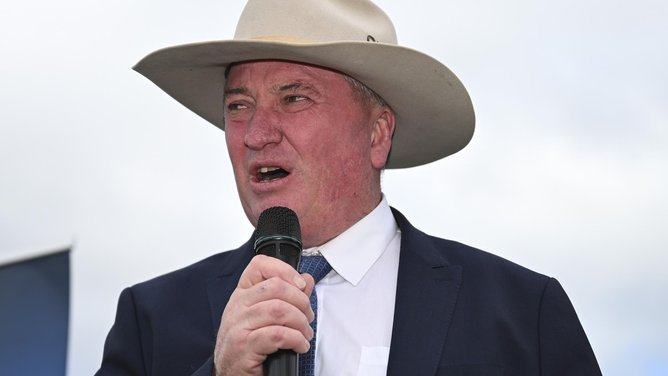
Data released by the ACBF found New England, which is held by former Nationals, turned One Nation MP Barnaby Joyce, could generate $118m under the method.
The Riverina, which is held by Nationals MP Michael McCormack, also stood to garner a further $148m.
In an August statement, Nationals leader Matt Canavan said the method needed to be “torn up” because it did not contribute to emissions reduction targets.
“Labor’s INFM method is just another way for Labor to force their net zero agenda on our forestry community, destroying lives and jobs in the process,” Senator Canavan said.
“Labor is setting up a scheme to use taxpayer money to pay states to shut down productive native forestry for carbon credits that don’t represent the emissions savings being claimed.
“The Coalition does not support the INFM method. That’s why The Coalition will vote to disallow the INFM method and we call on the crossbench to do the same.”
Speaking in August, One Nation senator Sean Bell said One Nation would “would not allow carbon credit schemes to distort the value of productive agricultural land”.
“Canada scrapped its consumer carbon price. The European governments are reworking their climate policies because of competitiveness, industrial pressure and household costs,” he said.
Barnaby Joyce has been contacted for comment.

Great Southern Forest
The vote comes amid a push in NSW for the establishment of the Great Southern Forest.
Stretching from Wollongong to the Victorian border, the forest contains some of the most carbon-rich state forests in NSW, according to the federal government.
“Protecting that corridor would generate more than half a billion dollars over 15 years and secure habitat for the Southern Greater Glider and the Swift Parrot,” Mr Schneiders said.
The Great Koala National Park, announced for the state’s mid-north coast in 2025, also stands to generate some $261m over 15 years.
Aimed at protecting more than 475,000Ha, some 12,000 koala, s and 36,000 greater gliders, the project is dependent on the passage of the new forestry method.
“This is a new way to pay for national parks,“ Mr Schneiders said.
“Revenue goes back into managing the forest for at least a century, which means fire management, pest control, Aboriginal cultural practices and threatened species work.”
The ACBF’s briefing note also includes, for the first time, analysis of carbon potential west of the Great Dividing Range.
It found Parkes, which contains about 24 per cent of forest zoned for harvesting in NSW, could generate an estimated at $78m over 15 years.
“Nobody has looked at what this means west of the divide,” Mr Schneiders said.
“These are forests where logging returns very little per hectare, and this is a way to fund fire and pest management jobs in country that badly needs them.”