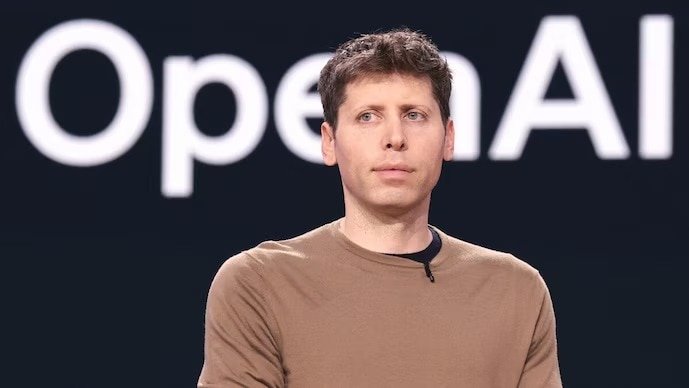
Source : INDIA TODAY NEWS
AI models today are quite advanced. Be it from OpenAI or Anthropic, AI models can do a lot of intensive tasks and calculations on their own. But one thing that remains a work-in-progress is to make AI feel less robotic and more human. But what happens when the people tasked with making an AI more human are found to be using AI themselves?
advertisement
As per a report from 404 Media, OpenAI has found many contract workers who were using AI tools to train the company’s AI models. The contract employees were part of OpenAI’s model-training projects, where they were tasked to improve the AI models.
The workers reportedly read real ChatGPT user prompts and conversations to assess how the chatbot responds. They then analyse the AI’s responses and make sure that the chatbot does not become too sycophantic – where a chatbot simply tells a user what they want to hear instead of giving the right information. These workers can earn as much as $50 per hour (roughly Rs 4,800), the report says.
But as it turns out, many of these workers were using AI to train the models instead of doing it themselves, which you may find ironic. According to the report, these projects have as many as tens of thousands of contract workers.
Why is OpenAI firing those who train AI with AI?
You may wonder why OpenAI has such a strict no-AI rule for this work. The reason, the report says, is the risk of training AI models on AI-generated text. Training a model on AI-generated text may lead to “model collapse.” This refers to a situation where a model becomes less accurate and diverse over time as it is trained on AI-generated output.
The report adds that using AI was not an uncommon practice for which contractors were fired by OpenAI. One contractor told the publication that they see people using AI “all the time and people are let go for it all the time, it’s pretty much the one thing that will get you kicked off ASAP.”
Another contractor who had used AI shared what they described as a termination letter, which cited concerns about the “authenticity” of their work. I’m not a bad person or worker. I just needed a little boost and turned to AI to help me which eventually led to my downfall,” they said. “I felt no joy in the work or that I was contributing to society in any way.”
OpenAI is said to have strict guidelines in place that prohibit workers from using AI tools, including AI detection tools. “Do not use GPTZero or any other AI detection tool. They are not reliable,” an internal document read.
Reviewers, who went through the work submitted by contractors who analysed the ChatGPT conversations, were also given similar instructions. “Reviewers may not use AI either, including Grammarly and AI translation, to review, write feedback, or write comments.” They were told that they should look for patterns such as repetitive wording and heavy punctuation while going through the submitted work.
A spokesperson for Mercor, a company that hires contract workers for AI labs like OpenAI, said that it did not allow the use of AI. “Our contracts strictly prohibit the use of LLMs to complete projects and we enforce that. We invest heavily in our tools and systems to detect misuse and ensure our experts comply with project rules and contract terms,” the spokesperson said. “When we confirm an expert has used AI to complete a task, we immediately remove them from the project.”
As per a previous report, OpenAI routes user prompts through a Privacy Filter model before they reach contractors. But the company’s own documentation reportedly says sensitive details can still get through, including information from user memory summaries. For Free, Plus and Pro users, training participation is on by default and can be turned off in ChatGPT’s data controls.
– Ends
SOURCE :- TIMES OF INDIA