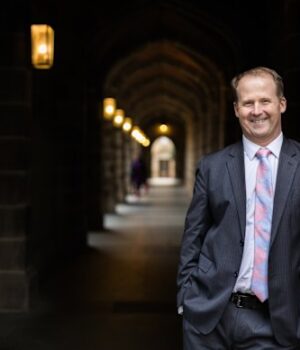
Source : the age
As Melbourne prepares to take its place as Australia’s largest city, we have the opportunity to also become the most innovative, sustainable, culturally diverse and liveable city in the country.
Let’s start with innovative. The University of Melbourne’s bold ambition is for Melbourne to become the innovation heartbeat of Australia. And we already have the ecosystem and expertise in place to shape solutions that will see Melburnians thrive.
The vital research, collaboration and conversations happening across our campuses and precincts today – in both research and education – will power our city’s growth and prosperity tomorrow. AI is enabling new opportunities for research excellence, collaboration and innovation across the University, Australia and the globe.
We are actively working with industry leaders, decision makers and communities with a shared vision for Melbourne to become a world-renowned innovation and AI precinct by 2050. Our city will be compared with the Silicon Valley in California and Kendall Square in Boston – an extraordinary science and innovation hub that has produced 105 Nobel Laureates and counting.
Our world-class precincts will drive this. Cross-disciplinary collaboration strengthens research impact and innovation. The Melbourne Biomedical Precinct, encompassing more than 40 hospitals, research institutes, universities and major companies, is home to 10,000 researchers. The precinct has delivered medical care, research and education for more than 160 years, driving innovations like the development of the multi-channel cochlear implant, the discovery of the rotavirus and personalised cancer treatments.
The tangible impacts of these discoveries have rippled across Australia and the world.
With imagination and rigour, the University is bringing its interdisciplinary research strengths to existing partnerships and new collaborations. We are realising discoveries that will advance knowledge, answer enduring questions about the world around us, enable healthier lives and communities and deliver environmental and economic benefits.
The University of Melbourne invests about $1.6 billion every year on research. Our researchers explore ambitious questions to advance the boundaries of knowledge. AI is accelerating research discovery and supporting world-leading research. Our researchers are supported through responsible AI guidance, partnerships and capability development. We work in partnership with government, industry and the community to solve big problems at scale.
But we never lose sight of why and for whom our research matters. The Melbourne community – today, tomorrow and future – stands to be the biggest beneficiary.
The researchers and educators in the University’s three expanding precincts – Melbourne Biomedical Precinct, Melbourne Arts Precinct and Melbourne Connect – are united in building a bold and robust future for our city.
The next generation of medical breakthroughs will continue, in part aided by the opening this year of the Aikenhead Centre for Medical Discovery at St Vincent’s Hospital. The Centre is Australia’s first hospital-based biomedical engineering research translation centre that will lead innovations in medtech, biotech and digital health.
The Melbourne Arts Precinct continues to learn more about the ways art and music positively shape society, health and wellbeing. Our researchers are exploring how music therapy can assist people with dementia and how dance can increase social cohesion and resilience in an unpredictable world.
But the intellectual property and research excellence within the University of Melbourne must be commercialised for real-world impact. This is the purpose of our innovation precinct, Melbourne Connect, a meeting place to facilitate innovation and translation for the benefit of society.
Melbourne Connect brings together researchers, entrepreneurs, experts, students and industry leaders to share ideas, develop creative solutions to local and global challenges, and fast-track innovations to market.
The University of Melbourne launched Australia’s first university-based venture capital fund – Tin Alley – a $125 million investment fund to commercialise and scale up innovative companies emerging from the University.
The University recently built a new lab, the Laboratory for Advanced Radiochemical Science (LARS), partnering with Cyclotek, to investigate next-gen cancer treatment and to strengthen Australia’s sovereign capability in radiopharmaceuticals.
Meanwhile, five University of Melbourne-affiliated startups are working on minimally invasive implants and redefining how we diagnose, manage and treat conditions like paralysis, epilepsy and Parkinson’s disease. Fluent, for example, is developing a brain computer interface helping people with impaired speech to communicate by using only their thoughts.
Building a sustainable city is a shared focus. The Australian Integrated Multimodal EcoSystem (AIMES) is a world-first project by the University of Melbourne with 50 partners across government, transport and tech sectors. AIMES collects computing data from smart sensors and systems across 100km of Melbourne’s inner north. This living laboratory is a platform for government, industry and academia to devise better transport outcomes for Melbourne.
University of Melbourne is committed to solving problems, fostering innovation, AI-enablement and delivering exceptional value and benefit to society. Our precincts are on the lands of the Wurundjeri Woi-wurrung and Bunurong (Boon Wurrung) peoples of the Kulin Nation. We will do this while continuing to embed Indigenous knowledges into our research, and the ways Indigenous peoples have cared for Country.
As the University of Melbourne has done for generations, it will continue to strengthen collaborative efforts and partnerships to secure the pipeline of unique breakthroughs and innovations for which Melbourne is renowned. In a world where knowledge is increasingly questioned, we are committed to leading with excellence, ethics and integrity.
Melbourne is on an exciting journey – one that will transform our brightest research and innovations into real-world outcomes and ongoing prosperity for Melbourne, its people, and for our global community.
Professor Mark Cassidy is Deputy Vice-Chancellor (Research) at the University of Melbourne.