Source : the age
How good is that bit in Christopher Nolan’s The Odyssey where Matt Damon skydives naked with the sexy chimp who talks just like his Grade 6 English teacher? No, wait, that’s a dream I had, and I won’t bore anyone further with the grubby details. Nobody likes to hear another person’s dream, especially my partner and children.
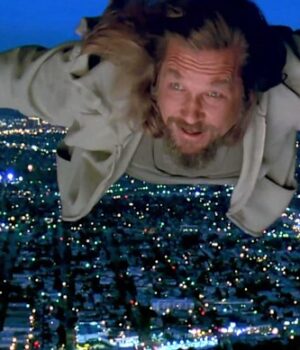
Christopher Nolan knows that dream sequences are the worst, which is why the director famous for his flashbacks and flash-forwards and all sorts of timey-wimey shenanigans generally steers clear of sleepytime nonsense. He even directed an entire film set within dreams that strenuously avoided surrealist imagery or flights of fancy. The “dreams” in Inception were closer to your daily commute than a nude plummet with a primate playmate.
This is the storytelling equivalent of waving your palms and pleading, “No, no, I take it all back!”
There’s a piece of writing advice sometimes attributed to the novelist Henry James: tell a dream, lose a reader. The irony here is that James himself could really knock out a killer dream story. He wrote in an autobiography of “the most appalling yet most admirable nightmare of my life,” in which he was chased through The Louvre by a terrible creature, the whole affair lit only by lightning. But James would agree with Nolan, who recently argued that audiences “devalue” dream sequences.
How many times does a film or TV show just start to become interesting before our protagonist bolts upright amid a snarl of bedsheets, panting with relief that none of what they’ve just experienced really happened?
This is the storytelling equivalent of waving your palms and pleading, “No, no, I take it all back!” It’s like ending a chapter of your book with the line “haha not really, lol”. It’s a failure of commitment, undoing the very thing that is likely the dramatic highlight of your tale. Rather than escalating tension and ratcheting up the stakes, it deflates whatever energy the dream sequence was supposed to generate.
There’s also the sorry tendency to treat dreams as perfectly legible pieces of code. Thanks to Freud and Jung, storytellers feel justified in treating our complex and jumbled inner worlds as if they were simple ciphers describing our fears and desires.
Yawn. Not everything that appears in our dreams represents something at the core of our psyche. Freud was forced to remind us that sometimes a cigar is just a cigar, just as I’ve been forced to remind my partner and children that sometimes a naked skydive with your Grade 6 English teacher is perfectly innocent.
I can already hear the cinephiles unsheathing their poison pens, so let me issue a caveat: I’m not against stories that are dream-like. In fact, they’re some of the best. Think of Picnic at Hanging Rock, a gossamer dream of the Australian landscape as shared by young white women under an oppressive colonial regime. The films of directors as diverse as Yasujiro Ozu, Ingmar Bergman, Sofia Coppola and Lynne Ramsay all possess a dreamlike weightlessness, even though they’re grounded in the waking world. Henry James himself pulled off the same trick with his classic The Turn of the Screw, in which the boundary between the real and the imagined is never resolved.
Then there’s David Lynch, whose art was almost entirely defined by dream logic but who rarely stooped to anything as low as an actual dream sequence. From Twin Peaks to Mulholland Drive, dreams and reality overlap to the point that there’s little difference.
Lynch often said that our partial, fragmented perception of existence means that we all essentially live inside our own private dream. His films, then, were dreams within a dream, and that’s a phrase that a whole bunch of his characters would repeat across his work.
If a film is already a fantasy, then why not go the whole hog and commit? How much more compelling is it to happen upon the moment in a story that has you thinking, “This can’t be happening, not really”, only to gradually realise that yes, we’re going there, and you won’t believe what happens next, too. Take this alluring primate by the hand and leap out into that wide blue sky. No need to tell us it was just a dream all along.
Want more Verdicts?
 John Bailey is a contributor to The Age and The Sydney Morning Herald.Connect via email.