

Source : THE AGE NEWS
One of the most telling exchanges from KPMG’s disastrous turn at a Senate public hearing this month did not even concern the current whistleblower scandal that is tearing the multibillion-dollar firm apart.
Acting KPMG Australia chief executive Stan Stavros was asked about his actions in a wholly separate scandal from 2021 that involved many of the same characters. It provides an uncomfortable reminder that this has become a recurring issue for a profession that claims to offer scrupulous integrity to its clients from big banks to charities, the Defence Department to super funds.
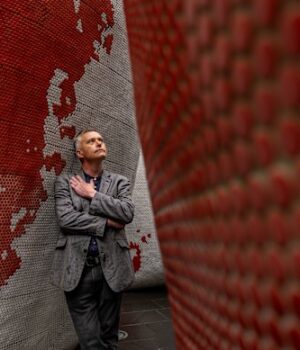
In 2021, it was KPMG partner Brendan Lyon who blew the whistle on a now discredited multi-billion dollar NSW rail entity, called the Transport Asset Holding Entity, which would have artificially inflated the state’s budgets by billions of dollars by shifting the rail network’s costs onto the obscure holding entity.
In his submission to a NSW parliamentary inquiry in 2022, Lyon detailed the bullying, ostracism and the forced exit from the firm he said he had suffered after he refused to change his report’s conclusion that the TAHE transaction would be a disaster for taxpayers.
Former KPMG Australia boss Andrew Yates, who abruptly resigned last month amid a growing whistleblower scandal at the firm, gets significant mentions in the 2022 submission. As chief executive in 2022, it was Yates who was forced to admit that “we did not get everything right with respect to the TAHE engagements”. He said the firm was committed to “learning from any mistakes we may have made.”
But Stavros, who has succeeded Yates as chief executive on an interim basis, was Lyon’s boss as the TAHE scandal boiled over.
It meant there was no easy ride for Stavros at last week’s public hearing, where he faced questions about the TAHE saga.
“Brendan was part of my group … I provided him support in a way that I thought was appropriate. What has become clear is that that support fell short of what Brendan expected or needed, and I do want to take the opportunity to apologise to Brendan,” Stavros told the hearing last week.
And what could he have done differently? “Probably just … putting my arms around him, getting him out of that environment, bringing him to Melbourne to be with me. That’s just one of the things that I think of, senator.”
“Well, that’s all lovely,” responds Lyon, who claims at the time, he wanted more from Stavros to support him against reprisals from others. There is no suggestion Stavros was involved in the misconduct himself.
KPMG declined to comment on Lyon’s remarks about Stavros, pointing to Stavros’ comments to the committee last week.
Stavros and Yates were not the only names involved in the latest whistleblower scandal who are associated with TAHE.
When Lyon was making his complaints, then-KPMG Australia boss Gary Wingrove was about to join KPMG International as a member of the global management team and then chief operating officer.
This is the same global body that refused to investigate the latest whistleblower claims after it was approached about the explosive allegations last year.
Wingrove, who was also called before the hearing with Yates and Stavros, was announced as the new chief executive of KPMG International in March this year.
Lyon says a chilling lesson is provided by what happened to those who ‘fell short’ in their response. He alleges Stavros did not intervene in the TAHE-related bullying he experienced.
“Falling short appears to be a key measure of success under the current incentives because every single person who worked on TAHE bar one (Lyon himself) … they were each promoted,” he says in an interview. “He [Stavros] was promoted 12 days after I was sacked.”
Wingrove told last week’s hearing that Lyon was not sacked, and he signed Lyon’s retirement deed.
The latest controversy at KPMG hit the headlines in March, when Labor senator Deborah O’Neill made a speech in the Senate detailing bombshell claims from a different whistleblower to Lyon.
She revealed that senior KPMG partners had allegedly misused confidential information from customers such as Lendlease and Optus to win lucrative auditing contracts from rival firms.
It ignited the scandal that has now claimed the Australian firm’s entire senior leadership team and has major clients and the federal government threatening to dump their business.
For O’Neill, it is hard to avoid the obvious parallels with the PwC tax scandal, in which the firm misused confidential information about planned tax changes that it had helped to draft by giving multinational clients a head start on sidestepping the rules. The PwC scandal was still front page news when the whistleblower approached KPMG with his complaint.
“[KPMG] knew that the [PwC] inquiry was on foot, but they were just waiting for us to finish our work and for the show to move on … [KPMG were] of the view, that what they were doing is how you do business,” she says.
“I think the shocking thing to these entities, PwC, KPMG, EY, Deloitte is they think that they don’t have to account for anything to anyone. Their primary loyalty is to one another in a partnership.”
Now, however, the scandal engulfing KPMG threatens to destroy huge parts of its business, and thousands of jobs in the same manner as occurred at PwC following its tax scandal.
Australia’s biggest corporate names such as Lendlease and Westpac pay a fortune for big four audit firms like KPMG to ensure the financial markets consider their accounts beyond reproach.
They have now ordered that some of the most senior partners at KPMG, who have been implicated in the scandal, not be involved in the audits of their financial accounts that close off next week.
Lendlease boss Tony Lombardo told the hearing KPMG’s behaviour was a “fundamental breach of trust”.
But it was ASIC chair Sarah Court who gave voice to just how serious this issue is for the entire financial market.
“It goes to the heart of integrity in our financial system,” she said. “A company has to be able to make itself vulnerable to its auditor and have the confidence in its auditor to fully expose its books, records, and extensive commercial and confidence information, and the integrity of our markets depends on that disclosure.”
With so many investigations under way, including by ASIC, the fallout has just begun for the vast majority of honest workers among KPMG’s 10,000 local staff.
Previous inquiries have detailed the brutal work culture that lower-level employees have to face.
“There’s a real irony in getting invited on to a partner’s boat to hear them all talk about when their Ferrari is arriving. All of the conversation is so elitist and there is no sensitivity to how that all sounds to the staff when they all feel burnt out, demoralised and insulted,” a big four employee told an internal review which was aired during the PwC crisis.
Following the PwC scandal, KPMG executives, including Yates, trumpeted their “speak up culture″ and independent board members, which mimicked corporate structures.
As the hearing was told last Friday, all of these structures came under huge strain in part because big four consulting firms like KPMG are not corporations, they are partnerships.
It means that, unlike their corporate clients, KPMG is not covered by the Corporations Act in a simple manner.
Being a partnership means the firm doesn’t have to comply with the Corporations Act’s whistleblower provisions and it means ASIC has limited oversight of its members. Adding to the complexity, a related services company – with different obligations – is often technically responsible for the firm’s employees.
The fact that the partnership model is not covered by the Corporations Act is one problem. But other unique characteristics also render efforts to mimic corporate structures – like independent board members – ineffective, as Cricket Australia chairman and former KPMG independent director Mike Baird found out.
“The presentation from management was that we don’t think there’s any substance to what’s been raised. Now, were we too trusting in that position? Clearly, we were,” Baird told last week’s parliamentary hearing.
Under a corporate structure, a board of directors acts as the nexus between external stakeholders and the executives who run the business.
In a partnership, the board has no external stakeholders, and therefore, no real power. The power lies with the executives and their fellow partners who own the business.
An ineffectual board is not at the heart of the problem, though.
For Lyon and others like Anthony Whealy, KC, a former NSW Supreme Court judge and the chair of the Centre for Public Integrity, it is the fact that there is so much financial upside from bad behaviour while the downside has been capped by regulations limiting liability in a model that is unique to Australia.
Whealy says few people appreciate the powerful statutory caps on liability that the big four get in Australia. These limit a firm’s liability in the event of wrongdoing.
“Bad behaviour begets bad behaviour right throughout their structure,” he says. “The conflict of interest, they just don’t see it. They think, ‘oh, this is a good opportunity. Let’s grab it with both hands’.”
The liability cap Whealy referred to is meant to be a form of reward for the firms maintaining higher professional standards, which are enforced by Chartered Accountants ANZ.
CAANZ boss Ainslie van Onselen told the hearing it has 12 active investigations under way but that it had not been aware of the initial Lendlease allegations until O’Neill’s speech in March.
Lyon says that shows the caps are “not working. It is creating a perverse incentive to seek profit at literally any cost”.
No one is hiding from the obvious solutions. Financial Services Minister Dan Mulino is expected to push forward with updated whistleblower laws and attempts to ensure these vast partnership operations don’t operate outside of laws meant to govern large corporations.
Lyons also emphasises the need for a “public regulator with teeth that is able to enforce liability and sanctions on auditors”.
But one thing that both Lyons and the anonymous whistleblower behind the current scandal agree on is that no one should rely on current laws to protect them.
“If I were asked, genuinely, whether I would do this again, my answer would be no,” the more recent whistleblower said in a submission to the public hearing last week.
Lyon’s recommendation is to go straight to a politician to subject wrongdoers to public scrutiny.
“It really is just the searing heat of public exposure that is acting to regulate the behaviours of these firms at the moment,” he says.
The Business Briefing newsletter delivers major stories, exclusive coverage and expert opinion. Sign up to get it every weekday morning.
 Colin Kruger is a senior business reporter for the Sydney Morning Herald and The Age.Connect via email.