

Source : THE AGE NEWS
Two Perth biotechnology companies are positioning themselves at the front line of Australia’s future biosecurity defence, combining cutting-edge molecular diagnostics with automated large-scale testing to tackle infectious disease threats before they spread out of control.
Perth-based Avicena Systems and Syngenis Laboratories have teamed up to develop rapid-response pathogen detection systems capable of identifying dangerous biological threats across agriculture, livestock, food supply chains and human health settings.
In an era where outbreaks can shut borders, cripple exports and cost economies billions, the timing of the collaboration appears spot on.
Avicena Systems is no ordinary junior biotech. The award-winning Perth company, founded by Dr Paul Watt, Paul Ostergaard and Tony Fitzgerald, has built a potentially game-changing molecular testing machine capable of hunting down dangerous pathogens at breakneck speed.
‘Syngenis is helping Avicena build a sovereign capability that can support faster, smarter and more adaptable biosecurity responses.’
Syngenis Laboratories managing director Tom Hanly
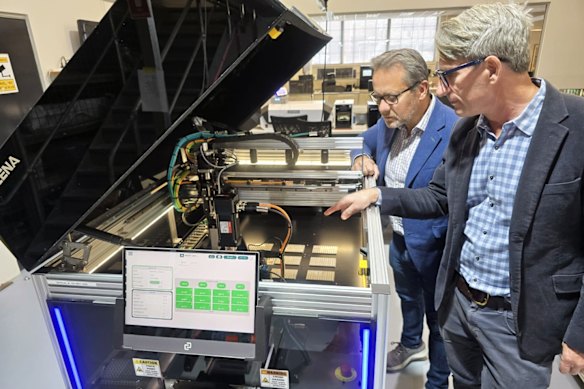
At the centre of the push is Avicena’s “Sentinel” platform, an automated molecular testing system built around Loop-mediated Isothermal Amplification technology, better known as LAMP.
The highly sensitive technology delivers polymerase chain reaction (PCR)-level accuracy, capable of detecting minute amounts of genetic material from viruses or bacteria, but at speeds conventional laboratory systems struggle to match.
Using robotics and automation, Avicena says its largest Sentinel machines can process up to 100,000 samples per day and automatically return results in less than 30 minutes.
That kind of throughput could become critically important during future pandemics, livestock disease outbreaks or border screening emergencies where speed often determines whether authorities contain a threat or lose control of it.
Meanwhile, Syngenis brings specialist expertise in DNA and RNA assay design and oligonucleotide synthesis. Since launching in 2020, the Perth-based company has been helping researchers and industry groups across Australia and overseas develop next-generation diagnostic tools and precision therapeutics – technologies increasingly seen as central to the future of medicine and rapid pathogen detection.
Oligonucleotide therapeutics are short, lab-made genetic sequences of RNA designed to work directly at a cellular level, allowing scientists to selectively switch off harmful genes or precisely target disease-causing biological pathways.
The runaway success of mRNA vaccines during the COVID-19 pandemic sparked a global investment frenzy in RNA-based medicine, opening the door to a new generation of treatments targeting cancer, neurological disorders, inflammatory diseases, rare conditions and inherited genetic illnesses.
Bringing Avicena and Syngenis together, therefore, effectively creates a sovereign Australian capability that reduces reliance on offshore diagnostic development and manufacturing during crises – a vulnerability exposed globally during the COVID-19 pandemic.
Syngenis Laboratories managing director Tom Hanly said: “By combining Syngenis’s molecular design and oligonucleotide capabilities with Avicena’s scalable diagnostic platform, we are helping Avicena build a sovereign capability to enable faster, smarter and more adaptable biosecurity responses.”
Australia’s biosecurity system faces unique pressures as an island nation heavily reliant on agricultural exports, livestock industries and busy international freight and passenger networks. The risks are enormous. A major foot-and-mouth disease outbreak alone has previously been estimated to cost Australia up to $80 billion over a decade.
Additionally, the rapidly spreading Lumpy Skin Disease Virus, now entrenched in Indonesian cattle populations, looms as another major threat to Australia’s beef sector. Avicena says the disease could inflict more than $7 billion in losses to the local beef industry in its first year if it reaches Australian shores.
Consequently, the companies believe their combined technology stack could dramatically improve how quickly authorities identify and respond to emerging pathogens, enabling new diagnostic tests to be rapidly designed, manufactured and deployed as fresh biological threats emerge.
Avicena Systems co-founder chief scientist and executive chairman Dr Paul Watt said: Avicena’s Sentinel platform is designed to deliver rapid molecular testing at scale, and by working with Syngenis we are strengthening the assay development capability needed to respond to new and emerging threats.”
The technology has broad potential applications across airports, seaports, quarantine facilities, hospitals, defence sites, livestock monitoring programs and remote surveillance operations where high-volume testing may be required quickly and continuously.
Notably, the companies say they aren’t just thinking about Australia.
Avicena has already begun expanding into the United Kingdom, Europe and the Middle East as governments worldwide increasingly prioritise decentralised, scalable and automated molecular testing systems.
Recent outbreaks of Ebola, hantavirus, norovirus, diphtheria, and tuberculosis have provided a stark reminder of how quickly infectious diseases can spiral out of control when detection systems fail to stay ahead of transmission.
The global biosecurity playbook now appears to be shifting away from reactive crisis management towards proactive surveillance, rapid detection and early intervention – stopping outbreaks before they have the chance to snowball into full-scale emergencies.
If Avicena and Syngenis can execute on their vision, the Perth pair may end up doing far more than simply building another diagnostic platform. They could help position Australia at the forefront of the next generation of global biosecurity infrastructure – where speed, scalability and rapid molecular detection become the first line of defence against future pandemics, agricultural threats and emerging infectious diseases.
And in a world where the next outbreak may only be a plane flight away, the ability to identify and contain threats before it’s too late could prove priceless.
Is your ASX-listed company doing something interesting? Contact: mattbirney@bullsnbears.com.au