

Source : THE AGE NEWS
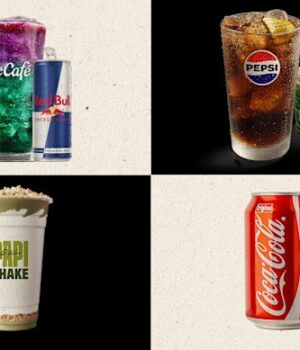
A fancy drink may well be the most exciting thing to order at a fast food outlet these days. Exhibit A: Hungry Jack’s was the latest to collaborate with Pistachio Papi, adding two new items, a vanilla shake and a soft-serve dessert, topped with the nutty green sauce. On the day of launch, queues went down the street.
The burger chain is one among a handful of the country’s largest fast-food giants leaning hard into the trend of elaborate, brightly coloured cold and frozen drinks, often served with chewy toppings or popular flavours and sauces.
Soft drink consumption is in long-term decline, according to IBISWorld, as drinkers turn to the plethora of healthier options available, like kombucha and sparkling water. But social media has helped push once-niche corners of the internet to the fore, such as Starbucks’ “secret menu”, “dirty sodas” or “Mormon sodas” (soft drinks mixed with syrups, fruit juices, or cream that emerged from the alcohol-free Mormon community in Utah).
Asian bubble tea chains that have proliferated across the country have introduced Western palates to highly customisable drinks that have been embraced by Gen Z, who are more inclined to swap a beer at the pub for a luridly coloured non-alcoholic beverage that can cost upwards of $10.
“Your Maccas, KFCs, Hungry Jack’s – what they’re trying to do is actually get people to shop or talk about a specific product,” says grocery consultant Mark Roestenburg.
Collaborations with the likes of Pistachio Papi, which rode the Dubai chocolate wave on social media and has already collaborated with Gelatissimo, Krispy Kreme, Yo-Chi and Baker’s Delight, get people talking and posting online, he added, and can be the difference between a customer visiting and not.
Drinks are playing an increasingly bigger role on this front: at least seven in 10 meals ordered in the hospitality industry include a drink, and nearly 10 per cent of customers only ordered a beverage, according to data from market research firm Circana. Japanese green tea powder matcha has become a regular fixture on the menus of Australian cafes, as have cold brews with cold foam.
Roestenburg compared it to the pulling power of the McDonald’s Monopoly campaign, which offers consumers a chance to win prizes like a year’s worth of mortgage payments or three free cars if they purchase certain items.
“I’ll drive past Hungry Jack’s and go to McDonald’s because they’re running Monopoly at the moment. And here it’s the same thing: I will genuinely drive past McDonald’s to go to Hungry Jack’s because I’ve heard about the Pistachio Papi Storm, and I’ll get that with my Whopper,” he says.
The most popular drinks of the new McDonald’s beverage range are the Red Bull Dragonberry Energiser, a green and purple concoction with freeze-dried dragon fruit, and the Sprite Berry Blast, which has the flavour of “blue raspberry” topped with cold foam.
“This idea of ‘try something new’ has become increasingly high up in the priority list of what’s really driving consumption,” says McDonald’s chief marketing officer Annabel Fribence. “Customers are increasingly looking for flavour, adventure and also theatre.”
Fast-food giants are no longer waiting until flavours become mainstream, says Fribence; marketing strategies have evolved to wield the power of influencers who spread the word seemingly organically to their highly engaged followers.
“Influencers, I think, are driving increased trust for trial, and so we’re seeing a lot more exploration across the range than we traditionally would see … consumers say, ‘you know what, I am going to give it a go’,” she says. Dragon fruit doesn’t fall within mainstream taste palates of lemon, orange, strawberry, or chocolate. “But it is our most popular drink.”
Other flavours might be designed to be gimmicky on purpose. KFC, on top of its own flavoured sparkling lemonades, spiders and thickshakes, has unveiled its new “Picklecore” range to some controversy. It includes a Pepsi served with a side of pickle brine and fresh pickles ($5.50).
“It’s actually surprisingly good,” says Roestenburg.
“From a marketing perspective … you’re not doing that sort of stuff to sell a great tasting product necessarily, you’re doing something to have that talkability,” he says. “There are people that absolutely love pickles and are going to buy it for that, but then there are other people that are going to buy it to try it and go, ‘that’s really different’.”
Ultimately, these products make money: the margins on these drinks are higher, says retail consultant Trent Rigby (who, incidentally, found the Pickle Pepsi “foul”).
“A flavoured, limited-time soft drink costs a chain very little extra to produce, but can be priced at a premium versus a standard Coke or Pepsi,” he says.
Customers who order a normal Coke or lemonade ($4.75) through the McDonald’s app or kiosk are given the option to order the drink with less ice, but this option isn’t available when ordering a Sprite Berry Blast (about $6), Dragonberry Energiser (about $8), or any of the other cold drinks from the new range.
“That gap is hugely attractive for fast food operators already under margin pressure, and it’s low-risk because these are usually short-run limited-time offers rather than permanent range changes. So retailers keep churning them out, gimmick or not.”
Across the board, traditionally unhealthy foods in our supermarket aisles are in long-term decline, the grocery industry consultant says. Total revenue growth of Coca-Cola Europacific Partners (CCEP), Coca-Cola’s Australian business, grew just 0.4 per cent to $6.4 billion in 2025.
McDonald’s isn’t seeing the uptake of their brightly coloured drinks denting demand for traditional soft drinks. “It’s not cannibalising [those sales],” says Fribence.
But Coca-Cola’s market share may not be as vast as it once was. Roestenburg says: “Coke as a business will be fine because they will absorb the innovative brands. Coke as a product? Fast-forward 10 years, does it have the same level of dominance? Maybe not.”
Coke’s position as the top soft drink doesn’t seem in dispute for now. Earlier this month, pizza chain Domino’s made a change that largely flew under the radar: it switched from Pepsi to Coke.
“Coke is the dominant brand by far in the market,” says fast-food tzar Jack Cowin, who is executive chairman at Domino’s and owns Hungry Jack’s. It’s too early to tell if the change has made a difference to sales, he says, but he’s confident it will.
But Cowin, whose competitors are doing much more than offering a standard Coke these days, knows the power of a menu update.
“New is a magic word in the food business,” says the 84-year-old. “[Customers] like the novelty aspect of having something different than just the standard Coke or Fanta, or whatever.”
The Business Briefing newsletter delivers major stories, exclusive coverage and expert opinion. Sign up to get it every weekday morning.
 Jessica Yun is a business reporter covering retail and food for The Sydney Morning Herald and The Age.Connect via X or email.

