

SOURCE :- THE AGE NEWS
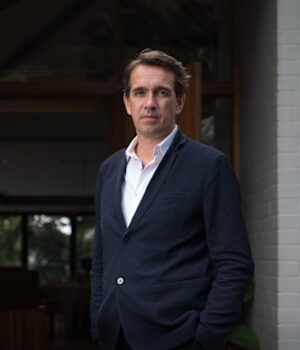
Peter Frankopan is a professor of global history at the University of Oxford.
Fitz: Professor, I very much appreciate your time. This week you’ve written a fascinating piece in a very influential journal, Foreign Policy, where you make the case that Russian President Vladimir Putin is drowning in the Ukraine war and there is a real risk that he will take everyone around him with them. I want to work to that, but can we go through where the war came from in the first place, and who’s got the white hats and who’s got the black hats?
PF: This goes back a lot further than the expansion of NATO or the fall of the Soviet Union. As far as Putin’s concerned, it goes back for 1000 years; he thinks that by invading Ukraine he’s dealing with the whole of the West, and that he’s the man standing as the bulwark in the way of otherwise inevitable grinding down of the Russian state. So he’s absolutely certain that he’s one of the good guys.
Fitz: Yes, but I’ve gone to a highly respected professor from Oxford University, who gets published in Foreign Policy and also understands the ins and outs of this. Is Putin, as I think, leading an evil empire trying to crush a noble state?
PF: The starting point is the respect of international law, and the international boundaries that were agreed on in 1991 with the dissolution of the Soviet Union. After that, in 1994, Russia, with the United States and the UK, gave guarantees to Ukraine that in return for giving up nuclear weapons and other advanced weapons systems, it’d have its territorial integrity guaranteed. By annexing parts of Ukraine in 2014, followed by a full-scale invasion in 2022, Russia committed a crime under international law. That’s pretty simple.
Fitz: Good, because I was shocked by the Hollywood producer Oliver Stone, when I interviewed him last year, making the case that Russia had a right to invade Ukraine and was only trying to keep itself safe from nukes going into neighbouring land. Do you view that as nonsense?
PF: Yes. Stone took a different view when it came to the Vietnam War, though, didn’t he? You can’t have it one way and then the other, and say Putin is justified to invade Ukraine but then the US wasn’t justified to go into Vietnam, or Iran or Iraq or Afghanistan. You’ve got to apply things fairly, and respecting international law is absolutely critical.
Fitz: I wish I’d said that, Oscar. Did Putin really think that after invading, it would be a matter of only days before they’d be rolling tanks into Kyiv and Russian flags would be going up?
PF: Yes, and we know that because the first tank crews and those in personnel carriers had their ceremonial dress ready. Putin had been misled by his own intelligence operatives about what Ukraine’s capacity to resist was. The whole column ground to a standstill well back from Kyiv because the logistics were a disaster and because of brave resistance. Since then, thanks to enormous European and early American help, Ukraine’s determination has been pretty spectacular. Putin’s miscalculation was not just that Ukraine would fold, but he was convinced that Europe was finished as a military force and would not have the political guts to fight. Trump might be unpopular in Europe, but he’s not wrong that we’ve relied on the US for too long. Europe’s backbone has finally stiffened over the last five years.
Fitz: But what’s stunning to me from your article is your quoting Anne Keast-Butler, the director of British intelligence agency GCHQ, saying that there’s between half a million and perhaps a million Russian soldiers already dead in this Ukraine war, that their average life expectancy from training ground to death in a combat zone lies somewhere between 10 days and three weeks, and in an actual battle, most of them don’t last beyond 20 to 35 minutes before they’re killed?
PF: Yes, there’s an extensive community communicating on encrypted channels inside Russia, talking about what’s going on in the frontlines. And the advance of the Russian army has been extremely slow. I mean, to put it into context, back in the Second World War, in four years the Soviet Union fought from Stalingrad and reached Hitler’s bunker in Berlin. In this action, the Russian army has been in the field now longer than the Red Army was during WWII and there’s not a great deal to show for it.
Fitz: Very close to a stalemate?
PF: Well, in the whole of last year, Russian forces took about 0.1 per cent of Ukrainian territory; that doesn’t look like great value for money, and it doesn’t look like great value for human life. But because Putin controls the state media and because the Russian machine is behind the war, extraordinary sacrifices are still being made. And those aren’t just measured in human lives. German military sources estimate that right now, nearly half of Russia’s budget is going on men, munitions and military infrastructure, a huge proportion of which is consumed by the war on Ukraine. They think that it might go as high as 50 per cent. For perspective, in Australia, even with things like AUKUS, you’re spending on defence is only nudging 2.5-3 per cent. Or put it another way: Putin is spending about five times on the war as he is on education and healthcare in Russia – combined.
Fitz: Half their national budget going to bombs! You quote Russian blogger Maxim Kalashnikov, raising the possibility that Russia might be “heading towards something like 1917″, a reference to the revolutionary year in which Tsar Nicholas II and his family were arrested to soon be shot, the Russian Empire fell, the Russian military collapsed and the Soviet Union was ushered in. Are we looking at the possibility in the next few months that Putin will be chased by renegade soldiers or the people rising as against the tsar?
PF: Well, there was a dummy run when Yevgeny Prigozhin marched on Moscow a couple of years ago, but we haven’t seen anything like that since, and no cracks in the leadership. But I think that at least as good a parallel as 1917 is probably the late 1980s when the Soviet Union collapsed – exhausted by the Afghanistan war, a terrible economy and falling revenues from oil exports.
Fitz: You’re making what sounds to me like a case that while Napoleon Bonaparte invading Moscow in the winter in the early 1800s is regarded as the greatest military bungle of all time, that has been matched in the 21st century by Putin saying, “Hold my beer, Bono, while my forces try to crush Ukraine in days, only to be stuck for four years and counting.”
PF: Well, it’s not over until it’s over. And anything can get a lot worse than it is, and either frontline could collapse very quickly in both cases. So, I can’t predict how this is going to go, but the rule is conflicts like this usually end in one of two ways – one is collapse and the other is exhaustion.
Fitz: Your piece makes the case that right now Russia must be getting close to both?
PF: At the moment, the only part of the Russian economy that’s growing is the part that’s based on defence procurement. But with everything that Russia is spending, what is it all for? Russia is already the largest country on earth. The last thing that Russia needs is more land. There are plenty of forests, plenty of fields, towns, empty spaces, you name it. So what does Putin want? It isn’t more land, or a city, or to reach a boundary point. He wants something existential, which is he doesn’t want Ukraine to exist as a sovereign state, and he doesn’t want the West to encroach any further into what he thinks of his sphere of influence. It is very abstract, and it’s very difficult to negotiate with somebody who wants something abstract because it’s not quite clear what they want.
Fitz: Surely, professor, the answer is obvious: He wants … to make Russia great again.
PF: [Grimly.] [President of China] Xi Jinping wants to make China great again, [Prime Minister of India Narendra] Modi wants to make India great again, [President of Turkey Recep Tayyip] Erdogan wants to make Turkey great again, [Prime Minister of Israel Benjamin] Netanyahu wants to make Israel great again. [US President Donald] Trump wants to make America great again. They’re all at it. You know, we’ve got all these people all around the world, all of them have a similar profile. No.1, they’re all men. No.2, they’re all absolutely convinced that they can restore some great mythical past and reverse the wheels of history. But look what’s happened: having thought that his war would keep the West away, Putin has brought Finland and Sweden into NATO. He’s caused a massive increase in European defence spending, including the United Kingdom. He’s made Russia more isolated rather than won new friends. So far he’s been able to convince those around him that he was still right to start the Ukraine War, but at some point, the music can stop, and I’m worried what happens if and when that time comes.
Fitz: Your premise is “that the drowning man will take everybody down with him”. What do you mean by that?
PF: Escalation, with the conflict going wider. Here in the United Kingdom, we’ve had property belonging to our prime minister firebombed by Russian agents in the last few months. We’ve had NHS trusts and hospitals hacked by state operatives. We’ve had water systems and dams compromised in Poland and in Norway and elsewhere. We’ve had warehouses set on fire, all by the dark arts of foreign intelligence agencies, most of which are pinned directly back to Moscow – who are really good at this sort of thing. So, there are all sorts of ways in which Russia is able to inflict pain outside Russia on those it doesn’t like, and all sorts of ways in which Russia can turn up that temperature and has already done that. We’ve had poison attacks on people living in the UK. There’s tons Russia can do to make life difficult for all of us.
Fitz: And yet, Ukraine has been stunning in recent times in sending drones attacking Moscow and attacking infrastructure. That surely changes the whole contours of the war?
PF: It does, and has achieved two significant things. First, it’s taken about 40 per cent of Russia’s refineries offline, which hurts Russia’s economy very badly. But second, it’s brought the war meaningfully right to the Russian people. If you can hit refineries that light up the skyline of St Petersburg and Moscow with plumes of smoke and an acrid smell, and you can stop people being able to fill up their cars at petrol stations, then people ask: “What’s the point of all of this?”
Fitz: Good question.
PF: The question right now, for us in Europe, is what happens if there is some form of fracture in Russia? What happens if Russia does escalate? Just two years ago, Russia changed its nuclear doctrine about first use of nuclear weapons. Russia has lots of conventional weapons it can use, not just against cities in Ukraine but elsewhere too. It’s about Russia choosing to escalate this into other states; and in fact, as of this week, Russia’s closed its land borders to the Baltic States and to Finland. So we need to understand why that’s happening, rather than saying, “Look, is this a point where we can all pack up, go home and think about who comes next?” We might be at a point where this gets much, much worse rather than some kind of peace agreement. So, I think we need to understand what we’re facing. We should all prepare ourselves for the process of Putin thinking that he’s got no other choice except escalating and taking action against other states inside Europe. These are dangerous times – for all of us.
Fitz: Thank you for your time, Professor.
Get a weekly wrap of views that will challenge, champion and inform your own. Sign up for our Opinion newsletter.
 Peter FitzSimons is a journalist and columnist with The Sydney Morning Herald.Connect via X.

