Source : the age
Australia has become an international outlier by allowing fuel made from Russian crude oil to enter the country, a parliament inquiry has found, urging the federal government to close loopholes that allow Moscow to profit from imports through third countries.
A damning report into the effectiveness of Australia’s sanctions regime also found not a single person has been prosecuted for breaching Russia-related sanctions since Vladimir Putin’s full-scale invasion of Ukraine in 2022.
The cross-party Foreign Affairs, Defence and Trade References Committee, tabled on Thursday, called on the government to urgently tighten the laws and better align Australia’s approach with the European Union, Britain and other allies.
Among 11 recommendations, it urged the banning of Russian blended oils and other products, including timber, that can be transformed in third countries before being legally imported.
The report says Australia should also identify all Russian assets subject to sanctions and consider giving agencies more resources to investigate, freeze and seize them.
The committee, chaired by Liberal senator Jess Collins, acknowledged that seizing sovereign Russian assets carried legal and financial risks, but argued Australia should nevertheless examine the option.
“The case for seizing and repurposing Russian assets is strong,” the report found, noting that “immense sums” would be required to ensure the European Union’s security if Russia emerged victorious.
“Supporting Ukraine to prevent a Russian victory instead is an economically sound alternative.”
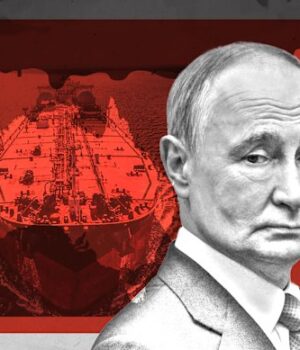
As revealed in several reports by this masthead last year in its Blood Oil series, Russian crude continues to be shipped to countries such as India, refined into petrol, diesel and other products, and then sold into Australia.
The committee found Australia had become “the largest single-country importer of oil products refined from Russian crude oil”.
That trade has flourished as Australia has become increasingly dependent on imported refined fuel after the closure of five domestic refineries.
Refined petroleum imports more than doubled from $19.9 billion in 2014 to $48.5 billion in 2024, while crude oil imports fell to $8 billion.
The US-led strikes on Iran and the closure of the Strait of Hormuz in February also forced Australia into panic-buying Asian fuel, inadvertently exposing its supply chain to laundered, sanctioned Russian oil.
The committee warned Russia was continuing to benefit even when its oil was transformed overseas before reaching Australian shores. It urged the government to stop allowing the complexity of global fuel markets to become an excuse for delay, warning against “sanctions policy paralysis”.
“It goes without saying that EU and UK jurisdictions were faced with the same challenges Australia may be weighing now, arguably greater challenges due to their geographical proximity and reliance on Russian oil,” it said.
The report also exposed the limited enforcement muscle behind Australia’s sanctions regime. The Australian Sanctions Office had just 27.7 full-time equivalent staff at the end of January, of which only seven work on sanctions compliance and monitoring.
The committee said the absence of prosecutions was unlikely to mean sanctions were not being evaded.
“It is unlikely that this lack of prosecution is due to a complete absence of sanctions evasion on Australian soil,” it said, warning evasion may have gone undetected or detected breaches may not have been prosecuted.
DFAT confirmed it had not sought additional resources for the office. The office also has no investigatory powers and must refer suspected breaches to the Australian Federal Police.
But Labor members of the committee, led by Senator Raff Ciccone, said the government did not accept many aspects of the characterisation by Coalition senators of the effectiveness of sanctions against Russia.
“Labor senators take particular issue with the report’s assertion that it is reasonable to conclude that ‘evasion has either taken place undetected, or that instances have been detected but not prosecuted’,” he said.
“The claim that the Australian Sanctions Office and Australian Federal Police are unaware of sanctions evasion, or aware but have failed to act, is baseless, and ignores evidence presented in the committee’s own report.”
The report said sanctions were only as effective as their enforcement, and warned sophisticated evasion techniques were evolving through third countries, offshore companies and complex supply chains.
The committee heard more than 70 per cent of Russian crude delivered each month was being carried by using a so-called shadow fleet of tankers to move oil beyond the reach of Western sanctions.
DFAT described the fleet as the “most clear example” of sanctions circumvention.
The report said the sanctions remained “sound in principle” but needed to evolve as Russia developed new ways to evade them.
Cut through the noise of federal politics with news, views and expert analysis. Subscribers can sign up to our weekly Inside Politics newsletter.
 Rob Harris is the national correspondent for The Sydney Morning Herald and The Age based in Canberra. He is a former Europe correspondent.Connect via email.
 Matthew Knott is the foreign affairs and national security correspondent for The Sydney Morning Herald and The Age.Connect via X, Facebook or email.