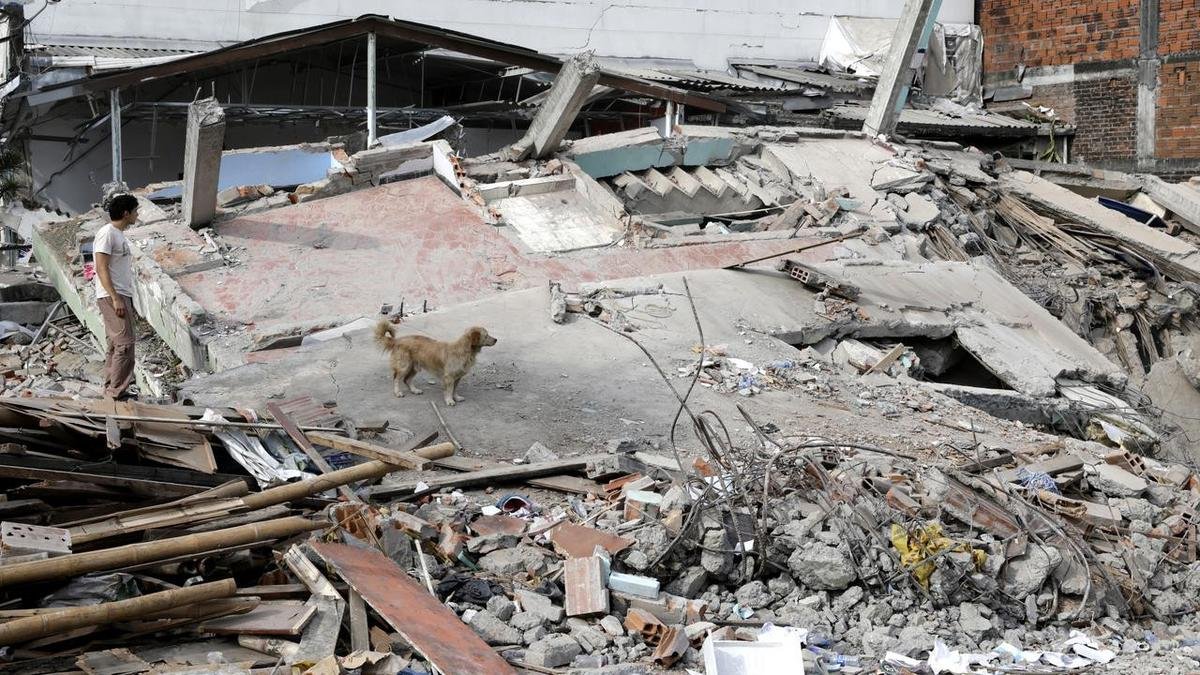
Source : Perth Now news
Rescuers are racing in Colombia to free four people from a collapsed hotel, a rare sign of hope nearly four days after one of the strongest earthquakes to hit the country in decades left hundreds dead or missing.
The operation in the coffee-region city of Pereira had become the main focus of a disaster response increasingly shifting from the search for survivors to the grim work of clearing debris and accounting for the missing.
“My son is getting married on Sunday,” said Hernan Giraldo, the father of 24-year-old Juan Felipe, one of the people rescuers hope to save.
“I’m waiting here to hug my son, alive. He was in that hotel room. I’ve been here since Monday night in case something happens, to find him.”
Venezuelan rescue workers, who arrived in Pereira after searching for survivors from the devastating twin quakes that hit their country’s Caribbean coast just seven weeks ago, were helping at the site with thermal imaging cameras.
“We’ll always have high hopes; we’ve found people alive even 10 days later. The goal is to search and find people alive,” said Cristian Acevedo, one of the Venezuelan rescue workers.
Colombia’s 7.4-magnitude quake struck shortly after 7.30am on Monday, with its epicentre in San Jose del Palmar in the province of Choco.
It toppled apartment blocks and damaged homes, schools and hospitals across western Colombia, from the Pacific port of Buenaventura to the inland cities of Cali and Pereira.
Authorities said on Friday 287 people had been killed and nearly 4000 were injured.
Almost 400 others were still missing.
Cali and Pereira accounted for more than two-thirds of those killed, and more than half the injured were in major cities.
Tens of thousands of homes were damaged and many destroyed, according to government figures, underlining the scale of a disaster that has left many Colombians sleeping in shelters or outside unsafe buildings.
As of Friday morning, operations had resumed in all but one airport.
The United Nations refugee agency warned the earthquake could trigger fresh displacement in a country already grappling with conflict, migration and other humanitarian pressures.
“For internally displaced people and refugees who are already trying to rebuild their lives, this earthquake risks becoming another displacement on top of displacement,” United Nations High Commissioner for Refugees spokeswoman Eujin Byun told reporters in Geneva.
Giovanni Rizzo, the Norwegian Refugee Council’s Colombia director, said more than nine million people in the country already depended on humanitarian aid, and roughly 10 per cent of them lived in the regions most devastated by the earthquake.
“Recovery is now not merely about clearing rubble. It is about helping families rebuild,” he said, adding it was particularly urgent to reopen damaged schools.
Authorities have recorded scores of aftershocks, adding to the danger for rescuers combing through unstable debris and for families reluctant to return to damaged homes.