Source : the age
The Reserve Bank has kept interest rates on hold as it weighs a slowing economy, dragged down by a weaker-than-expected housing market, against risks that inflation could be pushed up by an “AI boom” and continued conflict in the Middle East.
On Tuesday the bank kept the official cash rate at 4.35 per cent – broadly in line with economists’ expectations – after releasing its updated forecasts for key metrics including economic growth, inflation and unemployment. Financial markets believe there is a 50-50 chance of a further rate rise late in the year, with rate relief not expected before the second half of 2027.
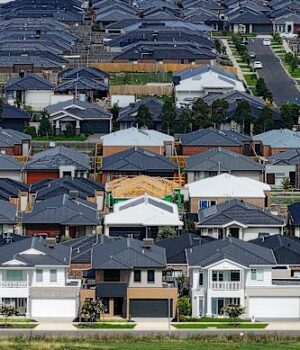
The decision comes after ANZ economists on Tuesday morning warned that property prices could slump by almost 15 per cent over this year and next, citing interest rates, low levels of affordability and the federal government’s property tax changes.
In its monetary policy decision statement the RBA said the decision to keep interest rates on hold was unanimous, and that the board remained focused on ensuring high inflation did not become embedded.
“Following three increases in the cash-rate target since the beginning of the year, financial conditions are now tighter than they were, and the economy appears to be slowing as expected,” the board said. “But inflation is still too high.”
The board said “inflation is likely to remain high for some time” due to the disruption to global oil supply caused by the US and Israel’s war against Iran, with higher fuel prices being passed through to other goods and services.
The bank said it expected economic growth to be slightly stronger for the rest of the year than it thought back in May, although it noted the figure was likely to remain below the long-run rate of 2 per cent. Its forecasts show growth of 1.4 per cent by Christmas and 1.6 per cent by December next year.
Price growth across the economy remains above the RBA’s target range of 2 to 3 per cent – inflation was 3.8 per cent in June – but the inflation figures were substantially lower than the 4.8 per cent figure the RBA forecast in May.
The RBA said household consumption has eased “gradually”, with spending on discretionary items including electric vehicles remaining relatively strong. Meanwhile, business investment had been much stronger than expected, the bank said, largely driven by data centre construction.
Unemployment, at 4.4 per cent in June, is still below the rate the bank considers “full employment”: the level at which it believes inflation pressures will not be stoked as people look for more work in response to cost-of-living pressures.
Treasurer Jim Chalmers has said the Reserve Bank’s decision to keep interest rates steady would “come as a relief to Australians with a mortgage”.
“This decision reflects the fact that inflation has been coming in well under the Reserve Bank and Treasury forecasts,” Chalmers said in parliament.
Meanwhile, ANZ, which had been the most bearish about the property market of all the major banks, said it believed capital city prices would fall by 4.3 per cent this year and by 3.4 per cent in 2027 before staging a recovery the following year.
Combined, the falls would mean a drop of 10.6 per cent from the peak in prices to their trough.
The biggest hit is expected in Sydney, where the median value is now $1.5 million, with house prices tipped to fall by 14.5 per cent from their peak at the start of the year. Melbourne prices are tipped to fall by 12.8 per cent from their peak.
Prices in both cities are expected to recover by almost 5 per cent in 2028.
Smaller hits are expected in other capitals, with drops of 7.9 per cent forecast in Brisbane, 5.2 per cent in Perth and 9.8 per cent in Adelaide. In these three cities prices have climbed by more than 15 per cent over the past two years.
ANZ senior economists Madeline Dunk and Adam Boyton said the market was slowing quicker than they had expected.
“It is clear the combination of restrictive interest rates, recent tax policy changes and global uncertainty have dampened sentiment in the market,” they said.
“Auction clearance rates are very soft, coming in below 50 per cent for the past 10 weeks across the capitals.”
Dunk and Boyton said interest-rate settings, and ongoing pressures on the construction sector, meant prices were unlikely to fall for too long. They are tipping a nationwide increase of 4.3 per cent in 2028.
“Given the broader supply backdrop, and the capacity constraints in the construction sector, we think it is hard to see housing prices falling for an extended period,” they said.
“Through the second half of 2027 we expect dwelling prices to start recovering, supported by 50 basis points of rate cuts from the RBA.”
Cut through the noise of federal politics with news, views and expert analysis. Subscribers can sign up to our weekly Inside Politics newsletter.
 Shane Wright is a senior economics correspondent for The Sydney Morning Herald and The Age.Connect via X or email.
 Millie Muroi is the economics writer at The Sydney Morning Herald and The Age covering workplace and economics. She was formerly an economics correspondent based in Canberra’s Press Gallery and the banking writer based in Sydney.Connect via X or email.