Source : INDIA TODAY NEWS
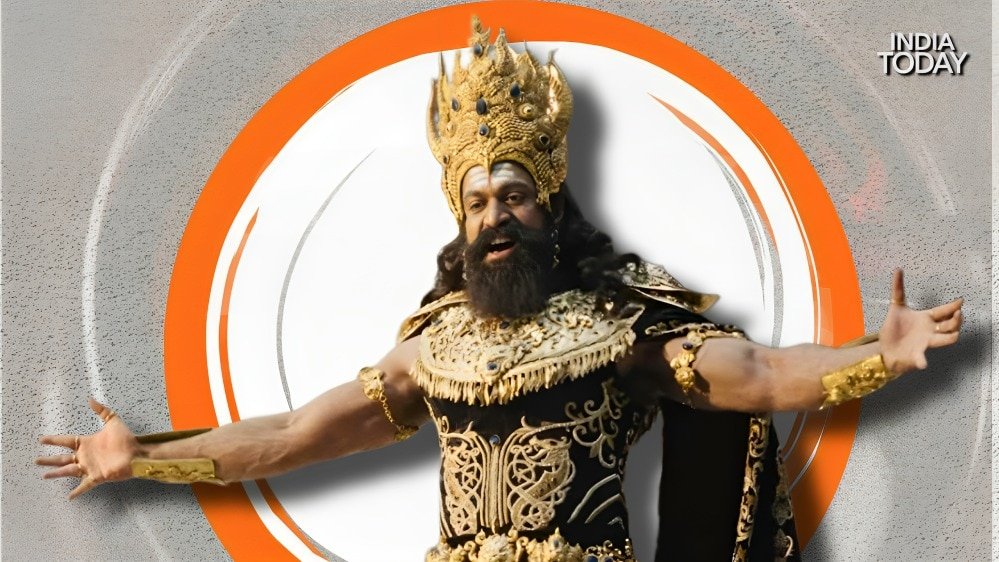
Actor Sai Pallavi’s remark that Ravana was “not all bad” has reignited conversations about one of the most complex characters in the Ramayana. Speaking at the Los Angeles premiere of Ramayana: Rise of a Legend on October 27 – in which she plays Sita – the actor urged believers to introspect about the good and evil within themselves, using Ravana as an example. But her observation is not entirely removed from existing interpretations of the epic. Across parts of India and Sri Lanka, Ravana is remembered not just as the antagonist who abducted Sita, but also as a learned ruler, a staunch devotee of Shiva and a figure associated with several intellectual and artistic accomplishments.
advertisement
“As scripture, if you are a believer, you will see and try to introspect what is the good and bad that exists in you, because Ravana is not all bad. It is important that we spot the Ravana in us, and we make changes over time,” Sai Pallavi said during her interaction with international media at the film’s global premiere.
In the popular understanding of the Ramayana, Ravana is the demon king of Lanka whose abduction of Sita leads to the battle with Rama and his eventual death. However, his character has been interpreted differently across regions, religious traditions and literary re-tellings.
A research paper on Ravana published by the University of California, Los Angeles’ South Asia Studies programme described him as a figure of immense strength, learning and devotion. It also noted that Ravana was a Brahmin by birth, well-versed in the Vedas and proficient in Sanskrit. His immense penance and devotion earned him boons from Brahma, including near-invulnerability against gods and demons.
His scholarship and devotion to Shiva are among the reasons he is revered in certain communities. One such place is Bisrakh, a village in Uttar Pradesh’s Greater Noida region, where residents believe Ravana was born. Unlike several parts of the country where effigies of Ravana are burnt during Dussehra, the village does not celebrate his death in the same way.
An India Today report from 2015 documented how residents of Bisrakh considered Ravana a great devotee of Shiva and a learned man. They believed that he was born to sage Vishrava and Kaikesi in the village. Residents also explained that their understanding of Ravana differed from the popular portrayal of him as a villain.
The tradition is not limited to India. In Sri Lanka, Ravana has also been remembered through religious rituals and local traditions. A 2018 academic study by Deborah de Koning, published in the journal Religions, examined the growing reverence for Ravana among sections of the Sinhalese Buddhist community.
The study documented a Ravana shrine at Sri Devram Maha Viharaya in Pannipitiya, near Colombo, where two annual rituals are organised in his honour. One, the Ravana Perahera, celebrates his image as a warrior king, while another ritual, the Maha Ravana Nanumura Mangalyaya, highlights his benevolent image as a healer.
The research also explains how Ravana’s image has been associated with the idea of an ancient civilisation and its knowledge systems. These interpretations have contributed to his renewed prominence in certain cultural and religious circles in Sri Lanka.
Why is Ravana called a man with ten heads?
One of the most widely discussed aspects of Ravana’s character is his ten heads. While traditional depictions portray him with ten heads and twenty arms, some cultural interpretations understand the imagery symbolically, connecting it to his knowledge and abilities.
An academic study by Deborah de Koning documents a contemporary Sri Lankan interpretation in which Ravana’s ten heads represent ten different skills. These include languages, law, philosophy, governance, technical knowledge, spiritual wisdom, astrology, medicine, warfare and aesthetics.
The interpretation offers a cultural explanation for the association between Ravana’s ten heads and his intellectual abilities. However, it is important to note that this is not a universally accepted explanation across all versions of the Ramayana.
An article by scholar Paula Richman, published in the journal Cultural Dynamics in 2007, also notes that the expression of having ten heads is used in several modern Indian languages to describe someone exceptionally brilliant, referring to Ravana’s deep knowledge.
Why do different communities see Ravana differently?
The different interpretations of Ravana are also connected to the many versions of the Ramayana that have existed across the Indian subcontinent for centuries.
A 2023 research article by The Indian Express, which draws on the work of scholars including Frank E Reynolds and Sanskrit scholar Robert Goldman, explained how the epic has been retold in different languages and cultural contexts. These versions have often reflected the social, religious and political circumstances in which they were created.
In some regional interpretations, Ravana is viewed as a noble ruler and intellectual rather than simply the antagonist of the story. The article also traced how Ravana’s character was reinterpreted through the Dravidian movement, particularly by E V Ramasami, popularly known as Periyar, who challenged the conventional portrayal of Rama and Ravana.
These interpretations do not necessarily erase Ravana’s actions in the epic. Rather, they demonstrate how a character can acquire different meanings depending on the tradition and culture through which his story is told.
Ultimately, Ravana’s legacy is a reminder that the Ramayana has never had just one interpretation. While his actions against Sita remain central to his portrayal as an antagonist, his scholarship, devotion to Shiva and the cultural traditions surrounding him have ensured that he is remembered differently across communities. Sai Pallavi’s remark, therefore, touches upon a larger conversation about separating a character’s virtues from his flaws.
Sai Pallavi will portray Sita in Ramayana: Rise of a Legend, the upcoming film directed by Nitesh Tiwari. The film also stars Ranbir Kapoor as Rama and Yash as Ravana. Positioned as a two-part cinematic adaptation of the epic, the first instalment is scheduled to release in theatres on November 5, 2026.
– Ends
MUST WATCH:
SOURCE :- TIMES OF INDIA