Source : INDIA TODAY NEWS
Saudi Arabia is facing growing pressure as Houthi rebels have made rapid gains that threaten a key Red Sea shipping route, while drone attacks blamed on Iraqi militias have forced the closure of a major oil pipeline. At the same time, Iran continues to disrupt the Strait of Hormuz, raising fresh concerns for the kingdom and unsettling global markets.
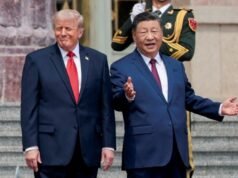
The situation is especially difficult for Riyadh because its main ally, the United States, appears uncertain about widening its military role. US President Donald Trump has signalled reluctance to deepen involvement in another Middle East conflict ahead of congressional elections. Former US ambassador to Saudi Arabia Michael Ratney said the latest developments are “incredibly frustrating” for the kingdom.
advertisement
Ratney said, “Despite their antipathy for the Iranians, this is a war they had never asked for, they had great trepidation about. And once it started, all of their worst-case scenarios started coming true.” The Saudi government did not respond to a request for comment. However, a Saudi official, who was not authorised to brief the media and spoke on condition of anonymity, said the kingdom would defend itself and work with partners, including the United States, to ensure freedom of navigation in the Red Sea.
Saudi Crown Prince Mohammed bin Salman has spent years trying to reshape the kingdom and the wider region through social and economic change, with the aim of turning Saudi Arabia into a global business hub in a more prosperous and integrated Middle East. Those plans suffered setbacks after Hamas’ October 7, 2023 attack on Israel, which triggered a series of conflicts across the region.
When the US and Israel attacked Iran on February 28, Tehran responded with missile and drone strikes on Saudi Arabia and other Gulf states, and effectively shut down the Strait of Hormuz. That trapped oil and gas exports and shook the global economy. Saudi Arabia avoided some of the worst impact by moving its oil across the Arabian Peninsula to the Red Sea, allowing exports to Europe through Egypt’s SUMED pipeline and the Suez Canal, and to Asia through the Bab el-Mandeb Strait towards the Indian Ocean.
That route has now come under pressure. Tensions with the Houthis flared again in July, prompting the group to declare a blockade of Saudi shipping and resume large-scale attacks for the first time in four years. Over the last two days, the Houthis have seized the port city of Mokha and a Red Sea island from Saudi-backed Yemeni government forces, improving their ability to block Saudi shipments through the Bab el-Mandeb.
On Friday, Saudi Arabia said it had shut down the pipeline running from its eastern oil fields to the Red Sea because of drone attacks originating in Iraq, where Iran backs powerful militias. Regional officials recently told The Associated Press that the Houthis had helped those Iraqi militias carry out attacks. According to figures compiled by Kpler, a global trade monitor, Houthi attacks had already cut Saudi oil exports to Asia from about 3.4 million barrels a day in June to just 128,000 in August, though they recovered somewhat this month to 700,000.
Saudi Arabia fought the Houthis for years from 2015, but its allies made little headway on the ground. The conflict killed an estimated 150,000 people and at times pushed Yemen to the brink of famine before a 2022 ceasefire. Neil Quilliam, a Middle East expert at Chatham House, said, “Saudi Arabia has spent several years trying to move beyond the Yemen conflict and focus on economic transformation and regional stability.” He added, “Recent Houthi gains increase pressure on Riyadh to respond, but every available option carries significant costs and uncertain outcomes.”
One option for Saudi Arabia would be to intensify military action and try to push the Houthis back. But Sherwan Hindreen Ali, Middle East research manager at ACLED, a conflict monitoring group, said that would likely prolong the conflict and trigger heavier attacks on Saudi energy infrastructure. “The kingdom already faced this in the past, but Houthi weaponry is more sophisticated now than it was back then, and the Saudis likely have less interceptor missiles available as a result of the US-Iran conflict,” he said.
Riyadh could also pursue diplomacy with the Houthis or with their backers in Tehran. But the Houthis have demanded that the Saudi-led blockade be lifted, a step that could strengthen them over the long term. Iran, meanwhile, has little interest in calming the region without major concessions from the United States.
For decades, Saudi Arabia and other Gulf states have depended on US security guarantees, but those ties have weakened under Trump. During his first term, he did not respond when a 2019 attack claimed by the Houthis temporarily knocked out half of Saudi Arabia’s oil supply. In February, the US joined Israel in attacking Iran without consulting its Gulf allies, and since then it has struggled to shield them from Iranian strikes.
Trump had launched an air campaign against the Houthis last year after earlier attacks on Red Sea shipping linked to the Gaza war. This time, however, US forces are heavily deployed around the Strait of Hormuz, where they are blockading Iran and trying to stop attacks on shipping. The fighting has visibly stretched the US military and reduced supplies of advanced interceptors. The conflict is also unpopular and has hurt Trump’s support after he had promised to keep the US out of Middle East wars. Opening another campaign in Yemen could add to the difficulties facing Republicans in closely fought House and Senate contests.
On Saturday, Trump said Iran “probably” was behind the Saudi pipeline attack. Asked about a recent call with the Saudi crown prince, he said: “He’s a good friend of mine, and I can just say everything’s going to work out fine and dandy.” The White House did not respond to a request for comment on whether it plans to intervene in Yemen. Speaking more broadly about the war with Iran on Thursday, Trump said, “Maybe I don’t do that because of the election,” when asked about increasing military pressure, as some US hawks have suggested.
Ratney said it would be hard for Saudi Arabia to achieve its goals without the kind of steady US backing it had at earlier stages of the fight against the Houthis. “My understanding at this point is the White House is not enthusiastic about getting involved,” he said. With Red Sea routes under threat, the pipeline shut and Hormuz still disrupted, Saudi Arabia is again confronting the risks it had hoped to leave behind.
With PTI Inputs
– Ends
SOURCE :- TIMES OF INDIA