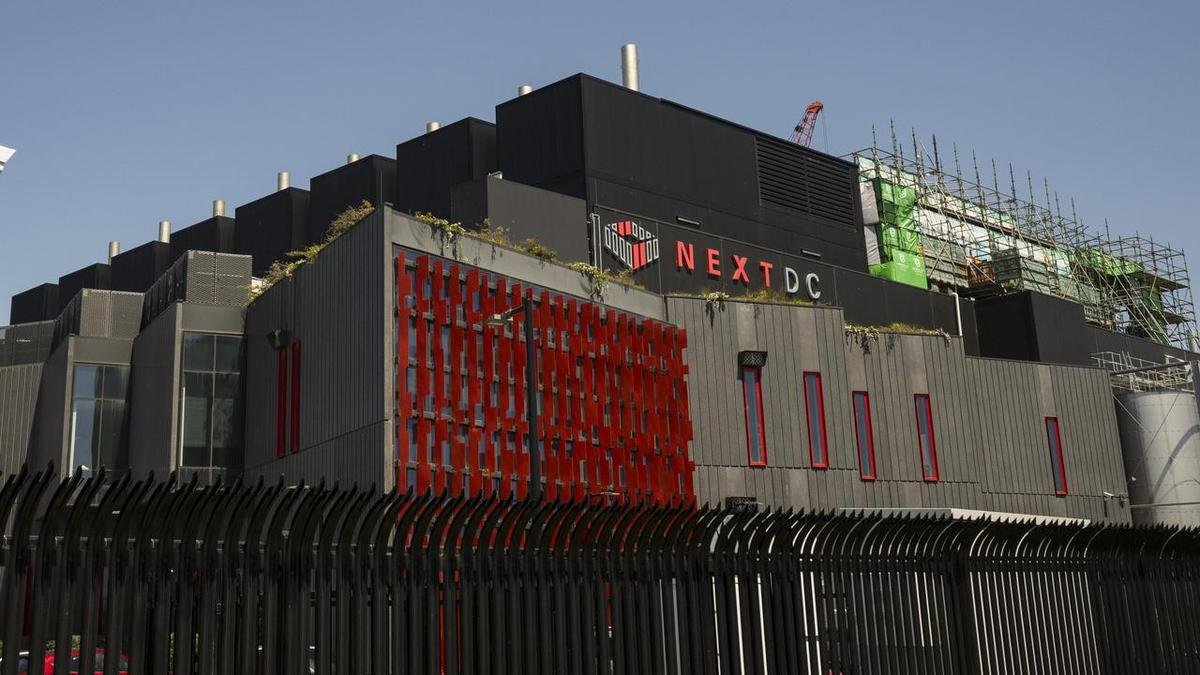
Source : Perth Now news
The increasing rollout of artificial intelligence enabling infrastructure across Australia is adding to economic pressures and threatens to monopolise an already stretched workforce.
Australia’s data centre construction projects are set to reach $870 billion in 2027, more than double the peak of the mining boom in the 2000s, according to analysis from Deloitte.
The report warns the rampant investment has come at a time when the economy has little spare capacity to accommodate such an increase in demand.
“This boom is happening close to our major cities, so data centres are competing directly with housing and infrastructure for workers and materials,” the report’s lead author Sheraan Underwood said.
“Labour is the main pinch point …competition for these workers will add to costs and raise the risk that projects are delayed, scaled back or take longer to deliver.”
It also means less populous states are missing out as data centre investment leads in NSW, Queensland and Victoria, unlike the mining boom which resulted in a majority of funds directed to the resource-heavy states.
“There’s also less room to absorb it,” Mr Underwood said.
“Inflation is above the Reserve Bank’s target and the construction sector is already dealing with a historically large volume of work.”
The nature of data centre construction being based on imports and requiring limited ongoing staff means the pay off will be much smaller than the billions of dollars invested.
“That creates a mismatch in timing. The construction and inflation pressures are arriving now, while the productivity dividend may take much longer to emerge,” Mr Underwood said.
A dividend which the lead author said was based on a “narrow base” of data centres, infrastructure and the net zero transition.
The impact of data centres on inflation is an issue the Reserve Bank governor acknowledged during her post-rates decision media conference on Tuesday.
“Ultimately, if productivity improves dramatically because of AI … it’ll allow us to grow faster,” Michele Bullock said.
“But because of the demand for investment in AI is so big at the moment, it’s outstripping savings, and that’s leading to an increase in what we call the neutral interest rate.
“If people think that productivity improvements will help to lower inflation and keep interest rates low, that’s not necessarily the case.”
Ms Bullock has noted about 70 per cent of data centre investment is imported and doesn’t put pressure on the domestic economy.
Exactly when the AI boom will have a positive impact on inflation remains highly uncertain.