

source : the age
Australia could miss out on the potential safety benefits of automated vehicles – or end up with self-driving cars too dangerous to be on the road – if laws don’t catch up with technology widely available to local motorists, Victoria’s peak motoring group has warned.
Tesla announced on Friday it was releasing the latest version of its semi-autonomous driving software in Australia, which can navigate city streets, stop at traffic lights and navigate into car parks without human input.
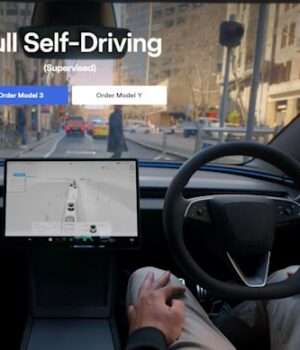
The self-driving software is called Full Self-Driving (Supervised) and the carmaker tells drivers they “must be ready to take immediate action at all times” to take over from the automated system.
Tesla’s marketing material shows its cars driving automatically around Melbourne’s CBD with a man sitting in the driver’s seat with his hands in his lap, not on the wheel – a practice that falls into a legal grey zone.
RACV head of policy James Williams said the potential for automated driving systems to reduce road trauma was immense, given human error was a factor in about 90 per cent of all crashes.
But Australian and Victorian laws were not keeping pace with technology that many Tesla drivers are already using, and which other car makers would soon roll out, he said.
Victoria’s road rules say that a driver must have “proper control” of their vehicle but do not stipulate what this means, especially in a car that is steering, changing lanes, stopping and accelerating itself.
“The advice from government has always been that means you should have one hand on the steering wheel. [But] it’s ambiguous so it needs to be resolved,” he said.
Williams said the RACV’s position was that the law should be updated to state drivers must have their hands on the wheel up to level 3 automation, which includes systems that operate a vehicle in limited circumstances but may require a driver to take over.
But it should not be required for level 4 automation and above, which can operate without human intervention.
Victoria Police could not say whether drivers needed to keep their hands on the wheel while using semi-autonomous driving systems
“There is no existing legislation that allows for a motorist to pass their driving responsibility over to a vehicle,” a police spokesperson said. “Drivers must maintain full and proper control of their vehicle at all times, whether actively engaged in the driving task or whether driver-assist functions are engaged.”
Williams said that at a national level, the federal government should put its long-slated automated vehicle safety laws in place to regulate automated driving systems to ensure they were safe enough to use.
Education on levels of automation and the fallback responsibility of drivers should also be included in licence tests, he said.
Williams said authorities continuing to drag their feet could mean car manufacturers were slow to roll out semi-autonomous vehicles and Australia missed the potential safety benefits, or systems were ruled out that were not up to the job.
“The technology is getting there very quickly – it’s making rapid advances and moving much faster than government,” he said.
Tesla claims its self-driving technology is seven times safer than human drivers. However, news agency Reuters reported this week that the car marker had made exaggerated claims about its safety record in submissions to regulators in Sweden and the Netherlands during efforts to obtain approval for its use in Europe.
Australasian College of Road Safety chief executive Ingrid Johnston agreed there were potentially huge safety benefits from autonomous vehicles but warned the technology needed to be fully and robustly tested, especially during the early transition period.
“We do need to make sure that the regulation and legalities around this keep up and that information is translated to consumers,” she said.
“Right now, the tech is moving faster than the regulations, and that is potentially problematic. People who are driving in these vehicles need to have a good understanding of what it means and where the lines are drawn, and at the moment, that is not necessarily clear.”
A spokesperson for the federal Transport Department said the government was working with the states, territories and the National Transport Commission on a framework for automated vehicles.
“This will enable conditional deployment of automated vehicles in select locations by 2027, as a first step, ahead of the automated regulatory framework being put in place across all states and territories,” the spokesperson said.
A spokesperson for Victoria’s Department of Transport and Planning said the framework would include a “complete end-to-end regulation” to support the deployment of automated vehicles and should be in place nationally from about 2030.
Tesla’s Model Y was the top-selling selling car in Australia in May, the first time an electric vehicle has taken the title.
Start the day with a summary of the day’s most important and interesting stories, analysis and insights. Sign up for our Morning Edition newsletter.
 Patrick Hatch is transport reporter at The Age and a former business reporter.Connect via X or email.