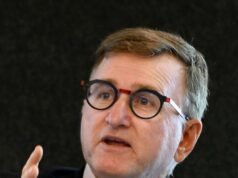

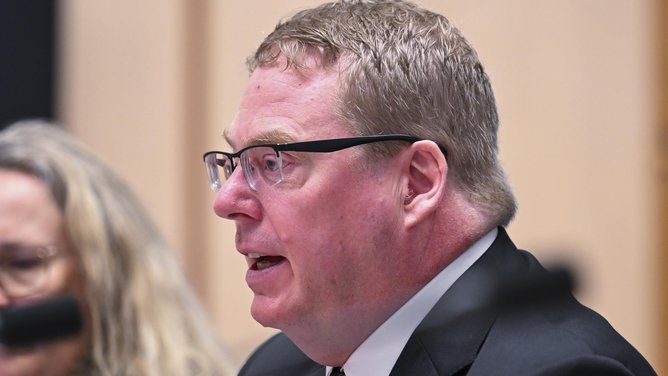
Source : Perth Now news
A senator has zeroed in on what she describes as a $2.7bn “slush fund”.
South Australian senator Anne Ruston quizzed health department officials about the federal budget figure on the first day of a Senate Community Affairs Legislation Committee hearing.
Senator Ruston said she was “horrified by the responses” she received from bureaucrats who told her the $2.7bn was a health “saving” that would be “reinvested”.
“Mr Comley I don’t know if I’m not understanding or your officials are being a bit tricky,” she said to Department of Health, Disability and Ageing secretary Blair Comley.
“This is 2.7bn worth of funding, half a billion every year, and you cannot provide me with anything apart from a very-wishy washy non-definitive answer.
“At the moment it just looks like a big slush fund.”
Budget strategy assistant secretary Kelly Fisher said “it has all been reinvested within this budget context”.
However, officials could not provide specifics about what programs the money would be reinvested into, leading Senator Ruston to another conclusion.
“If programs are being underspent, you must know what they are,” she said.
It comes after Senator Ruston grilled health department officials at budget estimates in December last year about vulnerable Australians being left in public hospitals that states and territories suggested was due to chronic underfunding of aged care services.
She questioned the department’s position on “tracking people who had come under the care, in the sense, of the commonwealth after having been assessed or referred for assessment for aged care support”.
“You have no clear definition of who’s responsible,” she said.
“So this seems to me like a failure of federal policy and failure of the department to actually be on top of an issue that has been publicly described for quite some time.”
Mr Comley disagreed with Senator Ruston’s characterisation, saying the department had been working “very intensively” with the states and territories.
“I just don’t accept the characterisation that we’re not taking this seriously in engaging seriously with states and territories,” he said.
“I also just want to add that the characterisation that is made – that it is solely a result of commonwealth policy that this occurs – I don’t think is correct.”


Later in the hearing, senator David Pocock quizzed the department about whether there were clinicians involved in the creation and validation of the algorithm used to classify and prioritise home care patients.
“So this algorithm that’s being rolled out, you haven’t actually given a whole bunch of outcomes to clinicians who then independently assess the needs of older Australians to check that, yes, the algorithm is actually giving the right level of support to keep these older Australians safe at home,” he said.
Health department first assistant secretary Greg Pugh said “the department validates it”.
Mr Pugh explained the extensive three-year consultation and trial period the algorithm and integrated assessment tool underwent before they were used by the department to classify at-home care for older Australians.
“The department ran the classification algorithm through a process of refinement on more than 200,000 completed assessments over 2024/25 and we did the same thing for the prioritisation algorithm over 100,000 completed assessments over 2024/25,” Mr Pugh said.
However, senator Pocock said “what (he) didn’t hear is the current algorithm being used has been clinically assessed”.