

Source :- THE AGE NEWS
The Blues and Maroons dined at Melbourne restaurants five kilometres apart on Monday night, but they may as well have sat at adjacent tables in the same establishment, such is the inside knowledge they have about each other.
In the 47 years of State of Origin, it is unlikely the competing teams have ever had as much awareness of each other’s strengths, vulnerabilities and potential tactics as they approach the second game of the series at the MCG on Wednesday night.
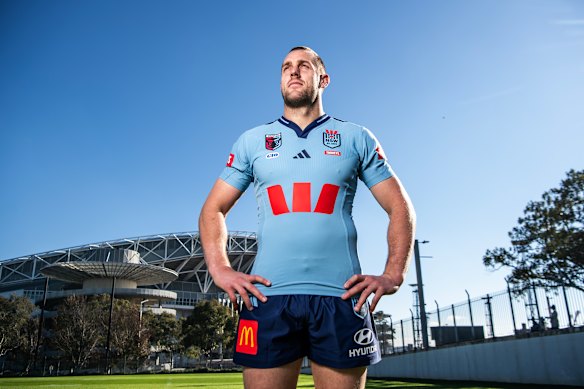
NSW captain Isaah Yeo agrees, saying, “We play against each other and with each other in NRL clubland, so there’s not too much we don’t know about each other.”
NRL head coaches are banned from taking charge of Origin teams, but their assistants are not. They are able to provide a wealth of tips on the opposition.
Players, too, have no hesitation revealing tactical and technical information about NRL club mates, meaning the Origin mantra, “Mate Against Mate”, as well as “State Against State” is genuine.
The only taboos on details divulged relate to an injury a clubmate may be carrying, or personal history which may upset.
NSW coach Laurie Daley has Roosters assistant Matt King and Knights deputy Brett White to volunteer detail on Queensland players from their clubs: Robert Toia, Walker, Lindsay Collins (Roosters) and Kalyn Ponga (Knights).
Furthermore, as departing QRL chief executive Ben Ikin points out, partly in reference to the dual roles of Frank Ponissi as Melbourne Storm’s head of football and the Blues’ team manager, “NSW probably have more intel on our playmakers [Storm duo of five-eighth Cameron Munster and hooker Harry Grant, plus Walker and Ponga] than we do on theirs.”
Queensland’s Billy Slater does have assistant Ben Te’o, a former deputy coach at the Broncos, the team that supplies Payne Haas and Kotoni Staggs to the Blues.
Nevertheless, Slater’s work in his video room at his rural retreat outside Melbourne sees him study players in preparation for his work as a commentator for Nine and also as an Origin coach with the devotion and diligence once reserved for medieval monks poring over ancient texts.
Daley is probably more prepared now than at any other time in his career. At an early Blues strategy meeting this year, I was impressed with his detail on potential Blues and Maroons, including eligible players who were ranked fourth or fifth in their positions.
So, with all the video tools available to dissect strengths and weaknesses of the game’s elite players, the opposition coaches could probably email their game plans to each other, and it would make little difference to the result.
Secret moves, such as the Sharks scrum base try in their 2016 grand final win, are almost non-existent nowadays. Everything comes down to execution and dealing with fatigue.
Take as an example, NSW’s bench utility Ethan Strange and the Maroons half Sam Walker: both are halves, with uncommon skill sets and destined to have 10-year careers in Origin after promising debuts in Sydney.
The only taboos on details divulged relate to an injury a clubmate may be carrying, or personal history which may upset.
Ask a Queensland player about Strange, and he’ll immediately visualise a rare step and fend combination, making it easier to offload: a left-foot step, left-hand carry, right arm fend.
Ask a NSW player about Walker, whose play making approach is the reverse of the standard representative No.7, and he’ll say words to the effect: “Likes to play before the line, makes the defence come to him, so he can opt late to pass, kick or run.”
The Blues trained Monday morning at AAMI Stadium, including an opposed session against a Storm combination of its NSW Cup team and Academy players.
The Storm players peppered the Blues with short in-goal kicks, preparing for Walker’s stab kicks.
The opposing fullbacks – NSW’s James Tedesco and Queensland’s Kalyn Ponga – demonstrated vulnerability in the series opener, where three tries came from kicks.
After all, with defences at Origin level so skilled, kicks are often the only way through the line.
Furthermore, given that NRL fullbacks now stand behind a single marker (allowing the usual second marker to defend in the line), they can be caught out by a dummy half who takes a couple of steps to hold him at the ruck and who then passes the ball to the backs for a kick.
Queensland’s Grant is particularly dangerous at the ruck and also has Munster – his Storm team-mate – adept at short kicks.
However, the elliptical MCG will test those kickers. There is a bigger gap between the dead ball line and the fence at Melbourne’s citadel of sport, making judgement on the weighting of kicks more challenging.
The Blues have not lost at the MCG in 30 years and dined opposite it on Monday night at Il Duca, an Italian restaurant famous for the resident waiter giving full voice, unprompted, to an aria.
He boomed out Nessun Dorma so loud that we wondered if the Maroons, who dined at more upmarket Squires Loft restaurant in Albert Park, heard him.
The aria, popularised by Luciano Pavarotti, is a victory song (“I will win”), but lest the Maroons believe the Blues are ahead of themselves. The players had all left the restaurant, leaving only the coaching and training staff when the waiter burst into song.
In any case, the Maroons’ mind games always begin at full-time after a loss.
NSW manager Ponissi stood on the sideline following NSW’s 22-20 win in Sydney and his Storm players in the Queensland team, Munster and bench forward Trent Loiero, walked over and congratulated him, shaking his hand.
Not Harry Grant. He brushed his NRL football boss, walking straight past Ponissi to the change rooms.
The opposition camps may well have all the technical and tactical detail on each other, but Grant’s snub is a reminder the great unknown in Origin games is the desire on Wednesday night.
 Roy Masters is a Sports Columnist for The Sydney Morning Herald.Connect via email.